Commercial Roof Coating Restoration in Vacaville, CA
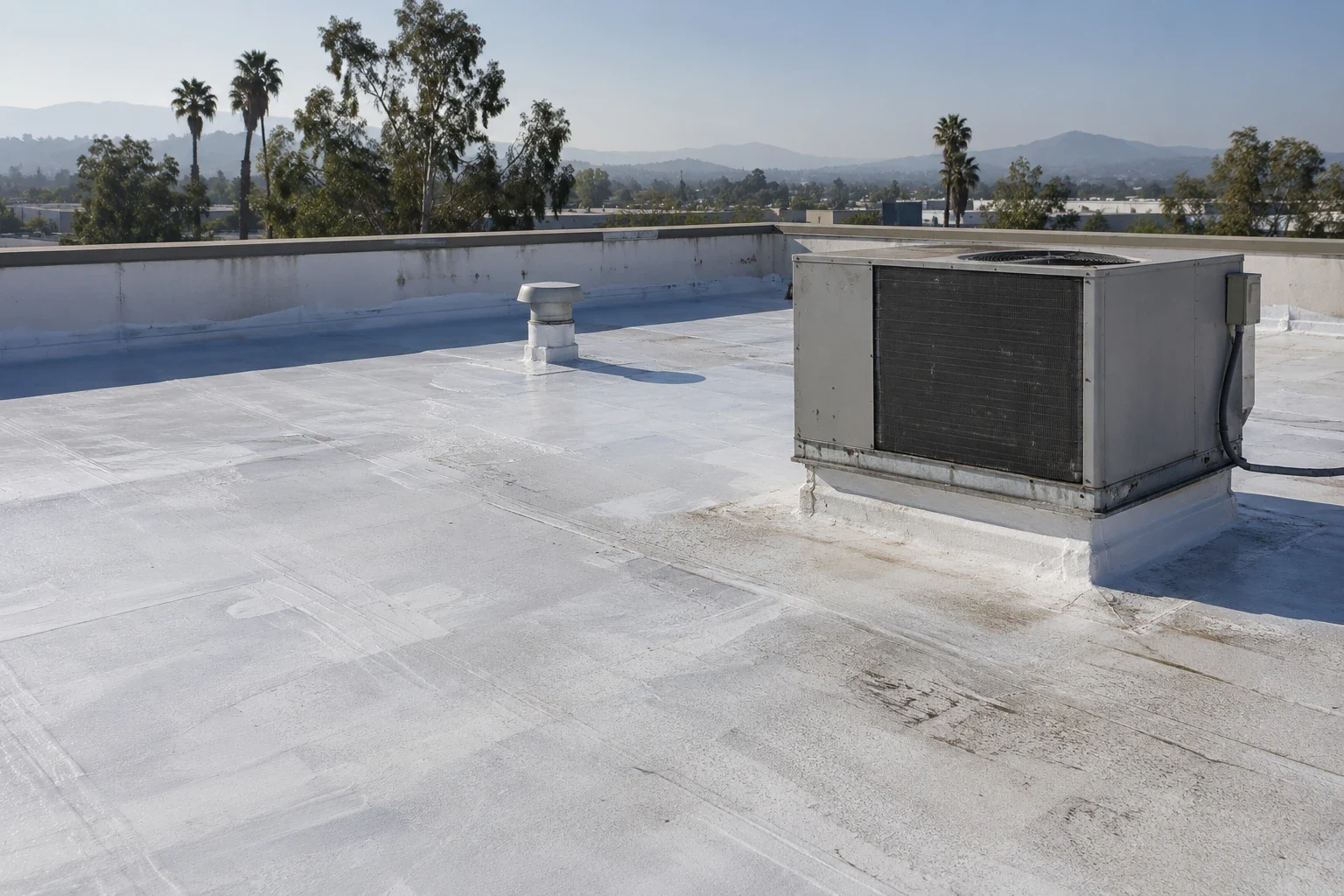
Evaluate roof coating restoration in Vacaville by checking the existing assembly, adhesion, drainage, moisture, and preparation before selecting a scope.
A roof coating can extend service only when it has a suitable surface to receive it. We inspect the membrane or metal, review past patches and coatings, check drainage, and test adhesion before recommending restoration. A Central Solano County heat advisory included Vacaville during a period of very high daytime temperatures and warm nights. The neighboring southern Sacramento Valley also has dry summers and a winter rainy season. These conditions inform scheduling and exposure review; they do not make an aging roof automatically suitable for coating. A commercial roof inspection documents the assembly and the repairs or tests needed before a coating scope is priced.
Identify the existing surface and prior layers
Before selecting a coating, we identify whether the roof is metal, single-ply, modified bitumen, or an earlier liquid-applied surface. We note seams, fasteners, chalking, loose material, corrosion, reinforcement, and edges where an older patch has separated. The history matters because a new finish must bond to the prepared receiving surface, not merely cover the visible color. A small adhesion test can show whether the proposed primer and system fit that area. If the test releases or the substrate is unstable, the scope should change before larger quantities are ordered. Commercial and industrial areas near I-505 and North Village give a local setting, while the field survey establishes which roofing layers a property contains. The field survey has to establish that. We also check whether earlier coatings were applied over repair patches or metal transitions. Those edges can respond differently from the broad field, so a representative test area should include the materials likely to receive new work. The written report identifies where the test occurred and does not extend its result beyond surfaces with the same preparation and substrate.
Resolve moisture and water paths before covering
A coating will not dry wet insulation or correct a drain that cannot move runoff. We trace low points, outlets, scuppers, overflow paths, and interior leak locations, then mark areas where moisture could be concealed below the membrane. A dry inspection day does not prove that the assembly stayed dry through prior rainy periods. We identify where targeted verification could change a repair or replacement decision. A moisture survey may help focus testing, and a drainage correction can address an outlet or flashing before restoration. Winter is the rainy season in the neighboring southern Sacramento Valley, so roof slope and drain condition should be recorded before coating work is scheduled.
Prepare seams, edges, and penetrations separately
Details need their own treatment before the open roof field is coated. We inspect lap edges, end seams, curb corners, pipe boots, drain bowls, wall transitions, and perimeter metal for movement or failed sealant. Loose material is removed; a coating is not a substitute for repairing a failed connection. The work plan marks which details will receive reinforcement or a compatible patch and which require further testing. A localized repair may be needed at an opening, and a flashing correction can address a curb or pipe. The nearby North Village master-planned area and Downtown Vacaville BID represent different access contexts, but they do not predict roof construction. We coordinate staging with each property contact.
Confirm the coating, primer, and receiving material
Compatibility depends on the existing roof, preparation method, and selected coating system. We document the test patch, surface cleanliness, any primer, and the detail repairs that must cure before field application. On metal, panel joints and fasteners need attention; on a membrane, seam condition and adhesion are central. We do not assume that two coatings can be layered because they look similar. The manufacturer instructions and project documents control the application and weather limits. A silicone roof review or acrylic system comparison may help the owner evaluate options, but neither replaces a field test. The written scope explains what test results support and the limits of what they establish.
Set a workable preparation and close-in window
Application planning accounts for surface temperature, forecast, dry time, access, and the building's daily use. A past regional heat advisory is a reason to verify actual roof conditions before work, not a prediction for a future date. The crew sequences cleaning, repairs, primer, reinforcement, and coating according to the selected system's requirements. Before material is applied, we confirm the prepared surface and keep any hold point visible to the owner. In an occupied property, we coordinate loading, walk paths, equipment, tenant schedules, and protection below the work area. If conditions shift, the sequence changes so the roof can be closed safely rather than forcing work into a window that no longer fits the product instructions. We also agree who can accept a revised work window and where the crew should stop if a test area or repair does not meet the product requirements. That decision path avoids covering a new condition without documenting it and gives the property contact a clear update before the work sequence changes.
Compare restoration with selective removal
Coating can be appropriate when the existing assembly remains stable, moisture questions are resolved, drainage functions, and adhesion testing supports the proposed system. Widespread wet insulation, failed attachment, corroded metal, incompatible layers, or recurring movement may point toward selective removal or a new assembly. We show the owner what was tested, where repairs are included, and which findings remain uncertain. If removal is more appropriate, a replacement scope should use the same roof map and documented measurements. For an occupied building, a phased work plan can define daily boundaries and close-in points. This keeps the decision tied to roof conditions rather than a general preference for restoration.
Record the prepared areas and completed details
The closeout identifies the roof section coated, preparation steps, repairs, test areas, and any part of the surface left outside the work. Photographs show representative field coverage as well as seams, drains, curbs, and perimeter details. We document any issue found during preparation and whether it was resolved or referred for a separate scope. North Village is an approximately 880-acre planned area in northeast Vacaville, and the industrial corridor between Vaca Valley Parkway and Midway Road follows I-505 west of it. These real place references may orient the service record, but the property roof map is what a future crew needs to find the coating boundary and compare performance. We leave the owner with the product and color references, the work date, the recorded preparation, and any maintenance limits supplied with the system. The next inspection can then compare the same seams and drainage low points without assuming the coating eliminated every risk.
Questions Owners Ask
Can a coating be applied over any commercial roof?
No. The surface, attachment, moisture condition, drainage, and compatibility all need review. We test the proposed receiving surface and correct details before a larger application is considered.
Does roof coating fix wet insulation?
No. A surface coating does not remove concealed moisture. We identify where testing could change the scope and separate confirmed conditions from areas that remain uncertain.
Why test adhesion before pricing restoration?
The test shows whether preparation and primer can produce a stable bond on the existing material. If the surface releases, coating more area would not solve the underlying condition.
Can a coating correct standing water near a drain?
A coating cannot create slope or clear an outlet. We map the water path and address drain, flashing, or low-area conditions before deciding whether the roof can receive a coating.
When should replacement be compared with coating?
Broad moisture, unstable layers, corrosion, repeated movement, or incompatible material may make selective removal or replacement more suitable. The decision follows the inspection and tests.
Related Roofing Work
- Commercial Roof Inspection in Vacaville, CA
- Commercial Roof Infrared Moisture Survey in Vacaville, CA
- Commercial Roof Drain and Scupper Repair in Vacaville, CA
- Commercial Roof Repair in Vacaville, CA
- Commercial Skylight and Penetration Flashing in Vacaville, CA
- Silicone Roof Coatings in Vacaville, CA
- Commercial Roof Replacement in Vacaville, CA
- Occupied Commercial Building Reroofing in Vacaville, CA
Share the roof plan, repair history, leak locations, and building access needs. We will identify the receiving surface, test where appropriate, and document whether restoration or another roof scope fits.