Commercial Roof Inspection in Vacaville, CA
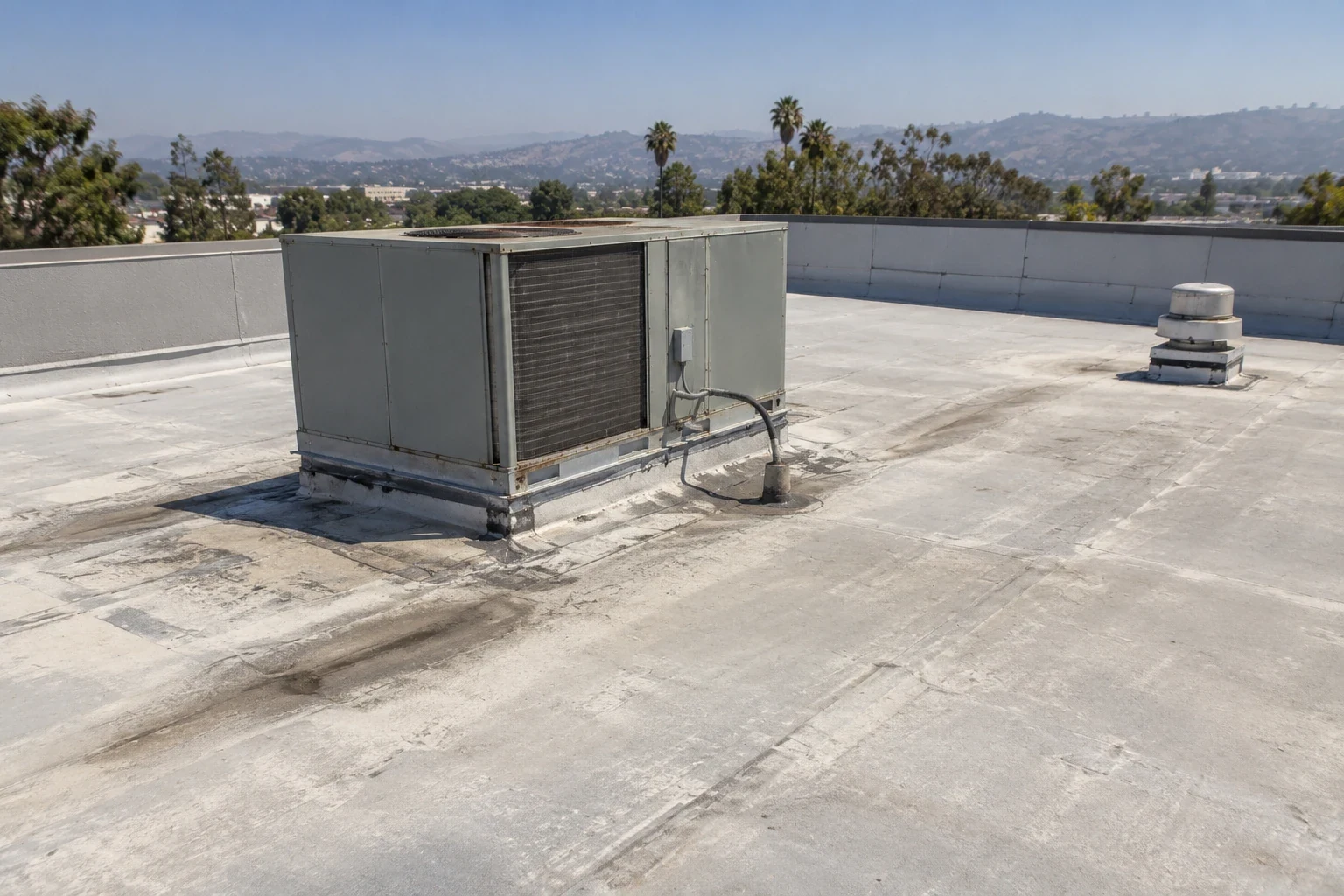
Get a Vacaville commercial roof inspection that traces leaks, seams, drainage and repair limits into a photo-supported plan for the next decision.
Roof surfaces warm in direct sun and cool later; that movement is a reason to inspect bonded seams and curb transitions. It does not diagnose a particular roof. On a commercial roof, temperature changes work through sheet seams, perimeter metal, equipment curbs and old repair edges. An inspection follows those connections, then asks whether the visible opening is the full defect or only the first place water became apparent. We walk the accessible roof, review reported leak locations and inspect the adjoining assembly before recommending a patch, a larger repair or replacement planning. The useful result is a condition record that connects each observation to the next action, so an owner can make a decision from the roof that is actually there.
Heat Reaches the Bond Line
Sun warms a membrane and the sheet expands; cooler hours draw it back. Repeated movement tests welded seams, adhesive bonds, fasteners and transitions where the roof changes height or material. We check whether a seam remains closed, whether a curb flashing stays attached and whether edge metal holds the membrane without a gap.
The City links Vaca Valley Business Park to more than 120 acres acquired by four companies for biomanufacturing facilities. Those projects describe surrounding industrial activity, while the inspection still needs to establish the roof’s actual condition. A production building may have rooftop equipment, service clearances and interior operating constraints that make a roof opening costly to schedule. We pair those constraints with the physical finding, then note whether the repair needs a short work window, a larger opening or a planned equipment shutdown.
Follow the Water Path
A ceiling stain gives the starting point, not a roof map. Water can travel along a deck flute, insulation joint or pipe before appearing indoors. We compare the reported room and timing with roof seams, penetrations, drains and areas where water stands after rain. At each transition, the inspection records whether the membrane is split, lifted, punctured or still intact. If the entry point remains unclear, a targeted moisture survey can help identify wet insulation for further confirmation instead of opening broad areas without a defined question.
Commercial and industrial activity near I-505 is part of Vacaville’s broader business context; it does not tell us what a specific roof contains. We record the roof system, drainage pattern, access and reported leak location. The next step follows evidence: sound, dry material can accept a bounded repair, while wet insulation may need selective removal.
Edges Show the Connection
Perimeters often reveal whether the field membrane and flashing work as one assembly. We examine parapet terminations, coping joints, metal edges and roof-to-wall transitions for open laps, loose fasteners, failed sealant and movement at corners. A good inspection distinguishes a surface crack from a connection that has separated beneath the visible layer. When water has reached insulation or deck, the repair must extend to material that can support a new bond. Coating protects a sound, prepared surface; it cannot reconnect detached flashing or dry wet insulation.
The inspection also checks penetrations and service routes. Curbs, conduit supports, pipe boots and access paths can collect water or interrupt drainage. We note where a maintenance step could puncture the sheet or block a drain, then explain how the affected detail should be protected. For a membrane assembly, the TPO system type matters because seam welding, flashing and compatible materials must match the existing assembly. If the roof is another system, the repair approach follows that material rather than treating every surface as interchangeable.
Repair Scope Follows Sound Material
Once the defect is traced, we mark the repair boundary around the failed layer and the area needed for a reliable tie-in. The inspection report separates immediate water control from permanent restoration, identifies evidence of wet or loose material and records details that still need an opening to confirm. A commercial roof repair can remain local when the surrounding membrane, insulation and attachment are sound. Broader separation, repeated failures or wet layers may shift the choice toward a larger repair, recover or replacement discussion.
The decision is not made from one photograph or a roof age alone. We compare the affected area with seams, prior patches, drainage and any records the owner provides. A photo-supported condition report gives the owner a way to track each finding, its location and the recommended response. For a manufacturing property, the same record helps coordinate roof work with equipment use and production access. The inspection should make the tradeoff clear: what can be repaired now, what evidence supports that choice and what condition would change it.
Access Sets the Inspection Window
On an occupied commercial building, access is part of the inspection scope. We confirm roof entry, fall-protection conditions, tenant activity and equipment that must remain available. If the route crosses a loading zone or a controlled production area, the visit is set around the building's operating schedule. Visible roof observations may fit an ordinary visit, while a test opening or interior check can require a separate outage or close-in plan. The owner approves that work window before material is removed.
At the end of the visit, the report groups findings by urgency and action rather than leaving a list of defects without context. Photos identify the location and the adjoining detail. Notes distinguish observed conditions from items that need confirmation below the membrane. If temporary protection is appropriate, the report states what it addresses and what permanent work remains. Owners who oversee several buildings can use scheduled roof maintenance to keep drains, seams and penetrations on a repeat inspection cycle, with each repair recorded against the property rather than recalled from memory.
Records Keep the Next Decision Grounded
Before the inspection, useful records include prior leak notes, roof plans, warranty documents, repair invoices and the last known system replacement. Records help distinguish a new opening from a recurring detail. We compare them with visible seams, drains and rooftop equipment, then flag differences for follow-up.
The deliverable should answer what the owner needs to decide: whether to stop active water, how much material to remove, when to schedule permanent work and what should be monitored. A manufacturing roof assessment can account for production access and equipment coordination without assuming the building's current membrane or condition. We serve multi-property business areas such as Vaca Valley Business Park, as well as nearby cities such as Rio Vista. Access conditions still need to be confirmed at each property. The next action still comes from the inspected roof, its water path and the material that can receive a repair.
Questions Owners Ask
What can an inspection establish when a ceiling stain keeps returning?
The roof walk can compare the stain location with seams, drains, curbs and penetrations, then record the likely water path and the evidence for it. If water may have entered farther upslope, we trace adjoining details before choosing an opening. The repair boundary follows the wet or failed material we can confirm.
Can the report tell us whether a repair will hold through another hot season?
A sound receiving surface, attached flashing and compatible tie-in make a bounded repair more supportable. The report records wet insulation and seam movement. A weather pattern alone does not predict a particular roof's performance; the assembly and observed condition set the recommendation.
What should we provide before the inspection visit?
Roof plans, leak locations, repair records and access rules define the question. If production, tenant or loading schedules limit roof access, share those windows as well. We compare records with the visible roof and identify any approval needed for a test opening.
When does a moisture survey change the next step?
A survey is useful when the inspection indicates possible wet insulation but the boundary is not visible. Its readings help target confirmation, and the report explains where a small opening can verify the assembly. Dry readings do not replace a check of the failed seam or flashing that admitted water.
How do you keep the inspection from disrupting an operating facility?
Access route and operating window decide the visit sequence. We can review exterior roof conditions first, then coordinate any interior check or intrusive test with the building contact. The report records inspected areas, open questions and separate close-in needs.
Related Roofing Work
- Commercial Roof Infrared Moisture Survey in Vacaville, CA
- TPO Roofing in Vacaville, CA
- Commercial Roof Repair in Vacaville, CA
- Commercial Roof Condition Reports in Vacaville, CA
- Commercial Roof Maintenance in Vacaville, CA
- Manufacturing Plant Roofing in Vacaville, CA
- Commercial Roofing in Vaca Valley Business Park, Vacaville, CA
- Commercial Roofing in Rio Vista, CA
Share the leak location, roof records and operating window. We will inspect the adjoining assembly, document what changes the repair boundary and lay out the next step for your Vacaville building.