
Commercial Skylight and Penetration Flashing in Vacaville, CA
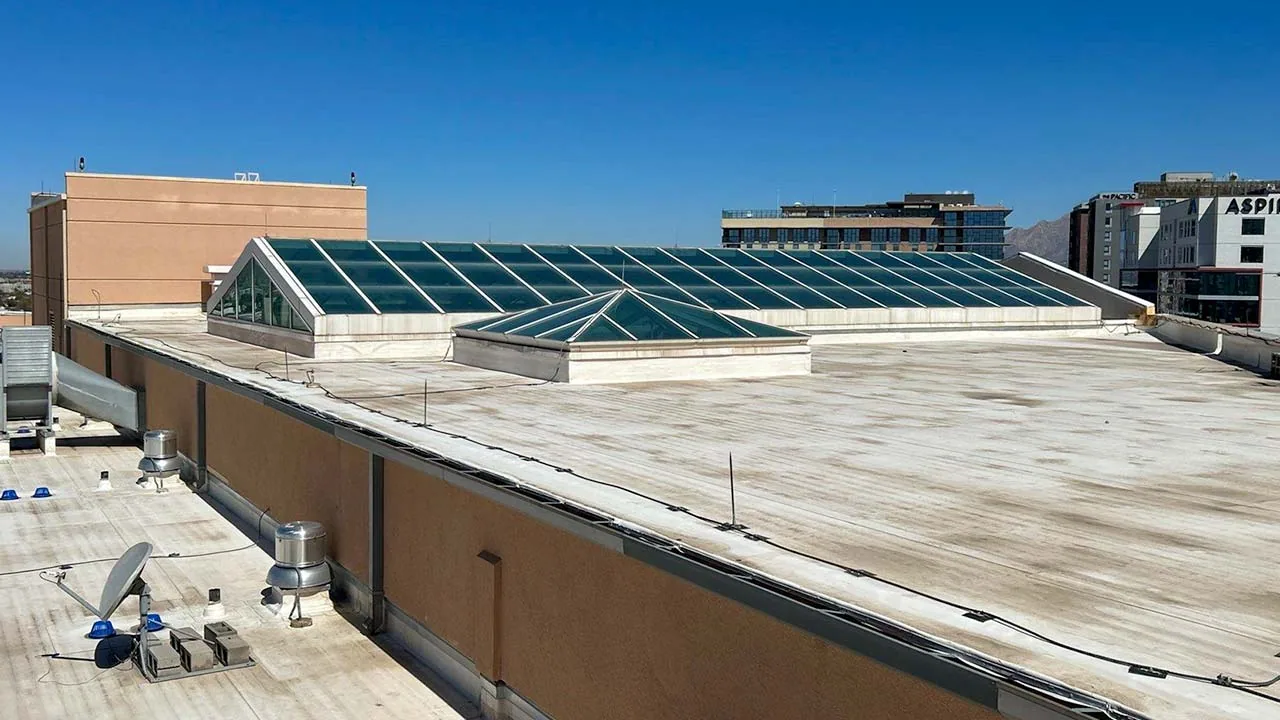
Inspect Vacaville commercial skylight curbs, pipe boots, vents, and membrane transitions, then define a compatible repair and closeout record.
Skylights, vents, pipes, and equipment curbs interrupt the roof membrane, so the flashing around each opening has to move with the assembly and remain sealed to its receiving surface. Heat can pull a skylight curb and roof membrane in different directions through the day. We inspect the sealant, curb corners, and membrane transition where that movement can open the bond line. We document the opening, the visible bond line, and any interior report before selecting a repair. A commercial roof inspection can map penetrations across the roof rather than treating one ceiling stain as the whole condition.
Check the curb before selecting a sealant
A skylight curb presents four corners, sidewalls, and a top termination where water can cross from membrane to vertical flashing. We check for loose counterflashing, splits at corners, exposed fasteners, and separation where a liquid-applied detail meets the curb. The survey records curb height and the accessible condition of its perimeter, then distinguishes an open lap from staining that may have another source. A limited opening can be proposed when the receiving surface or concealed attachment cannot be confirmed visually. We do not assume a bead of new sealant will bond to aged material or correct a moving connection. Buildings near the I-505 industrial land corridor between Vaca Valley Parkway and Midway Road still need their own field measurements; a planning map cannot identify a roof assembly. A localized repair scope should state which curb faces, corners, and membrane sections are included.
Separate the glazing condition from the roof detail
Clouding, cracked glazing, a failed frame seal, or water at a skylight may point to different trades and repair boundaries. We photograph the lens, frame, curb, and adjacent membrane from safe access, then note whether moisture is visible at a joint or only on an interior finish. The roof-side observation does not certify the glazing unit or prove where concealed water traveled. Where the frame itself is damaged, the scope can identify a skylight contractor review before the curb flashing is rebuilt. If the membrane is sound, replacing it broadly would add work without addressing the actual defect. Business and industrial areas near North Village and Vaca Valley Parkway have varied roof assemblies, so each skylight curb needs an opening-specific survey. A leak investigation can trace a reported interior path while keeping the roof opening and interior findings distinct in the record.
Inspect pipe boots and vent penetrations individually
Pipe penetrations need a boot or field-fabricated flashing compatible with the pipe, membrane, and expected movement. We look for a split boot, loose clamp, open seam, brittle seal, or a gap at the base, while noting pipe diameter and any nearby conductors or supports. A detail that has been covered by coating may hide an earlier repair, so the report records that layer rather than assuming the visible surface is the original system. We also check whether water marks align with the penetration or follow a seam from another location. On a larger roof, a maintenance visit can inventory penetrations so the owner can compare conditions between visits. Downtown Vacaville and Rio Vista represent different commercial contexts, but neither is a substitute for roof-level documentation. The repair boundary should identify each opening by a roof-plan marker, not by a general note to reseal all penetrations.
Account for movement and material compatibility
Daily temperature change can move sheet metal, a curb, and the surrounding roof field at different rates. We inspect corner transitions, termination bars, and sealant joints for signs of pullback, fishmouths, or repeated patching. Before adding material, the crew identifies the membrane type and checks product compatibility with the existing surface and primer requirements. A coating is not a universal substitute for a boot or properly formed flashing, and an incompatible layer may weaken adhesion at the bond line. If the original assembly is unknown, a small test or manufacturer guidance may be needed before production work. The scope states what can be confirmed and what remains concealed. At each corner, we note whether the flashing turns cleanly onto the curb, whether the transition remains bonded, and whether movement has opened a channel at the upper termination. A repair detail should preserve drainage away from the opening instead of creating a pocket that holds water against the frame. If replacement material has different thickness or flexibility, the tie-in should account for that change and leave a sound, accessible bond line for inspection. For widespread deterioration, a coating restoration review considers the field membrane separately from curb and penetration details. A TPO system assessment can help identify assembly layers where records are available.
Trace the water path without overclaiming
Interior staining below a skylight does not by itself prove that the curb is leaking. Water can travel along a deck flute, framing member, conduit, or membrane seam before appearing at a ceiling. We compare the reported location with roof observations, note recent moisture patterns, and recommend a controlled test only when the conditions and access make it appropriate. Any test has a defined area, observation period, and stop point to avoid introducing water into an occupied space. The owner receives a clear distinction between observed evidence and a suspected path. Where a drain or low point may contribute, a drainage review is documented as a separate finding. Commercial and industrial development spans Vacaville business corridors, while a roof leak investigation follows the actual skylight, seam, or curb condition. We record the actual roof location, penetration type, and next test required.
Coordinate access and document the finished detail
Penetration work may require roof access inside an active tenant schedule, protection for equipment below, and a weather window that allows the detail to close before the crew leaves. We confirm roof access, fall-protection arrangements, nearby electrical or process equipment, and any interior area that needs protection. The work plan identifies whether a skylight can remain in service, whether a temporary cover is required, and who will confirm restoration of interior conditions. At closeout, photographs show each repaired face, corner, boot, and membrane tie-in with a roof-plan reference. The report lists material used, any substrate replacement, and items that could not be accessed. A roof condition report preserves the observations for later comparison, and a building in Rio Vista still calls for an opening-by-opening roof survey. For a larger project, a phased work plan can coordinate penetrations with other roof sections.
Questions Owners Ask
Can sealant alone repair a leaking skylight curb?
Not in every case. We inspect the curb, corners, membrane transition, and receiving surface first. Loose flashing or a failed substrate may need correction before a compatible seal can be applied.
Does an interior stain prove the skylight is leaking?
No. Water can travel before it becomes visible indoors. We compare the roof opening, nearby seams, drainage, and reported timing, then identify any controlled test needed to confirm the path.
Can a roof crew replace damaged skylight glazing?
The scope depends on the frame and glazing condition. We document what is visible and identify when a skylight specialist should evaluate the unit separately from curb flashing.
How are multiple penetrations recorded?
Each opening receives a roof-plan reference and condition note. Closeout photos then show the specific curb, boot, or flashing detail that was repaired and any follow-up item.
Will coating solve a loose pipe boot?
A coating may not correct a loose or incompatible boot. The existing membrane, pipe, attachment, and movement detail need to be checked before a repair material is selected.
Related Roofing Work
- Commercial Roof Inspection in Vacaville, CA
- Commercial Roof Repair in Vacaville, CA
- Commercial Roof Leak Repair in Vacaville, CA
- Commercial Roof Maintenance in Vacaville, CA
- TPO Roofing in Vacaville, CA
- Commercial Roof Drain and Scupper Repair in Vacaville, CA
- Commercial Roof Condition Reports in Vacaville, CA
- Commercial Roofing in Rio Vista, CA
Tell us which skylight, vent, or penetration is involved and what was observed inside. We will inspect the roof-side detail, map the repair boundary, and identify any test or specialist review that remains.