Commercial Roof Replacement in Vacaville, CA
Plan a commercial roof replacement in Vacaville with assembly testing, removal boundaries, drainage review, and an occupied-building sequence.
A replacement decision starts with the layer that cannot stay, not with a choice of color or membrane. Before pricing removal, we document the membrane, insulation, drainage, and attachment across the proposed work area. For replacement decisions, we inspect the assembly, identify moisture and attachment conditions, and show where removal should stop or continue. The I-505 industrial land corridor lies between Vaca Valley Parkway and Midway Road west of North Village; each roof still needs its own map. The result is a defined scope, a close-in sequence, and a comparison against repair or recover options before the owner commits to replacement.
Separate surface wear from assembly failure
A blister, split, or leaking seam may be repairable when the surrounding membrane and insulation remain sound. Broad wet insulation, repeated attachment problems, deteriorated cover board, or several failed layers can make a replacement more practical than another isolated patch. We walk the roof, review leak history and prior repairs, inspect curbs and edge metal, and note any soft or unstable areas. When moisture is not visible from the surface, we use a scan or targeted core only where the result will change the proposed scope. A written condition inspection distinguishes observed defects from areas that need verification. The owner can then see why a defined repair boundary remains reasonable or why removal should reach a broader section.
Choose the new assembly for the building
Once the removal limit is clear, we compare assemblies against deck condition, slope, drainage, rooftop equipment, access, and the building's use. TPO, PVC, EPDM, modified bitumen, built-up roofing, metal, and recover systems do not share the same attachment and detailing requirements. We identify how the proposed membrane meets walls, drains, curbs, and perimeter edges, then state what substrate preparation is included. Vacaville's economic sectors include biotechnology, advanced manufacturing, industrial production, and logistics; that mix helps frame operational constraints without assuming a specific roof type. A TPO assembly or multi-ply system should be chosen from the actual roof conditions and owner priorities, not from a citywide material preference. We also review insulation thickness and slope with the proposed membrane because a changed roof height can alter curb flashing and door or equipment clearances. The estimate identifies those interfaces and the trade coordination they require. Before mobilization, a preconstruction walk can mark drain elevations, curb clearances, edge conditions, and interior areas needing temporary protection.
Set slope and outlets before close-in
Replacement is a chance to correct the water path while the assembly is open. We locate drains, scuppers, overflow paths, and low points, then compare them with the deck and insulation elevations. A roof that repeatedly holds water can need tapered insulation or a drain correction, but the required work depends on measured elevations and the existing structure. We do not promise that a new membrane will solve ponding if slope remains unchanged. The I-505 industrial land corridor lies between Vaca Valley Parkway and Midway Road, west of North Village. Those local boundaries help locate a project; the drainage survey sets the scope. The plan includes any drain and scupper work before the new membrane is closed in.
Keep operations in the sequence
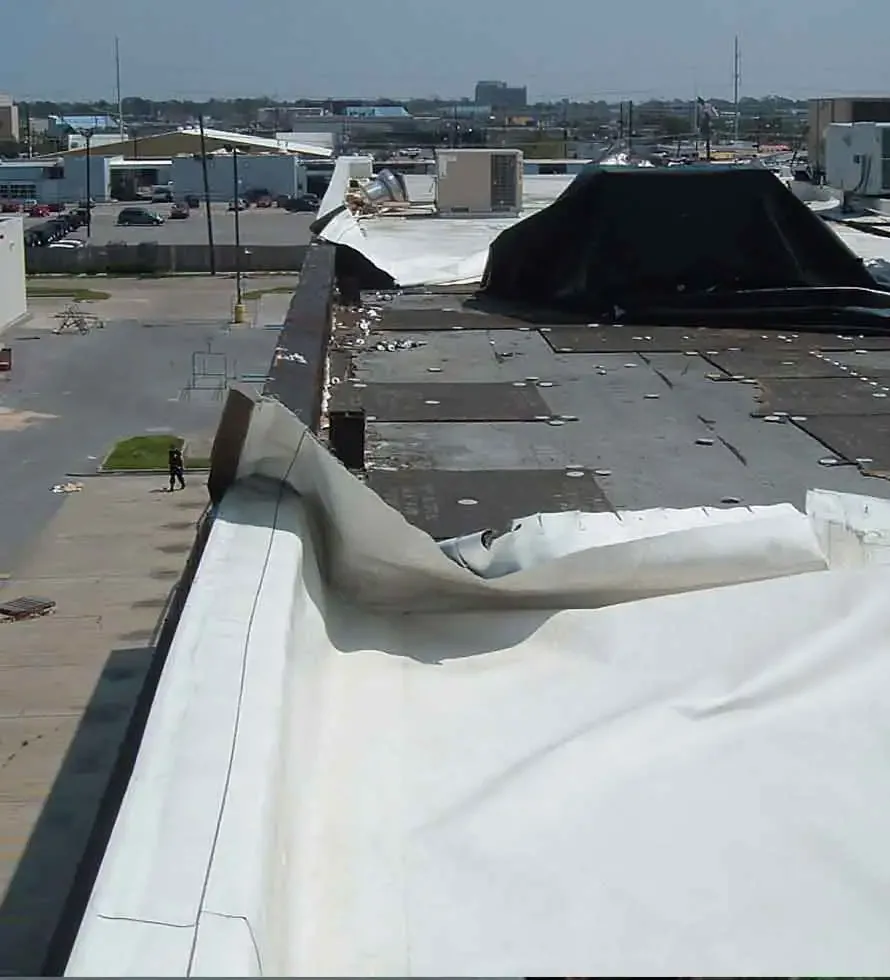
A tear-off exposes the roof deck, so access, weather protection, and daily close-in planning matter. We divide the work into areas the crew can remove, rebuild, and dry-in within the available shift, then coordinate around tenant entrances, rooftop equipment, and deliveries. At a building in Vaca Valley Business Park, the owner confirms the operating windows and protected access before mobilization. The neighboring southern Sacramento Valley has warm, dry, sunny summers and a winter rainy season; the forecast and the day’s substrate conditions govern each close-in decision. We specify what temporary protection is planned if work must pause and how the next section will be made watertight.
Document what comes off and what stays
The proposal should state the removal depth, disposal approach, deck repairs, insulation, cover board, attachment, membrane, flashing, and perimeter work. During tear-off, concealed conditions can differ from the survey. We stop at the agreed inspection point, photograph the exposed condition, and price any additional work before covering it. If the existing roof qualifies for an overlay, a recover option can avoid removing sound layers, but moisture and code conditions must permit it. Where the assembly has broad damage, replacement provides access to correct the affected layers and rebuild transitions. We also coordinate curb heights and equipment support if the finished roof elevation changes. That detail is important where new insulation affects flashing height; the scope needs to show how the new roof ties into existing walls and curbs rather than leaving a vague allowance.
Scope and schedule also depend on what lies below the membrane. Deck repair, wet-insulation removal, tapered insulation, added cover board, and relocation or temporary support of equipment each affect labor and material sequencing. We note these as distinct items so the owner can see which are confirmed and which remain contingent on tear-off. A clean field area does not establish a sound deck at a hidden drain or curb. The written inspection point lets the team stop, document the opened section, and get direction before the new assembly covers it. That decision protects the close-in plan and keeps the final record tied to the condition actually exposed.
Before mobilization, the owner can confirm who approves deck repairs, how concealed damage is priced, and which changes require a written stop point. Clear limits keep discoveries documented before added work proceeds.
Leave a record for the next decision
After installation, the owner needs more than a completion date. We record roof zones, materials installed, repaired deck areas, drainage corrections, and the details that should be checked during future maintenance. If manufacturer documents apply to the selected assembly, we coordinate the required inspections and closeout records without promising a warranty length or status the project has not earned. Each building receives a record of the work actually performed, with roof zones and details kept separate from other properties in the portfolio. The service file should note where access is permitted, how rooftop equipment and drains are arranged, and which areas were not part of the replacement. A later maintenance visit can use that map to check seams, edge metal, and drainage after seasonal exposure.
Questions Owners Ask
What evidence supports replacing instead of repairing?
We look for the extent of wet insulation, repeated seam or attachment failures, deck condition, and whether repairs can end at a sound boundary. The report separates confirmed conditions from items that need testing.
Can a replacement be completed while the building stays open?
Often the work can be phased, but the sequence depends on access, weather protection, equipment, and how much roof can be safely closed in each shift. We coordinate a specific plan with the owner before tear-off.
How do you decide whether to remove the existing roof?
We inspect the layers and confirm moisture where it changes the scope. If the assembly is stable and applicable code conditions allow, a recover can be compared; otherwise the proposal defines removal to a sound substrate.
Does the 2022 heat record determine the new roof system?
No. It is a local weather marker, not a design load or a diagnosis. We evaluate the building, substrate, drainage, and project requirements before comparing assemblies.
What happens if tear-off exposes additional damage?
We document the opened area, show the condition, and explain the added work before covering it. That lets the owner approve a revised boundary with the evidence in view.
Related Roofing Work
- Commercial Roof Inspection in Vacaville, CA
- Commercial Roof Repair in Vacaville, CA
- TPO Roofing in Vacaville, CA
- Modified Bitumen Roofing in Vacaville, CA
- Commercial Roof Drain and Scupper Repair in Vacaville, CA
- Commercial Roofing in Vaca Valley Business Park, Vacaville, CA
- Commercial Roof Recover and Overlay in Vacaville, CA
- Commercial Roof Maintenance in Vacaville, CA
Share the building use, leak history, roof records, and the operating windows that matter. We will inspect the assembly, verify moisture where needed, and lay out removal, drainage, and close-in choices for review.