Built-Up Roofing in Vacaville, CA
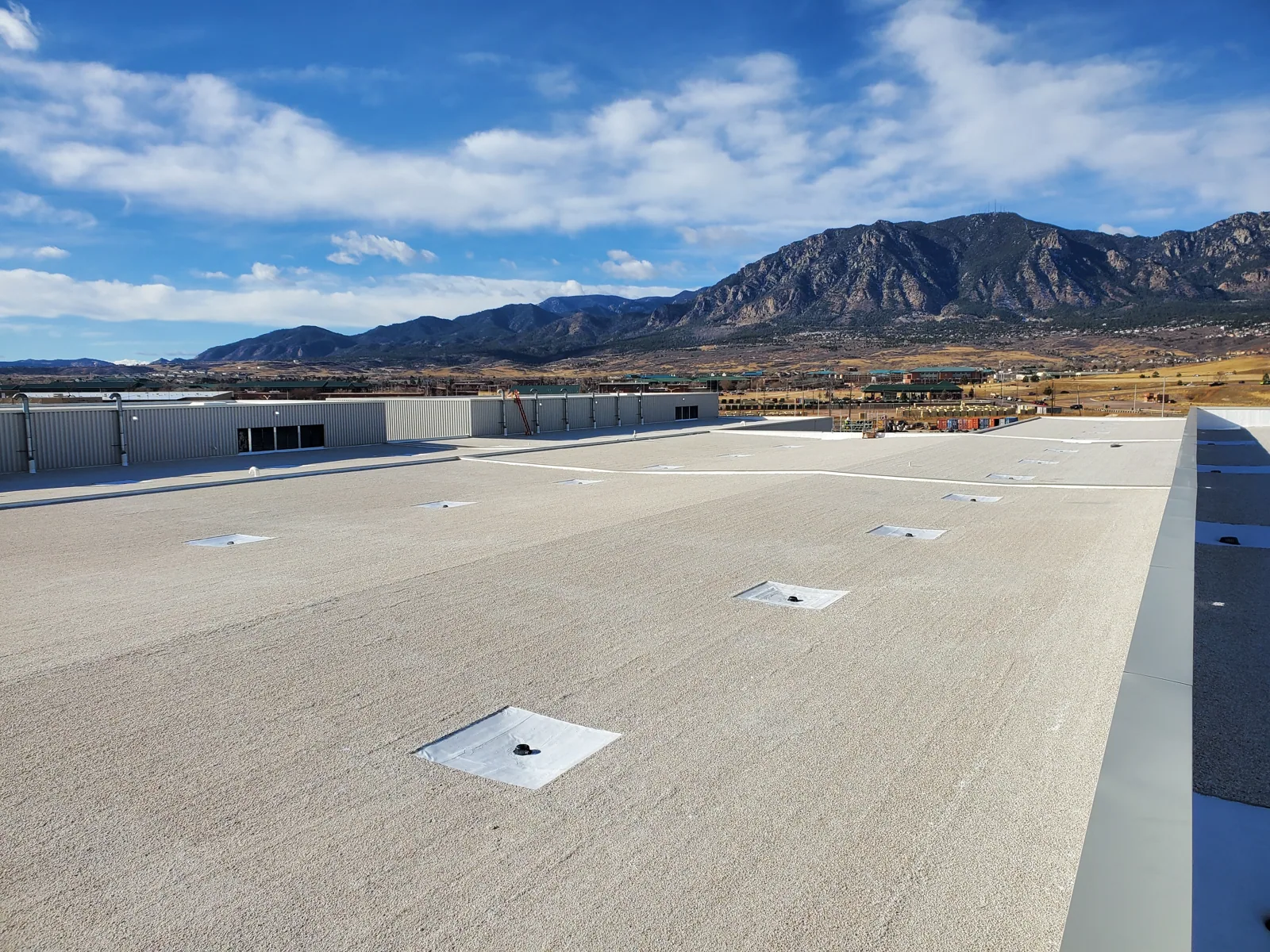
Review built-up roofing repair and replacement in Vacaville, CA. We inspect plies, surfacing, drainage, and insulation before defining the roof scope.
Several roof layers can hide a small opening until water reaches the deck or interior finish. Built-up roofing, often called BUR, combines alternating bitumen and reinforcing plies with a protective surface such as aggregate or a cap sheet. The number of layers alone does not show whether the assembly is sound; adhesion, drainage, and moisture beneath the field matter. A Central Solano County heat advisory covered a period of very hot days and warm nights in Vacaville, CA. That outlook is a reason to inspect movement and surfacing, not a finding about a particular BUR roof. We use that as a prompt to check movement and surface condition, then inspect the roof itself. A commercial roof inspection documents the exposed plies and repair boundary before a patch, recover, or removal is considered.
Understand the layers that remain
BUR is assembled from roofing felt or other reinforcement embedded in bitumen, with multiple plies forming a continuous membrane. A cap sheet or aggregate surfacing protects the top layer from exposure and traffic. We inspect blistering, cracks, open laps, exposed reinforcement, and loose aggregate, then check the termination details where the assembly meets walls and metal. A defect at the surface may be isolated, but water can travel between plies before it reaches the ceiling. We use moisture testing and selective openings where needed to learn whether the insulation or deck is affected. The scope should state how many layers are removed, which substrate remains, and what new boards or plies will replace them. We photograph each stage before the assembly is closed.
Read the surface without relying on color
Aggregate can shift under foot traffic or reveal spots where the bitumen has worn. A smooth cap surface can develop splits at seams, around penetrations, or where water collects. We inspect the drainage low point and check whether ponding follows a blocked drain, uneven insulation, or a deflected deck. Business parks and industrial-park land uses sit near I-505 and North Village in Vacaville. Those planned and existing areas include different commercial settings, but their roofs cannot be assumed to share the same BUR layers. We record what is visible and test where the surface suggests a concealed condition. That helps distinguish a surface repair from a scope that must reach the insulation or deck.
Use an opening to set a sound boundary
A BUR repair begins with a defined cutback. We remove loose surfacing and damaged plies until the remaining material is bonded and dry, then rebuild the layers with compatible reinforcement and bitumen. A patch needs enough overlap to connect to firm material; mastic spread across a split does not replace failed plies. At a drain or wall, the repair also has to restore the transition so water can move into the drain rather than behind the membrane. When a leak has spread across more than one ply, a ponding-water repair may need to address insulation slope and drainage as well as the membrane. Photos and measurements show where removal stops and where the roof can remain.
Plan hot work and close-in
Some BUR applications use hot asphalt or kettle-applied bitumen, which requires fire protection, controlled staging, and a clear path for materials. Other assemblies use cold-applied materials or modified sheets with different site controls. We choose the method that fits the existing layers, roof access, occupied space, and approved system details. Before opening a roof area, we agree on the amount of roof that can be rebuilt during the available work window. Insulation should not sit exposed if weather or a shift change could leave it unprotected. In Vacaville, biotechnology, advanced manufacturing, industrial production, and logistics are named local sectors, so work planning should account for active equipment and loading routes where they occur. Material handling can also affect the work plan: kettle placement, roof access, fire-watch coverage, and protection of nearby air intakes need to be settled before hot application. For an occupied facility, coordinate odor-sensitive rooms and deliveries with each shift so the crew can keep the exposed area within the planned close-in window. A phased roof schedule lays out the close-in sequence and interior protections.
Keep drains, parapets, and equipment connected
BUR transitions include drain bowls, scuppers, parapets, equipment curbs, and edge metal. A new ply must terminate without burying the drain opening, leaving a loose edge, or narrowing access for maintenance. We check the height of each curb and whether the counterflashing can be reset over the new assembly. When insulation thickness changes, drains and doors need a separate height review. A drain and scupper scope can be coordinated with the membrane layers, while coping and edge metal work closes the perimeter. Vaca Valley Business Park is an existing policy-plan area in Vacaville; industrial and commercial uses along the nearby corridor make staged roof access relevant, but the building's own drainage and operation determine the details we install.
Compare repair, recover, and tear-off
A limited repair can preserve a BUR roof when the other plies and substrate remain firm. A recover may be suitable over a dry, attached assembly if the added layer can be detailed at drains, walls, curbs, and doors. Widespread wet insulation, multiple separated plies, or recurring leaks may make removal to the deck the clearer choice. We compare BUR with modified bitumen or a TPO membrane using the roof's service needs, weight, traffic, fire controls, and repair access. The estimate separates removal, substrate work, insulation, new plies, surfacing, and metal details. Cost also follows the number of layers, debris handling, deck repairs, access, flashing height, and whether the existing surfacing must be fully stripped. We identify those drivers so scope alternatives remain comparable. A Vaca Valley Business Park roof review starts from those same observations rather than a generic system recommendation.
Questions Owners Ask
How can you tell whether all BUR plies need replacement?
We inspect the surface, probe suspect areas, and use moisture testing or a selective opening where layers cannot be assessed from above. Dry, well-bonded sections may remain if the proposed system allows it. Wet insulation, widespread separation, or a weak deck can require deeper removal. The report records the observed boundary and any concealed condition that could change quantities.
Can a BUR roof be repaired while the building stays open?
Work can often be phased, but access, noise, odor, hot materials, and interior protection need a property-specific plan. We identify the rooms below each work area, stage material routes, and set a daily close-in limit before opening the roof. The owner can coordinate tenant notices and equipment access around that sequence.
What does aggregate surfacing change during a repair?
The crew must remove enough loose aggregate to expose a clean repair surface and then restore protection around the rebuilt plies. Surfacing can obscure a small crack or a prior patch, so we inspect the underlying bitumen before selecting the repair method. The new finish should not trap water at the repair edge.
When is a BUR recover a practical option?
The retained plies need to be dry, firmly attached, and compatible with the new assembly. We also check deck capacity, drain and curb height, door thresholds, and edge conditions. If a second layer would cover wet material or create transitions that cannot be flashed, tear-off may be more suitable.
What records should accompany BUR closeout?
Keep photographs of the cutback, exposed substrate, new plies, drains, and terminations, along with material and application details. Note any wet insulation or deck repairs and the exact areas excluded from the scope. We can prepare a photo-supported condition report for maintenance and later capital planning.
Related Roofing Work
- Commercial Roof Inspection in Vacaville, CA
- Ponding Water Roof Repair in Vacaville, CA
- Occupied Commercial Building Reroofing in Vacaville, CA
- Commercial Roof Drain and Scupper Repair in Vacaville, CA
- Commercial Roof Edge Metal, Coping, and Gutter Service in Vacaville, CA
- Modified Bitumen Roofing in Vacaville, CA
- TPO Roofing in Vacaville, CA
- Commercial Roofing in Vaca Valley Business Park, Vacaville, CA
Share the leak locations, roof records, and operating window. We will inspect the BUR surfacing, plies, drainage, and substrate, then identify whether a bounded repair or broader replacement is supported.