Commercial Roofing in North Village, Vacaville, CA
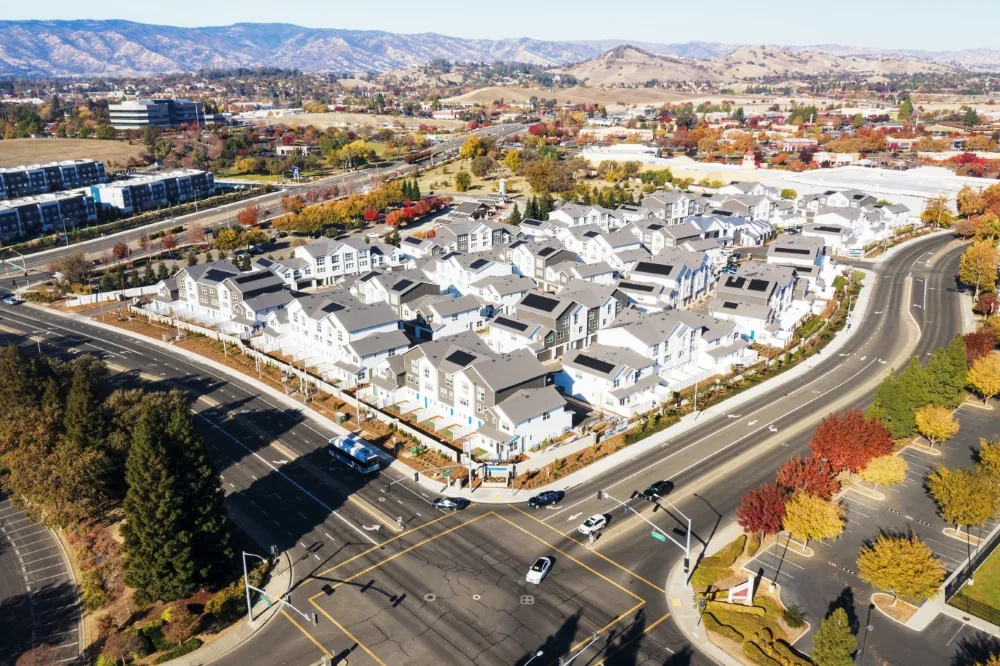
Inspect and repair commercial roofs in North Village, Vacaville, with careful scope boundaries, drainage review, and work timed to confirmed operations.
Heat movement at a curb can shift the repair boundary even when the field membrane appears flat. North Village covers about 880 acres in northeast Vacaville, bounded by Midway Road, Leisure Town Road, Vaca Valley Parkway and I-505. The City’s plan includes commercial and business-park uses alongside housing, schools, public uses and open space. Those planned uses orient the district; they do not identify the roof or operations at a specific property. A regional forecast for very hot days and warm nights is relevant to seam inspection, not proof that a roof has failed. We confirm access and assembly at the building, then record where sheet movement, drainage or adjacent construction affects the work.
Treat planned uses as planning context
The City describes business-park and commercial uses in North Village, but those designations do not identify which buildings are complete or what roof systems they carry. Before we set a scope, we confirm the property's current use, access route, roof plan, and any construction work that could overlap with the visit. Where a new mechanical curb or utility route is planned, the roof detail should be coordinated before the membrane is cut. For an existing roof, we document current conditions separately from proposed improvements. A roof inspection can establish the accessible assembly and show which question needs an opening or owner direction. We do not treat the master plan as a building survey. During a walk, we mark the roof zones that can be reached and identify any active construction interface, such as a planned curb or access path. If the owner has drawings for a future mechanical change, we compare the roof detail with that work before setting a repair boundary. This avoids closing a membrane around an interface that the project team expects to alter. The property contact confirms which work is authorized and who can approve a field change.
Check the seams through a heat cycle
The National Weather Service has listed Vacaville in an advisory for very high daytime temperatures and warm nights across Central Solano County. That regional forecast is context for inspecting sheet movement, seam bonds, and exposed flashing; it does not show whether a North Village roof has a defect. We examine laps, edge metal, curb flashing, fasteners, and the receiving surface where a repair would terminate. A coating over a split can hide the opening without restoring the connection below it. If the surrounding membrane is firm and dry, a limited repair may be supportable. When loose material or moisture extends past the seam, we widen the inspection boundary and identify what must be tested before the next layer closes.
Keep the water path in view
Drainage depends on the outlet and the slope leading to it. We inspect bowls, strainers, scuppers, overflow paths, and the insulation elevations around low points. A blocked outlet can be cleared, while persistent ponding in a depression may call for a different correction. We record where water remains and whether the surface was wet during the visit so the owner can distinguish a visible low spot from a measured drainage problem. A drain and scupper service can address the outlet detail, and scheduled maintenance can record whether debris or failed sealant returns. The planned residential and park uses in North Village do not tell us how any one commercial roof drains; the survey does.
Coordinate roof work with site operations
Business-park work can involve deliveries, mechanical service, interior protection, or other construction nearby. We confirm the actual schedule with the property contact and identify whether the roof must remain open for a new penetration or equipment change. Removal is divided into sections that can be protected and closed during the agreed window. If work pauses, the temporary dry-in and next access step should be clear in the plan. For an occupied building, a phased reroof sequence can account for tenant routes and daily close-in. If the field inspection finds a localized opening, a repair scope may avoid disturbing sound areas. We define each option from the materials and work underway, not from a master-plan boundary.
Select a system after identifying the substrate
Membrane selection follows roof conditions. We identify deck and insulation where accessible, note attachment and existing layers, and check how the proposed assembly will meet drains, curbs, walls, and edges. A TPO sheet needs sound welds; EPDM uses a different seam and patch detail; metal panels move at their clips and fasteners. Those distinctions matter if new development or equipment work changes curb height or creates another roof penetration. We compare a TPO assembly with an EPDM system only after the existing substrate and project requirements are clear. If an overlay is considered, we check retained moisture, attachment, added height, and drainage before any layer is left in place.
Connect North Village to Vacaville
North Village remains a planned area within Vacaville, and its commercial context should be separated from the conditions at a specific property. The City lists biotechnology, advanced manufacturing, industrial production and logistics among the sectors active locally. Those labels support a geographic overview, not a description of any individual address. For a visit, identify the entrance and property contact first, then agree on the times and areas where a contractor may work. Commercial uses sit alongside homes, schools, public uses and open space in the City's plan, so access assumptions should come from the site itself. A Vacaville roof assessment or review in Downtown Vacaville involves a different location. Keep schedules and authorization for each property separate.
Compare repair, recover, and replacement
A repair remains practical when the defect is limited and the receiving material is sound. A recover may be considered when the existing assembly is dry, stable, and suitable for another layer with correct height and drainage details. Replacement becomes a broader question when wet insulation, repeated failures, poor attachment, or a deteriorated deck extends beyond a local boundary. We describe what was observed, what the owner can choose, and which test could change the scope. A replacement assessment states removal depth and close-in steps; a photo condition report records the evidence behind that recommendation. Share the building's current use, roof records, and operating window so the next visit answers a defined repair or renewal question.
Questions Owners Ask
Does North Village's plan show what is on a particular roof?
No. The plan describes land uses across the area, not an individual building's completion status, roof system, or condition. We confirm the property, current use, and accessible assembly during the inspection before recommending work.
How do you inspect a roof near other construction activity?
We confirm the work area, access route, planned penetrations, equipment needs, and who can authorize a change. The roof survey records current conditions separately from proposed site work so an existing defect is not confused with a future detail.
Does Vacaville's heat advisory mean a seam has failed?
It does not. The forecast gives weather context; we inspect the seam, flashing, and receiving surface for an actual separation or movement. The repair boundary follows the material condition we can observe or confirm.
Can ponding be fixed by applying a coating?
A coating does not create slope. We check the outlet, overflow, surrounding elevations, and membrane tie-in, then identify whether cleaning, drainage correction, insulation changes, or a separate deck review would address the low point.
What information helps plan work in a business park?
Send the roof plan, leak history, property contact, delivery or equipment constraints, and any construction schedule that affects access. We use confirmed operating windows to sequence protection and close-in for that building.
Related Roofing Work
- Commercial Roof Inspection in Vacaville, CA
- Commercial Roof Drain and Scupper Repair in Vacaville, CA
- Commercial Roof Repair in Vacaville, CA
- TPO Roofing in Vacaville, CA
- EPDM Roofing in Vacaville, CA
- Commercial Roofing in Vacaville, CA
- Commercial Roofing in Downtown Vacaville, CA
- Commercial Roof Replacement in Vacaville, CA
Share the roof records, current leak locations, property contact, and any active site schedule. We will map the accessible assembly and identify a repair boundary or the next test needed.