
TPO Roofing in Vacaville, CA
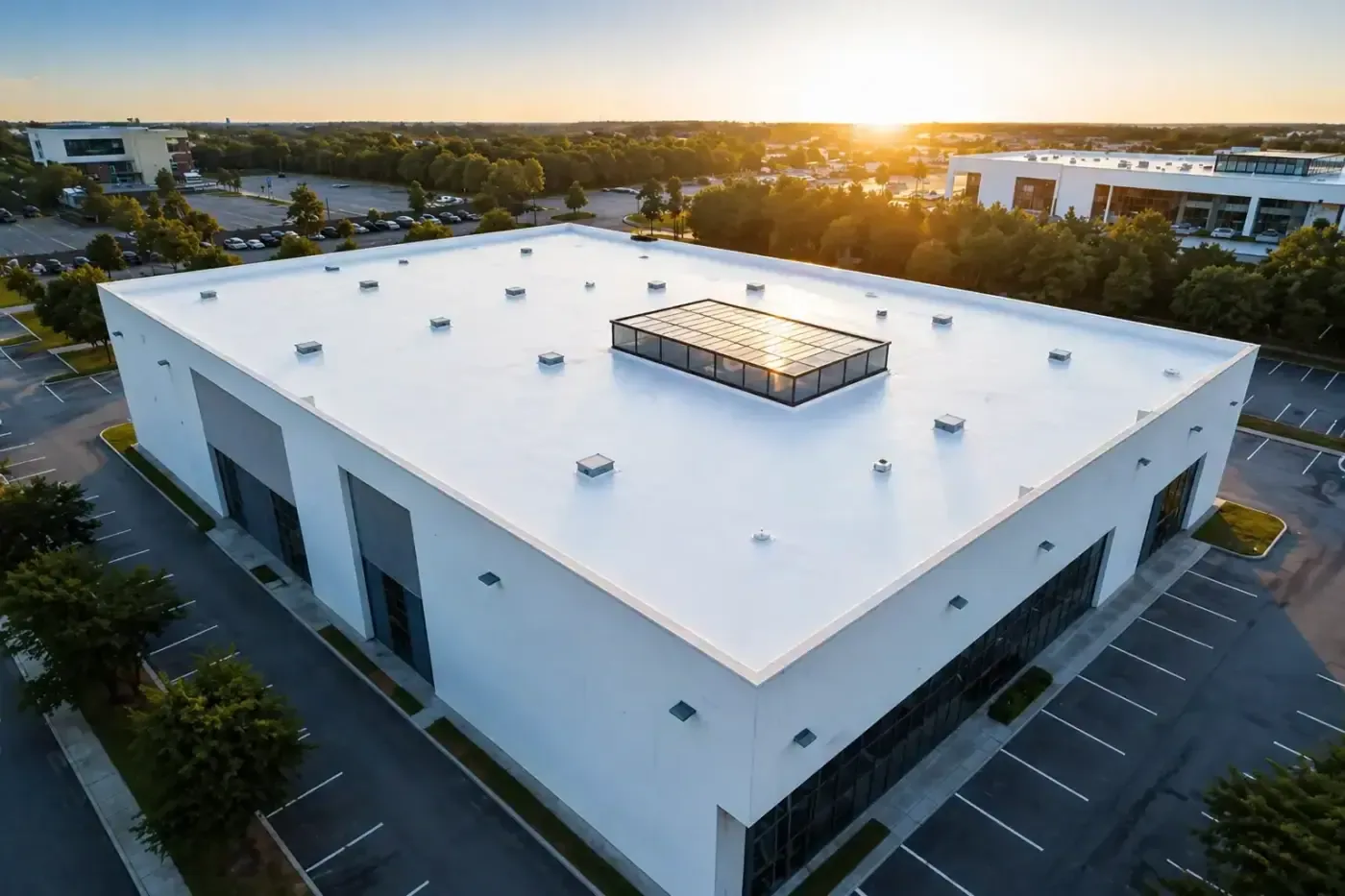
Plan TPO installation, repair, or replacement in Vacaville, CA. We inspect seams, insulation, drainage, and occupied-building access before setting scope.
Vacaville, CA, appeared among Central Solano County cities in a National Weather Service heat advisory for very hot days and warm nights. That regional warning does not establish damage on one roof, but it makes a useful reason to examine how a white thermoplastic polyolefin sheet moves at seams, curbs, and edge metal through repeated heating and cooling. We trace those transitions, test the bond line, and check the receiving surface before deciding whether a local repair can hold. A membrane with loose insulation or wet cover board needs a different scope than a sound assembly with one open lap. Our commercial roof inspection connects those observations to a repair, recover, or replacement decision, with access and close-in timing set before work begins.
Read the sheet at its seams
TPO is a thermoplastic single-ply membrane. Its field sheets are joined with hot-air welds, so seam quality depends on clean material, suitable temperature, steady travel speed, and consistent pressure. Age, dirt, prior patches, and daily sheet movement can make a weak bond difficult to see from the ground. On the roof, we check suspect laps with a probe and look for splits, fishmouths, contamination, or a repair laid over a moving edge. A narrow separation on a stable sheet may be repairable. A long open seam with wet insulation below it calls for a larger cutback and a defined dry-out boundary. That distinction protects the repair from ending on material that cannot accept another weld.
Choose attachment with the assembly
Some TPO roofs are mechanically attached, with fasteners and plates holding the sheet at planned rows; others are adhered to a prepared substrate. The choice affects wind-uplift resistance, sheet movement, staging, and what must remain in place during future service. We review the existing deck, insulation layers, perimeter details, and available records before proposing a method. A change in attachment can alter fastening patterns and edge requirements, so the assembly needs to be considered as a whole rather than as membrane alone. For an existing roof that may support another layer, a roof recover assessment checks moisture, attachment, height at transitions, and drainage before a cover board or new sheet is approved for the scope.
Heat changes the repair window
Vacaville's 115°F September record on September 5 and 6, 2022, is a marker for inspection, not a substitute for testing the roof. Warm sheets can feel different underfoot and move differently from early morning conditions; an installer still needs the surface clean and within the product's working range to produce a sound weld. We schedule seam work for a practical close-in window, protect open insulation from overnight exposure, and retest completed laps after they cool. Vaca Valley Business Park is an existing policy-plan area, and Vacaville’s local economy includes biotechnology, advanced manufacturing, and logistics. In those operating buildings, a reliable work sequence matters as much as a material choice: coordinate roof access, delivery paths, sensitive rooms, and temporary protection before removing the old assembly.
Keep curbs and drains in the scope
The membrane field is only one part of a TPO roof. Equipment curbs, pipes, skylights, walls, and edge metal each interrupt the sheet and create a place where water or movement can test the flashing. A curb may need a new boot or welded skirt; a corroded termination may need metal work before the membrane can be secured. We inspect those junctions with the field and include them in the repair boundary instead of leaving isolated details for later. Where mechanical equipment changes are planned, we coordinate curb height and support before the new sheet is closed around it. Our curb and equipment support work addresses that interface, while drain inspection checks the low point, clamping ring, and path for water to leave. A weld probe is not a substitute for opening a wet area, but it can reveal a narrow bond failure without enlarging the test cut.
Compare materials by the roof's job
TPO is one of several heat-welded single-ply options. PVC also has welded seams, but its formulation and chemical resistance differ; EPDM is a rubber membrane that typically relies on adhered or taped seams rather than hot-air welding. None is the automatic answer for every building. We compare the expected exposure, rooftop exhaust, grease or chemical contact, foot traffic, deck and insulation condition, and how future repairs will be handled. A PVC assembly may fit a different exposure than TPO, while an EPDM system changes how seams and patches are made. The written scope identifies the proposed membrane, attachment, cover board, flashing details, and items excluded, so bids can be compared on the same roof components. A maintenance team also needs the accepted detail drawings and repair record in one place; that record helps a later technician distinguish a new opening from an older weld or patch.
Set a repair limit before removal
A TPO repair should end where sound membrane and dry, stable layers begin. We mark each opening, remove wet or loose material to that boundary, and inspect the exposed surface before installing compatible insulation, cover board, and membrane. If deterioration appears across multiple sections or the roof has repeated wet areas, a broader replacement scope may be more practical than collecting patches. A condition report records photos, locations, seam observations, and the reason for each recommendation. Downtown Vacaville's Business Improvement District represents more than 450 businesses across multiple industries. A clear membrane and flashing record helps each owner plan later maintenance without assuming that neighboring roof assemblies are alike. We can compare a targeted repair with full replacement using the same observed conditions, not a guess from a stain below. A photo-supported roof condition report keeps that decision tied to the assembly.
Questions Owners Ask
Can a TPO seam be repaired without replacing the whole roof?
A localized seam repair can work when the surrounding sheet is firmly attached and the insulation below it is dry. We probe beyond the visible opening, remove contamination, and test the prepared weld area. If the bond line keeps releasing or moisture extends past the seam, the repair boundary has to widen. We show where sound material begins before pricing that work.
What should be checked before installing another layer over TPO?
Moisture and attachment lead the review. We inspect the membrane for widespread splits and loose laps, test suspect areas, and check whether insulation remains firm. We also measure how another layer would affect drains, doors, equipment curbs, and edge terminations. A recover is considered only when the retained assembly can support the proposed system and the added height can be detailed correctly.
Will the existing insulation need to come out?
The exposed layers decide that question. Dry, firmly bonded insulation may remain if the proposed assembly permits it; saturated or crushed boards need removal so the new membrane is not placed over an unstable base. We map those areas during inspection and separate localized replacement from a full tear-off. The scope identifies the deck condition found after opening, which can affect final quantities.
How does TPO work affect an occupied business?
Access, noise, odors, deliveries, and open-roof time are planned with the building's operating window. TPO welding avoids the open flame used in some other roofing work, though hot-air equipment and rooftop activity still require controlled access. We stage materials, protect interior areas, and close exposed sections as the shift progresses. For a facility with sensitive production or logistics routes, the sequence is agreed before removal begins.
What belongs in a TPO replacement proposal?
A useful proposal names the membrane, attachment method, insulation and cover-board layers, flashing details, edge metal, drainage work, and removal limits. It should also state how wet areas will be identified, what happens if concealed conditions differ, and how the roof will be protected between shifts. We can inspect the existing assembly, document those observations, and prepare a scope that separates required work from optional improvements.
Related Roofing Work
- Commercial Roof Inspection in Vacaville, CA
- Commercial Roof Recover and Overlay in Vacaville, CA
- Commercial Rooftop Equipment Curbs and Supports in Vacaville, CA
- PVC Roofing in Vacaville, CA
- EPDM Roofing in Vacaville, CA
- Commercial Roof Condition Reports in Vacaville, CA
- Commercial Roofing in Vaca Valley Business Park, Vacaville, CA
Share the leak location, roof records, and operating window. We will inspect the TPO field and transitions, then show whether the next step is a bounded repair, recover review, or replacement plan.