Commercial Roofing in Vaca Valley Business Park, Vacaville, CA
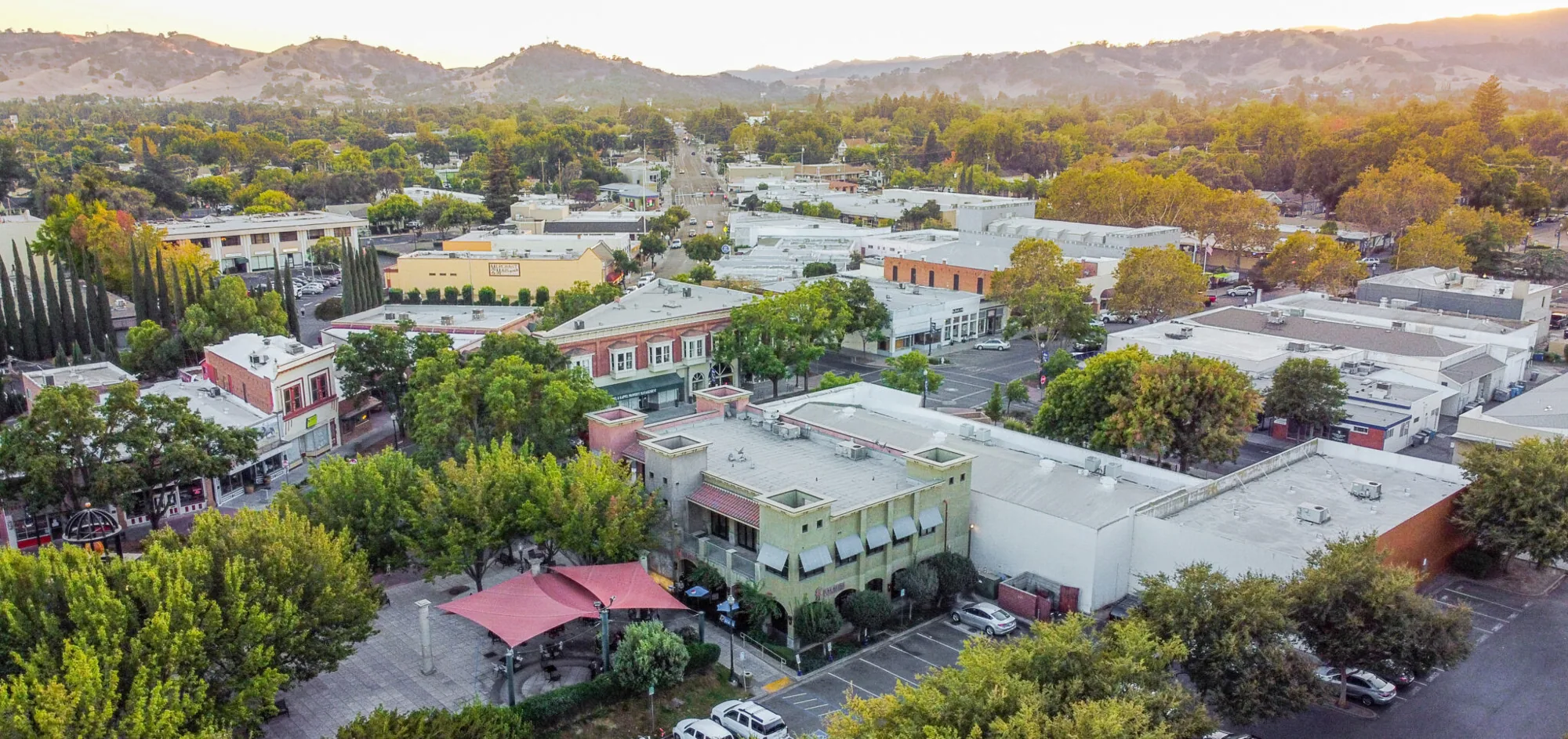
Commercial roof inspections, repairs, and renewal planning in Vaca Valley Business Park, Vacaville, with checks of seams, drainage, and close-in details.
A curb line can pull at its flashing after a hot day warms the adjoining field. In Vaca Valley Business Park, that connection calls for a roof-level check, not an inference from nearby development. A National Weather Service advisory forecast very hot days and warm nights for a region that included Vacaville. We inspect the actual membrane, edge metal, curb detail, drains and receiving surface before defining repair work. The City maps Vaca Valley Business Park as an existing policy area and reported land acquisitions for biomanufacturing facilities. Neither item establishes whether a particular building is complete or what assembly it carries. We confirm the property, access, records and visible condition first.
Read movement at each seam
A heat cycle works a roof at every change in plane. On a membrane, we check whether a lap remains bonded and whether movement has opened the receiving sheet beside it. At an equipment curb, the flashing should rise and terminate in a way that keeps water out while allowing the assembly to move. Metal panels respond differently at clips, fasteners, and end laps. A sealant bead alone does not correct a loose connection below it. During a commercial roof inspection, we map the seam, adjoining insulation where accessible, and nearby penetrations so the recommendation follows an observed condition rather than the surface stain alone.
Confirm the building's work window
Vacaville identifies biotechnology, advanced manufacturing, industrial production, and logistics and distribution among its economic sectors. Those uses can involve equipment, deliveries, or interior protection needs, but the building contact confirms its actual operation and access rules. The reported acquisition of park land for biomanufacturing facilities does not tell us whether a specific structure is complete, occupied, or ready for roof work. We verify those details before planning a lift, opening the assembly, or scheduling a close-in window. If work must proceed in phases, a phased reroof plan divides removal into sections that can be protected and closed within the approved operating period. The contact also identifies who can authorize a field change. On a roof serving production or distribution, the sequence starts with the areas that can be taken out of service and the routes that must stay clear. We confirm whether a dock, mechanical unit, or interior process has a restricted time window, then set the lift and material path with the site contact. Where a penetration or curb change is planned, the trade responsible for the equipment must agree on its final height before flashing is fabricated. If that detail changes after membrane installation, the revised connection needs to be inspected before it is closed. These decisions help keep the roof dry while the building remains usable.
Trace water back to the outlet
A dark area on the membrane does not show where water entered, and a visible low point does not by itself establish a drainage failure. We compare the roof plan with elevations, drain bowls, strainers, overflow paths, and the surface around each outlet. A blocked bowl may need cleaning and flashing repair; a persistent depression can require a slope or insulation correction. Before adding another layer, we check whether the existing assembly is dry and stable and whether added height will affect drains, curbs, and edge metal. Drain and scupper work can address an outlet detail, while an infrared survey can help locate areas for closer testing. We state what the test can confirm and what still needs an opening.
Identify the assembly before selecting a repair
Records are a starting point, not a substitute for looking at the roof. We check exposed seams, fasteners, flashing, patches, and layer transitions, then compare them with available plans. A heat-welded TPO membrane calls for a different seam repair than EPDM or a standing-seam panel. If the surface has a coating, we check adhesion and the material underneath before choosing a compatible treatment. A recover is considered only when the retained assembly is suitable, added height works at the edges and penetrations, and the drainage path remains functional. A recover evaluation should identify moisture checks, test openings, and owner decisions that could change the scope.
Price the boundary, not an assumption
A limited repair can be the right choice when the defect has a clear edge and sound material can receive the patch. We widen the investigation if wet insulation, loose attachment, recurring seam separation, or deck concerns continue past that boundary. Replacement is a separate comparison when several roof details or assembly layers need work; it is not inferred from one stain or an old coating. The proposal names the zones to be opened, materials to be removed, temporary protection, and how each section will be closed. If concealed conditions could affect the final scope, we identify the test or approval needed before removal. A repair assessment and a replacement option can then use the same roof map, making the cost drivers and exclusions easier to compare. We price labor and material from the assembly that will actually be removed or retained. Access to the roof, the number of transitions, protection for active spaces, edge conditions, and the amount of wet insulation all affect the sequence and cost. A test opening can show whether a repair ends at the visible lap or needs a wider cutback. We record who approved the opening and how the exposed area will be closed that day. If moisture continues beyond the sample, the estimate should identify the next decision rather than assume the first test represents every zone. The owner can then compare a defined local repair with a replacement scope using the same boundaries.
Keep each property's history distinct
On Vacaville's planning map, Vaca Valley Business Park sits within an existing policy area; the mapped I-505 industrial corridor spans Vaca Valley Parkway to Midway Road, west of North Village. Use that marker to plan dispatch, not to infer roof condition. Before scheduling, list the building address, entry contact and authorization needed for roof access; a business-park label can refer to separate properties. At the visit, date each photograph and identify the structure and area it depicts. If the review also includes another Vacaville location, keep those field records in distinct folders. A condition report can gather observations for this address while naming any areas that could not be reached. A finding at one property does not establish a condition at another.
Questions Owners Ask
Does the land acquisition mean a building is ready for a roof survey?
No. The reported acreage was acquired for biomanufacturing facilities, but that does not identify which structures are complete, occupied, or accessible. We confirm the building and project stage with its contact before scheduling work.
What makes a seam repair extend beyond the visible opening?
The receiving material sets the repair boundary. We check for moisture, loose attachment, or separation continuing past the exposed defect; when any of those conditions persist, we inspect farther before pricing the work.
Will an overlay correct a low spot?
An added membrane does not change the roof's slope. We check the outlet and surrounding elevations, then determine whether cleaning, drainage work, or a slope correction must come before an overlay is considered.
How is roof work timed around production or deliveries?
The property contact sets the access route, interior protection needs, delivery limits, and times when a section can be open. We sequence removal and temporary dry-in around that confirmed window.
Which records help compare repair with replacement?
Current roof plans, leak locations, prior repair notes, and photographs help define the same zones for both options. We list what was observed, what remains concealed, and which test could change the recommendation.
Related Roofing Work
- Commercial Roof Inspection in Vacaville, CA
- Commercial Roof Drain and Scupper Repair in Vacaville, CA
- Commercial Roof Infrared Moisture Survey in Vacaville, CA
- TPO Roofing in Vacaville, CA
- Commercial Roof Recover and Overlay in Vacaville, CA
- Commercial Roof Repair in Vacaville, CA
- Commercial Roofing in Vacaville, CA
- Commercial Roof Condition Reports in Vacaville, CA
Share the building location, reported leak area, roof records, and operating window. We will inspect the accessible assembly and document a repair boundary or the test that could change the scope.