Commercial Roof Leak Repair in Vacaville, CA
Trace commercial roof leaks in Vacaville, identify the repair boundary, and plan protection and permanent close-in for occupied buildings.
A leak call starts with the water path, not the ceiling stain. We note where water appears, when it occurs, and what lies above that area, then inspect the roof's seams, drains, curbs, and wall transitions. The neighboring southern Sacramento Valley has a winter rainy season, so drainage and dry-out belong in the inspection. Vacaville recorded a 115°F September high in 2022, a marker that puts movement at edges and bond lines on the checklist. We trace the active water path and set the repair boundary from the roof condition found. We locate a supported opening, protect the interior if water is active, and set a repair boundary that reaches sound material. The owner receives a record of the temporary measure, permanent work, and any moisture test needed before the assembly is closed.
Protect the room and preserve clues
Before roof work begins, we ask which rooms or equipment are affected, whether the leak is active, and whether the ceiling has been opened or patched. That information helps us protect contents and find the roof zone without disturbing safe access. We photograph the visible condition, identify electrical or stored-product concerns reported by the facility, and coordinate an interior route for inspection. A temporary dry-in can reduce exposure, but it is not the final repair and should be marked as temporary in the service record. Once conditions permit, we inspect the membrane and surrounding details rather than sealing the first visible crack. If the leak needs immediate response, our emergency roof repair starts with containment and a safe dry-in plan.
Trace the route beneath the surface
Water may travel along insulation joints, a deck flute, or a slope before dropping into a room. We compare the reported stain with drains, seams, penetrations, and the roof's low points, then trace the likely path across the assembly. A second leak after rain does not automatically mean the first repair failed; it may involve a different route or a shared low area. We check prior patch edges and service notes to see whether the opening has changed. When moisture below the membrane could widen the scope, we use an infrared scan to identify areas for targeted confirmation. A moisture survey can guide those checks, and the inspection record keeps confirmed findings separate from indicators that need a core.
The location, shape, and timing of a leak all help, but none identifies a roof opening alone. A stain that grows after several hours can point to water moving through a layer, while an immediate drip near a curb may justify a closer review of that transition. We ask whether the area has been repaired before and what was visible when it was opened. Those details help us select a safe test point and avoid cutting a sound section. If the roof assembly cannot be opened during the first visit, we state what we could observe and what access is still needed before specifying permanent work.
Carry the repair to a sound edge
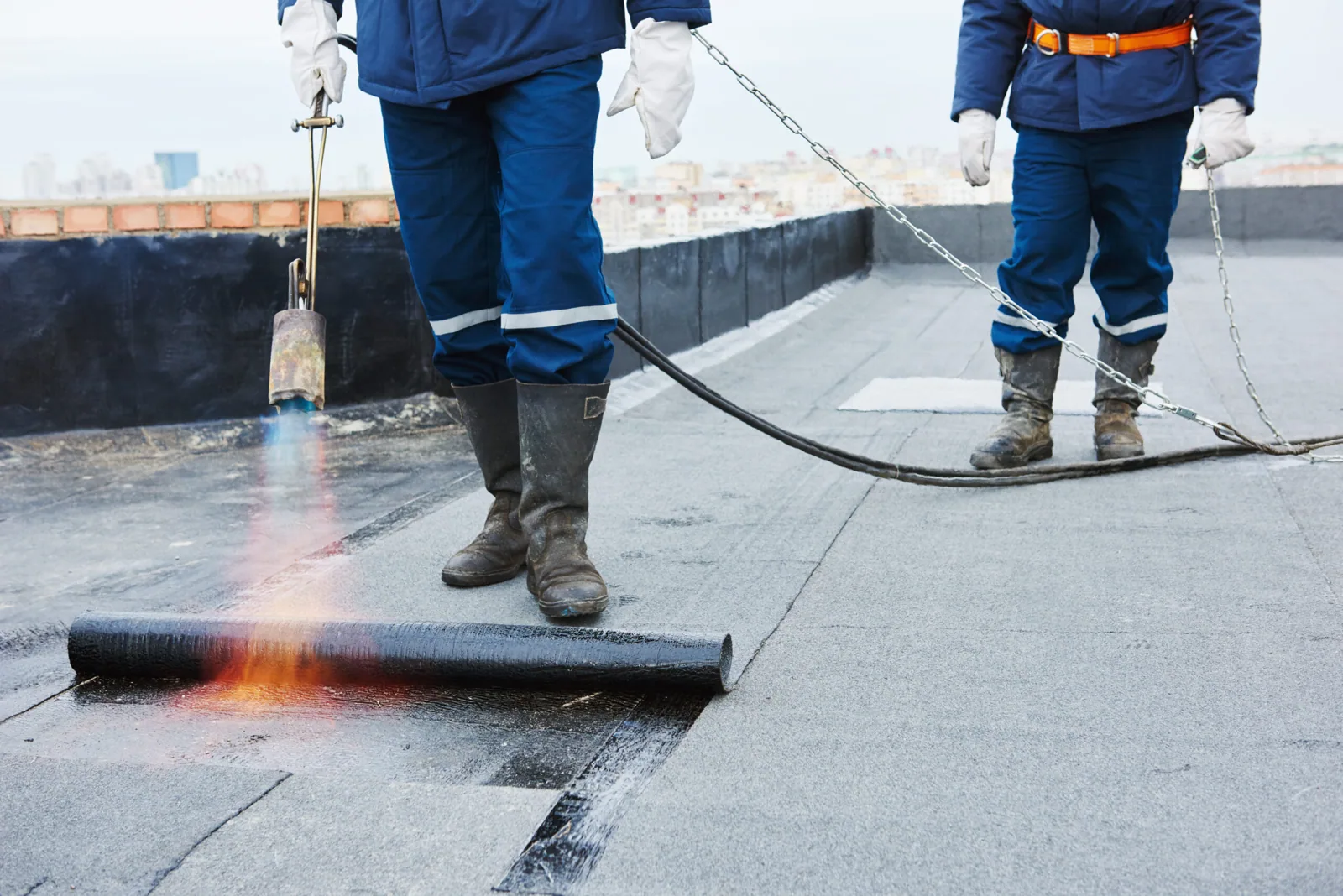
A permanent repair needs a receiving surface that can hold the selected material. We remove loose or failed membrane until the edge is clean and stable, inspect the underlying insulation and cover board, and replace layers that are wet or no longer secure. On a single-ply roof, the new sheet must bond or weld to compatible material with adequate lap; on a metal roof, panel movement and fasteners matter. The scope states the repair size from observed conditions, not from the size of the interior stain. If the opening sits at a pipe or curb, a penetration flashing repair may be needed to restore the transition. We photograph the completed lap and note where the new material meets the existing assembly.
Resolve the outlet and slope
When water collects near a drain, we look beyond the membrane patch. The basin, strainer, bowl, flashing, overflow, and adjacent slope can each affect whether water leaves the roof. We clear an obstruction when appropriate and check for damaged metal or a separated membrane tie-in. If the outlet functions but water remains in a depression, the repair may need insulation or slope work that a sealant bead cannot provide. Industrial land lies along the I-505 corridor between Vaca Valley Parkway and Midway Road, west of North Village. At the roof, we compare the low point, outlet elevation, and surrounding insulation before including drainage or slope work in a permanent repair. When needed, a drain or scupper repair is written into the permanent scope before the area is closed.
Set the work window and close-in
A leak repair on an occupied property may involve interior protection, rooftop equipment, deliveries, and a period when a section must remain open. We coordinate the access route, identify intakes or sensitive areas to shield, and plan how the roof will be made watertight at the end of each work period. The neighboring southern Sacramento Valley has a winter rainy season. Before setting preparation and close-in, we check the current forecast and the substrate at the work area. Around Vaca Valley Business Park, facility operations can vary among properties; we confirm hours and service clearances with the building contact. For a manufacturer-specific material system, we identify the compatible repair products without claiming an authorization or partnership. A TPO membrane repair, for example, requires the existing sheet and weld condition to be verified first. If a temporary cover is used, we mark its limits and inspect the surrounding field before deciding the permanent tie-in. That keeps a short-term measure from being mistaken for completed restoration and gives staff a clear point to report if water returns.
Keep the next inspection useful
After the repair, we record the leak location, materials removed, replacement layers, new details, and any area that still needs monitoring. If the owner calls again, that record helps us compare the new water path with the earlier opening rather than repeating an unbounded patch. A leak that returns at the same detail can point to movement, a broader wet section, or a nearby connection that was not involved initially. We review those conditions and state what additional test or repair would change the scope. Downtown Vacaville's business district spans more than 450 businesses across multiple industries, but each property keeps its own service record and operating limits. A scheduled maintenance visit can inspect the repaired seam, drain, and adjacent roof area before the next wet period.
Questions Owners Ask
Why can a roof leak appear far from the opening?
Water can move along the roof deck or insulation before reaching the ceiling. We compare the stain with slope, seams, drains, curbs, and wall transitions to trace a supported path.
What is included in a temporary dry-in?
It is a limited measure to reduce water entry while the permanent repair is prepared. We identify what was covered, what conditions remain, and when the area should be revisited.
Can a moisture scan identify every wet area?
A scan can direct attention, but it does not confirm moisture by itself. We use targeted cores or other field checks when that answer affects whether to patch, remove layers, or replace a section.
Will a drain cleaning solve a recurring leak?
Only if a blocked outlet is the cause. We also check the bowl, flashing, nearby membrane, overflow, and slope so the repair reaches the failed part of the water path.
What information should I give before a leak visit?
Share the affected room, leak timing, roof access limits, prior repairs, and any equipment or inventory that needs protection. Those details help us plan a safe inspection and close-in.
Related Roofing Work
- Emergency Commercial Roof Repair in Vacaville, CA
- Commercial Roof Infrared Moisture Survey in Vacaville, CA
- Commercial Roof Inspection in Vacaville, CA
- Commercial Skylight and Penetration Flashing in Vacaville, CA
- Commercial Roof Drain and Scupper Repair in Vacaville, CA
- Commercial Roofing in Vaca Valley Business Park, Vacaville, CA
- TPO Roofing in Vacaville, CA
- Commercial Roof Maintenance in Vacaville, CA
Send the leak location, timing, roof history, and building access window. We will trace the water path, protect affected areas, and document the permanent repair and any testing that remains.