Cold Storage Roofing in Vacaville, CA
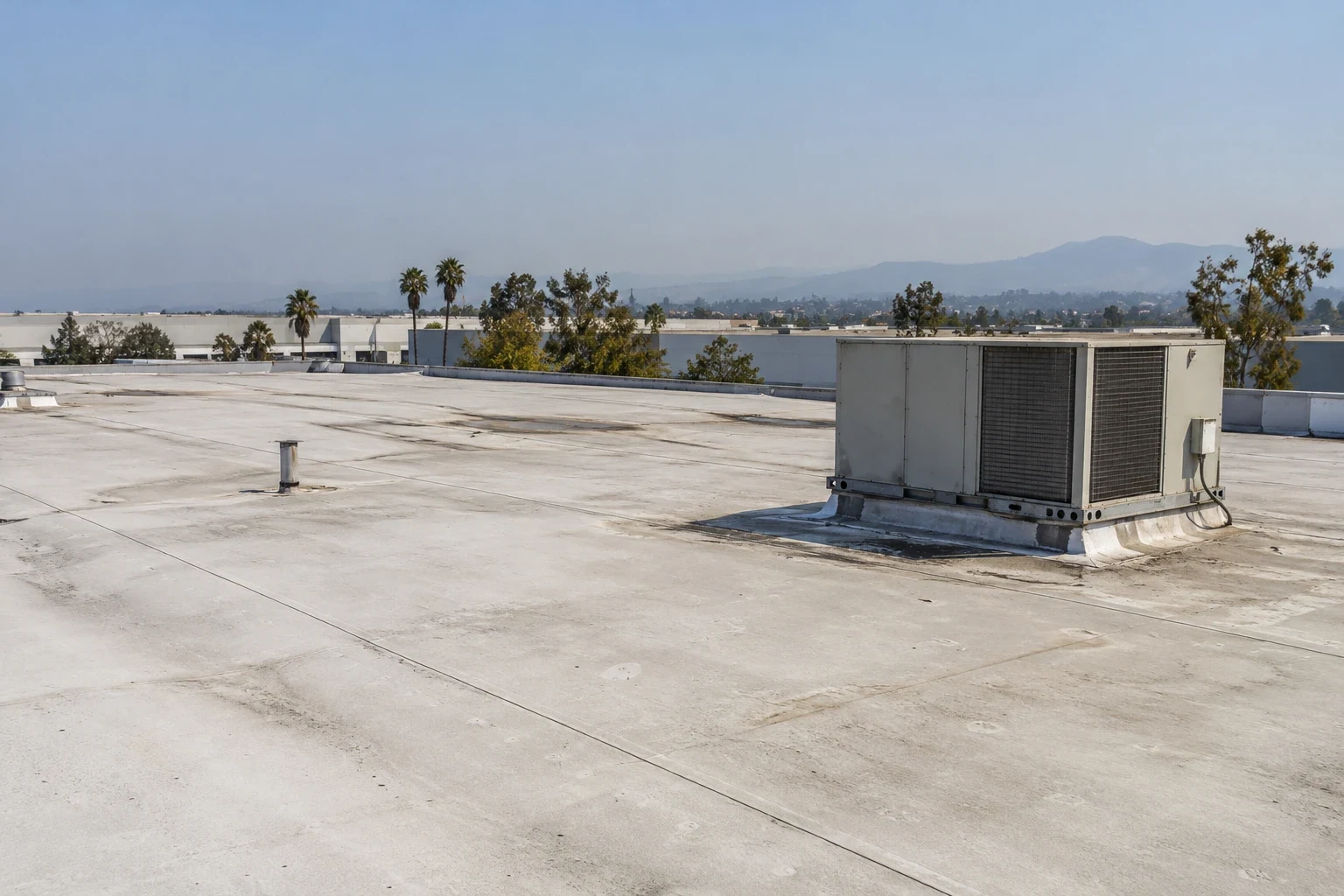
Inspect a Vacaville cold-storage roof for moisture paths, vapor control, insulation, drainage, and work sequencing around temperature-sensitive operations.
A cold room makes the roof boundary part of the temperature-control system. In Vacaville, hot daytime conditions can expose the outer surface to a different temperature and moisture load than the space below it. We check the membrane, insulation, vapor-control layer where accessible, curb flashing, and transitions before defining a repair. A warm, humid condition outside does not prove condensation inside the assembly, and a ceiling mark does not locate its source. The inspection follows the water path, reviews available roof records, and notes how a repair opening can close without disrupting temperature-sensitive operations.
Trace the roof boundary
Cold-storage roofs can contain several layers selected to control heat flow and moisture movement, but the actual assembly must be confirmed. We inspect seams, edge metal, penetrations, equipment curbs, and visible interior conditions, then compare them with roof plans and past repair notes. A targeted test opening can show whether insulation is wet, crushed, or separated at a specific location. We record the layer exposed and the condition around it. That is more useful than assuming every cold room has the same roof construction or that one damp spot represents the full field.
Vapor control depends on the design of the assembly and the temperature conditions on both sides. If an air or vapor layer is interrupted at a curb, pipe, or wall transition, moisture can move through that opening and affect insulation or deck. We trace those interfaces rather than applying sealant to the visible surface alone. Owners can compare warehouse roof checks when the building includes dry storage, and distribution center roof planning when loading activity shares the same structure. The work scope follows confirmed layers and the project design.
Separate water entry from condensation
A roof leak and condensation can produce similar interior signs, yet they call for different corrections. We compare the location and timing of moisture with drains, seams, penetrations, insulation transitions, and equipment above. A wet area that follows a storm may lead to an opening at the membrane or flashing; a recurring pattern can also require review of interior humidity and vapor control. We document the observations and name any test that could distinguish the paths. A coating over the top surface will not correct an assembly condition that has not been located.
Cold storage creates a persistent difference between interior and exterior temperatures. We inspect insulation joints, vapor-control continuity, curb transitions, and deck interfaces for signs that moisture is condensing within layers rather than entering from above. The location and depth of a wet reading determine whether a test opening is justified. If a survey suggests moisture below the membrane, an infrared moisture survey can help choose test points. A commercial roof inspection records the findings and the limits of what the field visit can confirm.
Keep the surface able to dry
Drainage affects how long roof layers stay exposed to water. We check low points, strainers, scuppers, overflows, and routes interrupted by curbs or refrigeration equipment. A drain may be open at the bowl while the surrounding surface still holds water because of slope or insulation. The report marks the low area, outlet, and any obstruction that should be corrected. For a cold building, repeated wetting can complicate moisture review, so the scope should separate an outlet correction from removal of any confirmed wet layer. Drain and scupper repairs can be planned with the membrane work where the conditions overlap.
Vacaville lies near I-80 and I-505, and North Village is a planned mixed-use area with commercial and business-park uses. I-80 and I-505 provide regional routes, while North Village includes planned commercial and business-park uses; neither identifies a facility’s roof assembly. A property’s access, receiving schedule, and temperature limits determine how work can proceed. If roof insulation needs replacement, compare insulation and cover-board choices with the assembly design and the receiving surface. Added layers must work with drainage height, equipment curbs, and perimeter transitions instead of creating a new water path.
Plan an opening around temperature limits
Roof work above cold storage needs a close-in plan tied to the facility’s temperature controls and access rules. We identify the area that can be exposed, the temporary protection required, and the time available before materials must be restored. Operations staff confirms which rooms, inventory zones, or equipment cannot be interrupted. We coordinate any refrigeration, electrical, or mechanical work with the responsible trade and keep roof responsibilities clear. A phased occupied-building sequence divides work into areas that can be prepared, repaired, and closed under the approved conditions.
Vaca Valley Business Park and the I-505 industrial corridor west of North Village have different access patterns, but a facility’s exact delivery route and gate instructions come from its property team. We confirm staging, lift positions, and roof access before materials arrive. If cold storage shares space with manufacturing, manufacturing roof coordination can help frame the trade handoffs without assuming the facility has one standard layout. The closeout records which roof zones were opened and restored, what materials were installed, and any area that still needs monitoring.
Choose a repair boundary that holds
A local repair can work when the leak path is defined, the membrane remains compatible, and the receiving layers are dry and stable. Wet insulation, a damaged vapor-control transition, recurring moisture, or a deteriorated deck may call for selective removal or replacement. We compare the affected area with test results and the roof plan, then show which observation changes the scope. Schedule and budget change with access limits, layer removal, equipment handoffs, disposal, and protection for the space below. An owner should see the repair boundary and the open questions before choosing the assembly.
Where a new roof is needed, system selection follows the deck, load, drainage, vapor-control design, and equipment interfaces. A TPO membrane or spray foam roof system may be reviewed only against those conditions and the approved design. Vaca Valley Business Park’s mix of planned industrial and business uses does not define a particular property’s system. We provide a roof map, photographs, test locations, material notes, and any limits on what was confirmed, so the next inspection can follow the same record.
Questions Owners Ask
How can you tell a roof leak from condensation above a cold room?
We compare moisture timing and location with roof seams, penetrations, drains, insulation, and the interior temperature boundary. A storm-linked leak can point to a roof opening, while a recurring pattern may also require review of air or vapor control. Testing at selected points helps confirm which layer is wet before the scope expands.
Can a cold-storage roof be repaired without warming the facility?
The facility’s temperature limits and work rules guide the sequence. We identify the area that can be opened, required temporary protection, and the time available for close-in. If another trade must protect refrigeration or controls, we name that handoff before work starts. The actual operating plan comes from the site team.
Does wet insulation always require full roof replacement?
No. The extent and condition of the surrounding assembly matter. We use test openings and moisture mapping to define where material is wet, then check the deck, attachment, and adjacent layers. Selective removal may be possible when the boundary is clear; a broader pattern can support a replacement comparison.
Will an infrared survey show every concealed roof problem?
No. Thermal patterns can help select test locations, but a targeted opening is needed to confirm layers and moisture at that point. We explain where the survey supports a decision and where the roof remains untested. The scope should not treat a scan as a complete description of every concealed condition.
What roof details deserve attention near refrigeration equipment?
We inspect curbs, pipe supports, conduit penetrations, service paths, drainage routes, and any transition where the roof meets an equipment support. Movement, vibration, and routine access can affect those details. The report marks the observed condition and identifies which trade needs to move or disconnect equipment before roofing work proceeds.
Related Roofing Work
- Warehouse Roofing in Vacaville, CA
- Distribution Center Roofing in Vacaville, CA
- Commercial Roof Infrared Moisture Survey in Vacaville, CA
- Commercial Roof Inspection in Vacaville, CA
- Commercial Roof Drain and Scupper Repair in Vacaville, CA
- Occupied Commercial Building Reroofing in Vacaville, CA
- Manufacturing Plant Roofing in Vacaville, CA
- TPO Roofing in Vacaville, CA
Share leak timing, roof records, temperature limits, and the facility work window. We will inspect the assembly, map moisture and drainage concerns, and record a repair or replacement boundary with close-in requirements.