Commercial Roof Recover and Overlay in Vacaville, CA
Check moisture, code, attachment, drain height, and detailing before choosing a commercial roof recover in Vacaville, California today.
A recover adds a new roof layer over an existing assembly when the old system is dry enough, secure enough, and permitted to remain. The first question is what lies below the surface. We inspect seams, edges, curbs, drains, prior patches, and the interior leak history, then verify moisture in areas where the finding would change the scope. A recover decision depends on the roof assembly in place, not a regional weather record. We verify the layers and their condition before deciding whether they can remain beneath new work. We map the assembly and define where a recover can stop, where removal is needed, and how the finished roof will meet existing equipment and walls.
Confirm the existing assembly can remain
An overlay is not simply a second membrane installed over whatever is present. Existing layers must meet applicable code limits, attachment must be suitable, and moisture or deterioration must not be trapped beneath the new work. We identify roof type, prior recover layers, wet insulation, deck concerns, and details with repeated movement. A targeted core can confirm the build-up where records are missing; an infrared pattern can direct that test but does not prove moisture by itself. We record the sample location and result so an owner can relate it to the mapped roof zones. The report shows what was observed and which findings remain open. If the assembly is stable and the limits are acceptable, a replacement scope can be compared with recover using the same conditions, including removal and disposal avoided or required.
Map drains and elevations first
A new layer raises the roof surface, which can change drain depth, curb height, scupper openings, and the path water follows. We measure those interfaces and inspect existing slope before specifying an overlay. A membrane that bridges over a blocked outlet or low area preserves the drainage problem. In Rio Vista, as in any city, a project must be evaluated as its own roof rather than inferred from the surrounding area. We record the actual outlet, overflow path, and adjoining membrane, then include drain or scupper corrections if they are needed to accept the finished assembly. Drainage details should be resolved before the added layer closes them in.
Check attachment and receiving surfaces
The new roof needs a sound substrate and a fastening or bonding approach compatible with the existing assembly. We inspect exposed fasteners, seams, loose areas, metal corrosion, and transitions where the old system has pulled away. For a bonded recover, the receiving surface must be clean, compatible, and able to hold the selected system; for a mechanically attached layer, the deck and fastener pattern need review. Vacaville's economic-development sectors include advanced manufacturing, biotechnology, industrial production, and logistics, which can make equipment access and service continuity important project constraints. Those uses do not determine the roof method. The survey documents the actual deck, assembly, and operating requirements so the proposal can state how attachment, substrate preparation, and edge tie-ins will be handled. A condition inspection can map those issues before a recover is priced, and the selected membrane system still needs its own compatibility and attachment review.
Rebuild the interfaces that cannot be buried
Some details need to be opened and repaired before a recover proceeds. We check curb flashings, pipe boots, skylight edges, wall terminations, and perimeter metal for deterioration or movement. The added height can leave a curb too short or a termination below the new water plane, so the proposal must show how those transitions will be raised or rebuilt. A loose edge cannot be made secure by covering it. If a penetration is leaking, a separate flashing repair establishes a stable tie-in. We also look at rooftop equipment supports and service clearances, since insulation or cover board may change the space around a unit. Each detail is listed with the material and sequence needed, rather than leaving a generic statement that all flashing is included.
Sequence work around the building
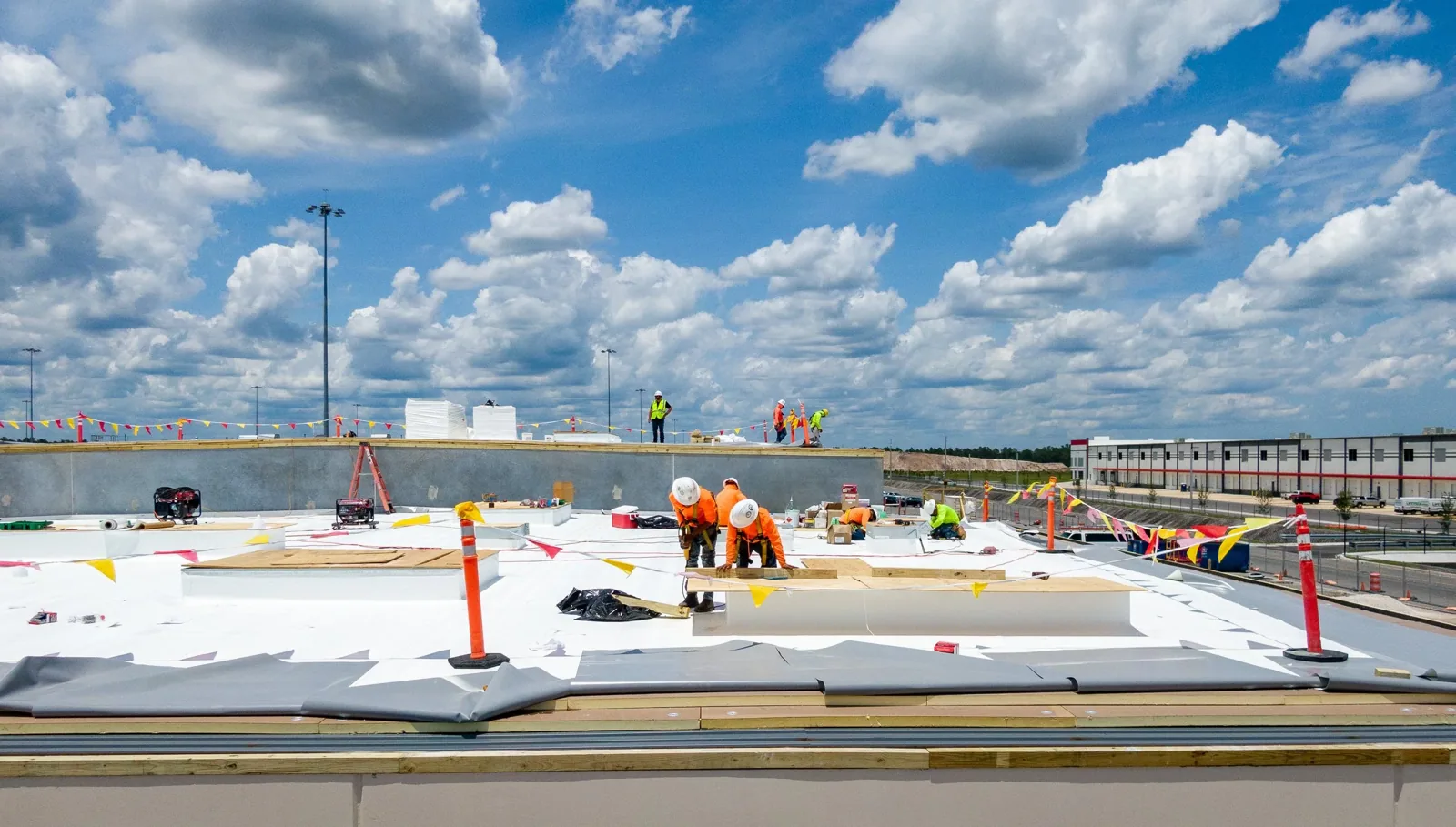
Recover work avoids full tear-off only where the existing roof can remain, but surface preparation, moisture removal, and detail reconstruction still require a controlled work plan. We identify access points, equipment staging, protected air intakes, and areas where tenant or production activity constrains movement. The City places Vacaville on I-80 near I-505 and reports industrial and business-park land uses near the North Village area. These settings include different access patterns, so the owner's site schedule determines the sequence. We divide the roof into sections that can be prepared, tied in, and closed within the available window. The plan also addresses what happens if rain or other conditions interrupt work: exposed edges are protected and the next section is not opened until the crew can maintain a secure close-in.
Before starting, we confirm where deliveries can stage, whether rooftop units may be shut down during work, and which drains or service walks must stay accessible. These are project decisions, not promises made from the address alone. A business with active shipping may need clear loading access; a clinic or office may require quieter work periods around its own operations. We map those limits with the owner and divide the roof into sections that keep weather protection manageable. If the recover cannot be closed in safely within the available window, the work area is reduced or the sequence changes before material is removed. The daily plan identifies each tie-in so unfinished edges do not remain exposed when the crew leaves.
Use the findings to choose recover or removal
A recover fits when the existing roof passes the moisture, attachment, layer-count, and detail checks, and when the new assembly can drain correctly. If cores show widespread moisture, the deck is unsound, or repeated failures run through several layers, removal may be necessary. The scope should name those findings and show where each option begins and ends. That lets the owner compare a recover's preparation and flashing needs against tear-off, deck repair, and replacement without assuming one will cost less before the roof is opened. After the work, we record the layer installed, repaired details, drainage changes, and areas that were not part of the project. A maintenance inspection can then return to those points and compare them with the roof's service record.
An overlay can reduce demolition, but it adds weight and changes edge and penetration details. The choice belongs to the assembly after deck, attachment, moisture, and drainage conditions are checked.
Questions Owners Ask
What makes an existing roof eligible for an overlay?
The assembly must satisfy applicable layer and code limits, remain secure, and be dry enough for the added system. We inspect details and verify moisture where it changes the recommendation.
Can infrared scanning prove a roof is dry?
No. A scan can highlight patterns that merit attention, but targeted cores or other field checks are needed when moisture status affects the decision to cover or remove the assembly.
Will a recover affect drains and curbs?
It can raise the finished surface, so we review outlet depth, overflow openings, curb height, and perimeter terminations before selecting the system. Corrections belong in the scope before close-in.
Can an overlay stop recurring leaks by itself?
Only if the leak sources and underlying conditions are addressed. We map the water path and repair failed details first; covering an unresolved opening can leave the same failure below the new layer.
When is tear-off the better choice?
Widespread moisture, unsound deck, insecure attachment, or an assembly beyond applicable limits can rule out a recover. We show those conditions and compare removal with the overlay option.
Related Roofing Work
- Commercial Roof Replacement in Vacaville, CA
- Commercial Roofing in Rio Vista, CA
- Commercial Roof Drain and Scupper Repair in Vacaville, CA
- Commercial Skylight and Penetration Flashing in Vacaville, CA
- Commercial Roof Maintenance in Vacaville, CA
- Commercial Roof Inspection in Vacaville, CA
- TPO Roofing in Vacaville, CA
Send the roof records, leak locations, and operating constraints. We will inspect the existing assembly, verify moisture where needed, and define recover, repair, or removal boundaries before selecting a new layer.