Commercial Roof Drain and Scupper Repair in Vacaville, CA
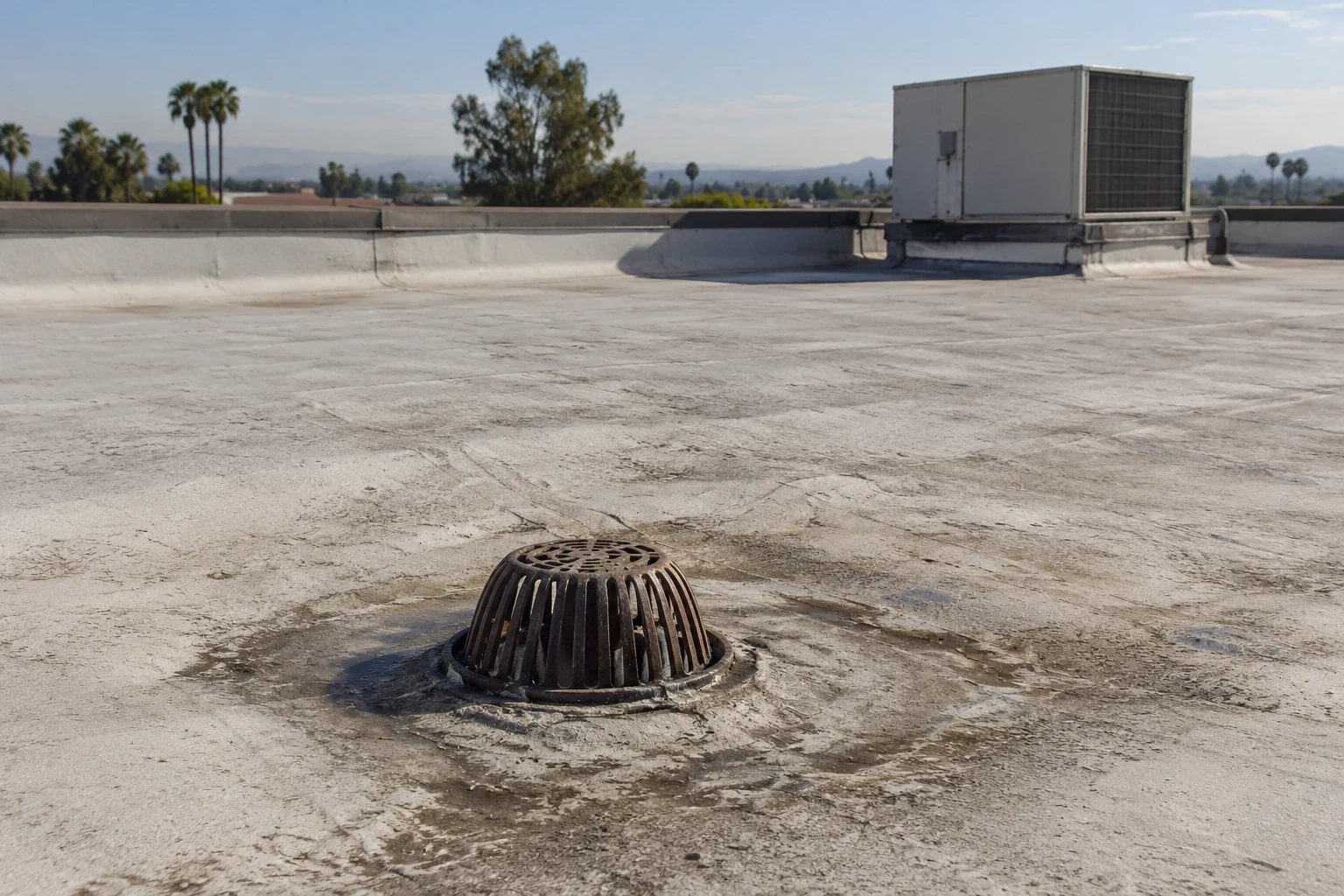
Inspect Vacaville commercial roof drains, scuppers, overflow routes, and membrane transitions, then document the correction needed for runoff.
A drain is one point in a larger route that moves water across a roof and away from the building. We inspect the inlet, strainer, bowl, surrounding membrane, overflow, and slope toward the outlet, then separate cleaning from repair. The neighboring southern Sacramento Valley enters its rainy season in winter, making a pre-season check of outlets and discharge routes useful. A pre-season visit can map each inlet, slope, and discharge path before debris or damage is addressed. The City identifies an industrial land corridor along I-505 between Vaca Valley Parkway and Midway Road, west of North Village. Each roof there still needs a field survey of slope, drains, and scuppers. At each outlet, we note whether the bowl, overflow, and visible discharge meet a continuous route and what remains concealed. A commercial roof inspection can map the low points before a correction is priced.
Inspect the bowl and the surrounding membrane
At each drain, we look for a blocked strainer, loose clamping ring, damaged bowl, corrosion, or membrane that has pulled away from the opening. We note whether water enters the outlet and whether the roof-side connection appears secure. A clear strainer does not prove a concealed leader is open, so we distinguish roof observations from a plumbing test that may require another trade. Photos show the bowl and membrane transition together, with a location reference on the roof plan. We also record whether fasteners, sealant, or an earlier patch could interfere with water flow. The work description states whether debris removal, flashing repair, or downstream testing is authorized.
Before cleaning, we photograph accumulated material and record whether it is loose debris or part of a deteriorated roof layer. We check the fastening ring and the contact between the membrane and bowl for movement, cracks, or a gap. If the bowl itself is damaged, cleaning will not restore the connection. If the crew cannot see the leader below the deck, the closeout says that the drain's concealed path was not tested. This avoids presenting a roof-side inspection as a confirmation of plumbing performance.
Keep primary and overflow openings distinct
A scupper often passes through a parapet or edge, so we check its metal, flashing, opening, and discharge route. We photograph debris, loose joints, corrosion, and any condition that could narrow the water path. If an overflow opening is present, we note its location relative to the primary outlet and make sure a patch or coating has not bridged it. This is a roof-side observation, not a code certification. Downtown Vacaville is a multi-industry business district, and Rio Vista is a separate nearby city. We use the place references to plan a visit, then map the outlet geometry and discharge route on the building itself. We verify the actual opening and coordinate any correction with the property team. If a downspout or leader serves multiple sections, we mark which roof areas feed into it and note whether the route was visible throughout. A blocked route can move water toward an unintended edge, so the owner should know which portion was verified and which part would need a separate drain or plumbing test.
Map low areas and record observation limits
Water left after a storm can result from debris, a restricted drain, a settled area, or roof geometry that does not guide runoff to an outlet. We photograph the boundary, record when it was observed, and compare its location with drains, curbs, and seams. One visit may not establish how long water remained, so the report says when the timing is unknown. If the low area appears related to deck movement or a wide section of standing water, we identify what further review is needed. A ponding-water assessment can help separate a visible symptom from a slope or assembly question before a localized correction is selected.
Set a repair boundary in sound material
Drain work depends on the membrane or metal around the bowl. We look for cracks, open laps, loose reinforcement, rust, and patches that extend into the outlet. The repair should tie into a stable receiving surface rather than bridge loose material. On an older roof, we may need to identify the installed membrane before choosing a compatible detail. A localized roof repair can address a confirmed opening. If coping or a gutter is also part of the route, an edge metal review can connect the roof correction to the discharge below. A coating restoration is a separate decision and should not be used to cover a blocked or loose drain connection.
Plan access and cleaning around building activity
Before work, we confirm safe access, fall protection, restricted roof zones, rooftop equipment, and the path for carrying debris or materials. A cleaning route may be brief, while replacement of drain flashing requires preparation and controlled close-in. The Vaca Valley Business Park and I-505 corridor serve industrial and employment uses, while Downtown Vacaville supports business activity across several industries. The property contact confirms site hours, clearances, and where removed debris can be staged. The facility contact tells us which walkways must remain open, where removed debris can go, and whether interior protection is needed. If cleaning uncovers damage, the crew records it and requests authorization for a separate repair instead of expanding the job without approval. We agree in advance who can approve a change, how a blocked outlet will be reported, and where the crew may stage removed material without affecting loading or egress. The owner then has a clear contact and work boundary before any additional correction begins.
Verify the completed outlet and carry the record forward
After work, we photograph the repaired bowl or scupper, surrounding membrane, and any overflow path, then remove loose debris from the service area. A roof-side visual check is labeled separately from a downstream plumbing test. The closeout names the outlets serviced, materials used, repair boundary, and any remaining monitoring item. A maintenance visit can return to the same low points, while a condition report preserves their locations. A roof plan remains the useful way to locate an outlet on a future visit. This keeps the report specific to a building and actionable for the property team. We also record whether overflow openings were unobstructed at the end of the work and identify any area that remained inaccessible. If the property has repeated ponding calls, the report can compare the new photos with a prior visit and make clear whether the same low point remains. That gives a maintenance manager a concrete basis for deciding whether to schedule a broader drainage evaluation.
Questions Owners Ask
Does clearing a drain always stop standing water?
No. Debris may be one cause, but low areas, outlet condition, or the roof's slope can also matter. We document what was checked and what remains uncertain.
Can a roof inspection confirm a concealed drain leader is clear?
A roof-side visit records visible conditions at the inlet and connection. A concealed line may need a separate plumbing test, which we identify rather than infer.
Why inspect the overflow with the primary drain?
The overflow is another part of the water route. We check that its opening and flashing remain clear and document any patch or coating that could narrow it.
How do you record ponding?
We note the observed boundary, nearby outlets, and visit timing. A single inspection may not establish how long water remained, and the report should state that limit.
What should the drain repair closeout include?
It should show the outlet, repaired transition, material, photographs, debris removal, and any downstream test or follow-up still open for review.
Related Roofing Work
- Commercial Roof Inspection in Vacaville, CA
- Ponding Water Roof Repair in Vacaville, CA
- Commercial Roof Repair in Vacaville, CA
- Commercial Roof Edge Metal, Coping, and Gutter Service in Vacaville, CA
- Commercial Roof Maintenance in Vacaville, CA
- Commercial Roof Condition Reports in Vacaville, CA
- Commercial Roofing in Downtown Vacaville, CA
- Commercial Roofing in Rio Vista, CA
Tell us where water remains, which drains or scuppers are involved, and whether there are interior reports. We will map the roof-side condition and document the repair boundary or test needed.