Distribution Center Roofing in Vacaville, CA
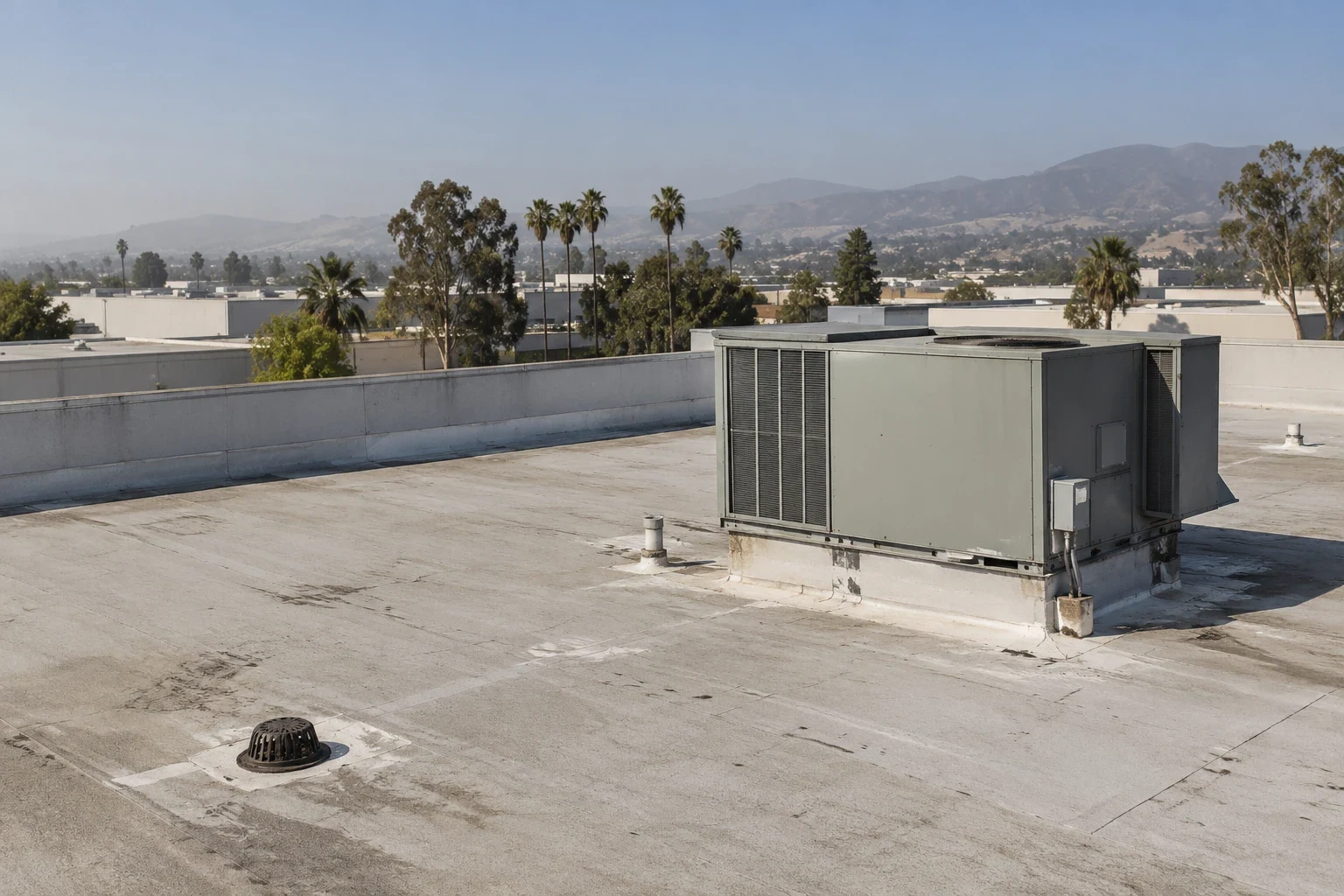
Plan distribution center roof repairs and replacement in Vacaville around heat movement, dock activity, drainage, equipment access, and close-in timing.
Warm nights during a Central Solano County heat advisory can leave a distribution center roof with less time to cool between hot days. That weather context makes seam movement, curb flashing, and edge metal worth checking, but it does not show whether a particular assembly has failed. We inspect the membrane, attachment, penetrations, and drainage low points, then compare the findings with loading schedules and roof records. Vacaville sits near I-80 and I-505. City planning materials identify different land uses in North Village and along the I-505 industrial corridor; site access depends on the property’s address, dock layout, and delivery rules. The scope should connect those operating details to a repair boundary and a close-in window the facility can use.
Map the roof before choosing a system
Distribution roofs can include long membrane runs, repeated equipment curbs, rooftop conveyors, and service paths, although no single layout applies to every building. We begin with visible seams, penetrations, perimeter transitions, and available roof records. If a soft area or recurring leak suggests concealed moisture, a targeted test helps locate the layer that needs attention. The report distinguishes observed membrane damage from questions about insulation or deck condition. That keeps an isolated opening from being treated as proof that every roof zone requires replacement.
Where a new assembly is under consideration, the substrate, attachment method, edge conditions, and equipment heights must work together. The owner can compare warehouse roof inspection priorities when storage areas share the property, or roof planning for manufacturing space when production lines affect access. The proposed system still depends on the confirmed layers and the building’s load and drainage requirements. A PVC assembly option is compared by its documented use and details, not by assuming a product name fits every roof.
Check seams and transitions under heat
Long roof runs make movement visible at sheet laps, end seams, metal joints, and changes in plane. We look for open laps, wrinkles, fishmouths, pulled fasteners, or a bond line that has separated from the receiving surface. The inspection follows the seam into nearby curbs and wall terminations because water can travel beyond the first visible split. Repair material must be compatible with the existing membrane and applied to a sound surface. A surface coating does not restore attachment below it. We document the preparation, test area, and repair limit before covering a detail that may affect several shifts.
Biotechnology, advanced manufacturing, industrial production, and logistics are part of Vacaville’s commercial economy. Those uses can bring different service routes, equipment shutdowns, and temperature controls. The sector mix does not identify a roof assembly, so we confirm the property’s actual equipment and operating limits. Where roof-mounted equipment shares a service route, curb and support flashing should be coordinated with the membrane work. A written condition record ties each photo to a zone and helps the owner distinguish a repeated detail issue from a broad field condition.
Follow the water to an outlet
Roof drains, scuppers, and overflow points need a clear path from the field to the outlet. We note sediment, blocked strainers, low areas, seams that hold water, and equipment bases that interrupt runoff. A long ponding line may involve slope or insulation, not just a drain bowl. The scope identifies what can be corrected at the outlet and what requires a separate elevation or assembly review. When the outlet is part of the failure, drain and scupper work can be scheduled with seam or membrane repairs rather than left as an afterthought.
the neighboring southern Sacramento Valley’s warm, dry summers and winter rainy season make the inspection date relevant to drying observations. A dry visit does not erase evidence of seasonal water retention, and a stain indoors does not locate the roof opening by itself. We compare site observations with available leak history and mark where moisture testing could change the repair boundary. If testing finds wet insulation, the work plan identifies the material to remove and the receiving layer to inspect before rebuilding. For a building with cold rooms, temperature-control questions join the same drainage discussion.
Keep dock and yard activity clear
Roof work changes movement on the ground as well as on the membrane. We identify dock doors, truck routes, pedestrian access, staging space, lift locations, and any area that must remain open before setting a work sequence. The facility team confirms gate procedures and delivery windows; the roof plan marks where materials can be carried and where a temporary opening can be protected. We phase the work into areas that can be prepared and closed within the approved window. If receiving must continue, a phased occupied-building roof plan records the boundaries and hold points.
North Village includes planned commercial and business-park uses alongside other land uses, while the I-505 corridor between Vaca Valley Parkway and Midway Road includes industrial land. The plans identify different uses in those areas, but do not establish operating access. The property’s address, dock layout, and delivery rules determine crew access. Owners near North Village or the Vaca Valley Business Park area can share those details during scheduling. We record crane or lift needs, roof access restrictions, and interior protection before agreeing to a close-in plan.
Set the repair or replacement boundary
A localized repair is a reasonable comparison when the affected seam or penetration is defined and the surrounding membrane remains stable. Repeated leaks, widespread wet layers, loose attachment, or deck deterioration can move the decision toward selective removal or full replacement. We show what the inspection confirms, what remains concealed, and what test would resolve an open question. Cost and timing depend on access, tear-off depth, insulation, disposal, equipment coordination, and the area that can be closed each day. The owner receives alternatives tied to the same roof plan rather than one broad recommendation.
Roof height, curb transitions, insulation, and equipment replacement must align with the approved alteration documents and permit requirements. A commercial roof inspection can record the existing assembly, while a recover assessment compares added layers against moisture and attachment findings. Closeout should map the repaired zones, materials, photos, and remaining questions so the next inspection starts from documented conditions.
Questions Owners Ask
Do repeated leaks across a distribution roof mean the whole membrane has failed?
Several symptoms can come from one drainage or transition issue, or they can mark separate failures. We map each interior report to a roof zone, inspect the nearby seams and outlets, and test where concealed moisture could change the scope. Replacement is considered when the evidence shows a condition wider than the repair boundary.
How do you keep loading active during roof work?
The facility identifies dock priorities, truck paths, restricted doors, and approved work windows before we sequence a roof opening. We stage materials and lifts to protect those routes, then close each area within the planned period. A schedule changes when access, weather protection, or equipment shutdowns cannot fit the agreed limits.
What do you inspect before proposing a roof recover?
We review the existing layers, attachment, moisture, deck condition, perimeter details, and added weight. A targeted opening can confirm concealed material where records are incomplete. If wet or unstable layers extend beyond a defined area, a recover may preserve a problem and removal should be compared.
Will hot weather prove that warehouse seams are damaged?
No. A heat advisory or hot period is context for checking sheet movement, bonds, fasteners, and metal transitions. The inspection records actual separation, loss of adhesion, or another observed condition. Weather history alone does not identify a failed seam or determine a replacement scope.
Which roof records help before a distribution center survey?
Previous leak locations, repair invoices, roof plans, equipment layouts, and any test results help us focus the inspection. The facility schedule and access rules are also useful because they affect staging and close-in timing. We compare those records with field observations and note where a document does not match the roof.
Related Roofing Work
- Warehouse Roofing in Vacaville, CA
- Manufacturing Plant Roofing in Vacaville, CA
- PVC Roofing in Vacaville, CA
- Commercial Rooftop Equipment Curbs and Supports in Vacaville, CA
- Commercial Roof Drain and Scupper Repair in Vacaville, CA
- Occupied Commercial Building Reroofing in Vacaville, CA
- Commercial Roofing in North Village, Vacaville, CA
- Commercial Roofing in Vaca Valley Business Park, Vacaville, CA
Share the leak locations, roof records, dock schedule, and access limits. We will map seams, drainage, and equipment transitions, then document a repair or replacement boundary with a close-in sequence.