Commercial Roof Infrared Moisture Survey in Vacaville, CA
Use infrared patterns and targeted verification to map suspected roof moisture before repair, recover, or replacement in Vacaville, California.
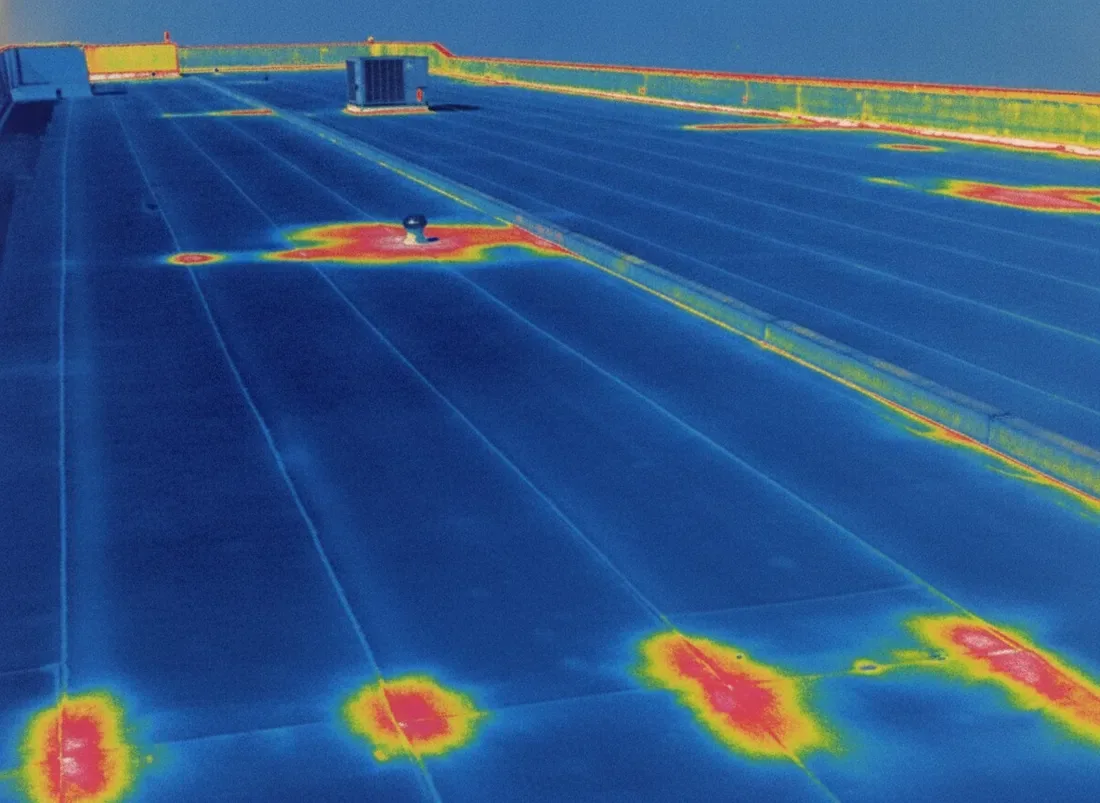
Infrared imaging makes a temperature map of the roof surface under the conditions present during capture. We first mark which portions are coated, shaded, metal, or occupied by equipment, because those differences can explain contrast without indicating wet insulation. The operator records the capture sequence and identifies any location where glare, wind, or access makes the image less useful. We then compare selected patterns with a roof plan and choose a limited number of field confirmation points. An image is not the repair quantity: only the verified assembly condition sets that boundary. A direct roof inspection can test the selected points before repair or replacement work is priced.
Understand what the image can show
Infrared imaging records surface temperature differences at the time of the scan. A different temperature can come from moisture, but it can also reflect insulation changes, shade, equipment, surface material, wind, or recent solar exposure. We look for patterns that are consistent across the roof and compare them with the membrane layout, drains, curbs, and interior symptoms. The scan needs conditions that allow a useful contrast; a roof that has not experienced an appropriate heating and cooling cycle may provide limited information. We note the timing and areas covered so the owner understands the boundaries of the survey. A hands-on roof inspection checks the material and details that a thermal view cannot touch.
Choose the survey question first
We select scan boundaries with the owner’s next decision in view. The roof plan identifies seams, additions, drains, and prior repairs; the leak log adds the room and timing reported by staff. A property near I-505 between Vaca Valley Parkway and Midway Road may have an industrial use, but that corridor reference does not set the scan map. We mark each roof plane from the building drawing, confirm access with the site contact, and place follow-up checks where a result would alter the proposed repair, recover, or replacement scope.
Confirm the areas that change scope
After scanning, we compare patterns with roof details and select representative points for confirmation. A core can show the layers and whether insulation is wet at that location, though each core describes only the sampled spot. We record where it was taken, what layers were found, and whether the sample supports a larger pattern. If results are mixed, we may recommend additional points rather than extrapolating across the whole roof. The owner sees which areas are confirmed, which remain suspected, and what test could resolve them. For an active leak, containment comes first; the leak repair scope can then account for the opening and any wet material that must be removed.
Before making a core, we select a point that can answer the survey question and be repaired afterward. The owner should know the location, approximate sample dimensions, and the material transition that will be restored. A sample near a drain, curb, or prior patch may not represent a broad field area, so we explain why that point is useful. When several roof additions have different assemblies, each may need its own representative check. Results are recorded by zone and are not applied to areas with different construction unless additional evidence supports that conclusion.
Relate patterns to roof zones
We divide the roof into areas that reflect actual slopes, membrane fields, additions, and equipment groups. A thermal image becomes easier to act on when its markings correspond to a roof map the facility team can recognize. We compare the suspected areas with drain paths, parapets, expansion joints, and repairs that may affect surface temperature. North Village in Vacaville includes commercial and business-park uses alongside school, residential, park, and public areas; the plan area does not describe a specific building's roof. Its varied uses are a reminder to coordinate survey access and follow-up with the individual site. A condition report can pair the mapped roof zones with field observations, cores, and dated photographs.
Before mobilization, we confirm roof access, scan coverage, and whether the owner has a current roof plan. Reflective surfaces, shading, equipment exhaust, and differing insulation assemblies can affect how a thermal pattern reads. The field log records exclusions and limitations alongside the image set. If a test opening is authorized, the crew photographs the exposed layers, notes the measured location, and restores the opening under the agreed scope. That sequence gives the owner a traceable link between a scan observation and any proposed repair, without turning an image alone into a leak diagnosis.
Compare repair, recover, and replacement
A thermal map guides where to inspect next; it does not select a roofing system. We pair each marked zone with the field observation or sample result, then rank the unresolved areas by whether they change removal depth, insulation replacement, or attachment. When evidence supports a bounded repair, the scope states the cut line and material tie-in. When multiple roof planes show different results, we keep their quantities separate for a recover or replacement comparison. The owner can see which test changed the recommendation and which areas still need access before approval.
Two readings taken under different surface conditions do not form a trend by themselves. We record scan time, recent weather, surface exposure, and equipment shading beside the roof-plan mark so a later survey can compare comparable conditions. That lets the next inspection revisit a particular zone and decide whether the observed pattern persisted or whether a new core is warranted. The recover option is evaluated from confirmed assembly evidence, while a replacement plan lists the layers and close-in order required if broader removal is selected.
Keep the finding traceable
The closeout includes the scan conditions, roof zones covered, image limits, suspected patterns, confirmation points, and results. We identify any inaccessible area or surface condition that reduced confidence, and we show which follow-up remains. A dated record lets a later visit compare the same zones after repair or seasonal exposure. For properties near Downtown Vacaville or Rio Vista, facility access and operating hours may differ, so we coordinate each survey with the building contact. We do not transfer one site's reading to another roof or treat a district as evidence of moisture. The next maintenance inspection can revisit marked seams, low points, or core locations and compare them with the service record. If a repair follows, we attach its location and closeout notes to the same roof-zone map for a clear return point during the next inspection visit.
A scan plan should state how the roof was traversed, which surface conditions limited readings, and where confirmation checks may be useful. That record supports later comparison without treating different survey conditions as a direct trend.
Questions Owners Ask
Does an infrared image prove that insulation is wet?
No. It highlights temperature patterns that may merit testing. We compare those patterns with roof details and use targeted cores or other checks where confirmation would change the scope.
What conditions make a survey more useful?
The roof needs an appropriate temperature contrast, a clear survey boundary, and access to the areas in question. We review timing and surface conditions before relying on the images.
How many cores are needed to confirm a pattern?
The number depends on the size and consistency of the pattern and how the result will affect the repair or replacement decision. Each sample confirms only its own location, so we document each point and result.
Can a survey tell us whether a recover is allowed?
It can identify areas for moisture verification, but attachment, layer limits, details, and applicable code conditions also matter. We combine those findings before comparing a recover with removal.
Should we scan a roof during an active leak?
Immediate water protection comes first. We can record the leak and return for a scan when conditions support a useful survey and the result can guide the permanent scope.
Related Roofing Work
- Commercial Roof Inspection in Vacaville, CA
- Commercial Roof Inspection in Vacaville, CA
- Commercial Roof Leak Repair in Vacaville, CA
- Commercial Roof Condition Reports in Vacaville, CA
- Commercial Roof Recover and Overlay in Vacaville, CA
- Commercial Roof Replacement in Vacaville, CA
- Commercial Roofing in Downtown Vacaville, CA
- Commercial Roof Maintenance in Vacaville, CA
Share roof records, leak locations, access conditions, and the repair or replacement question. We will define the survey area, verify relevant patterns, and report what remains unconfirmed.