KEE Roofing in Vacaville, CA
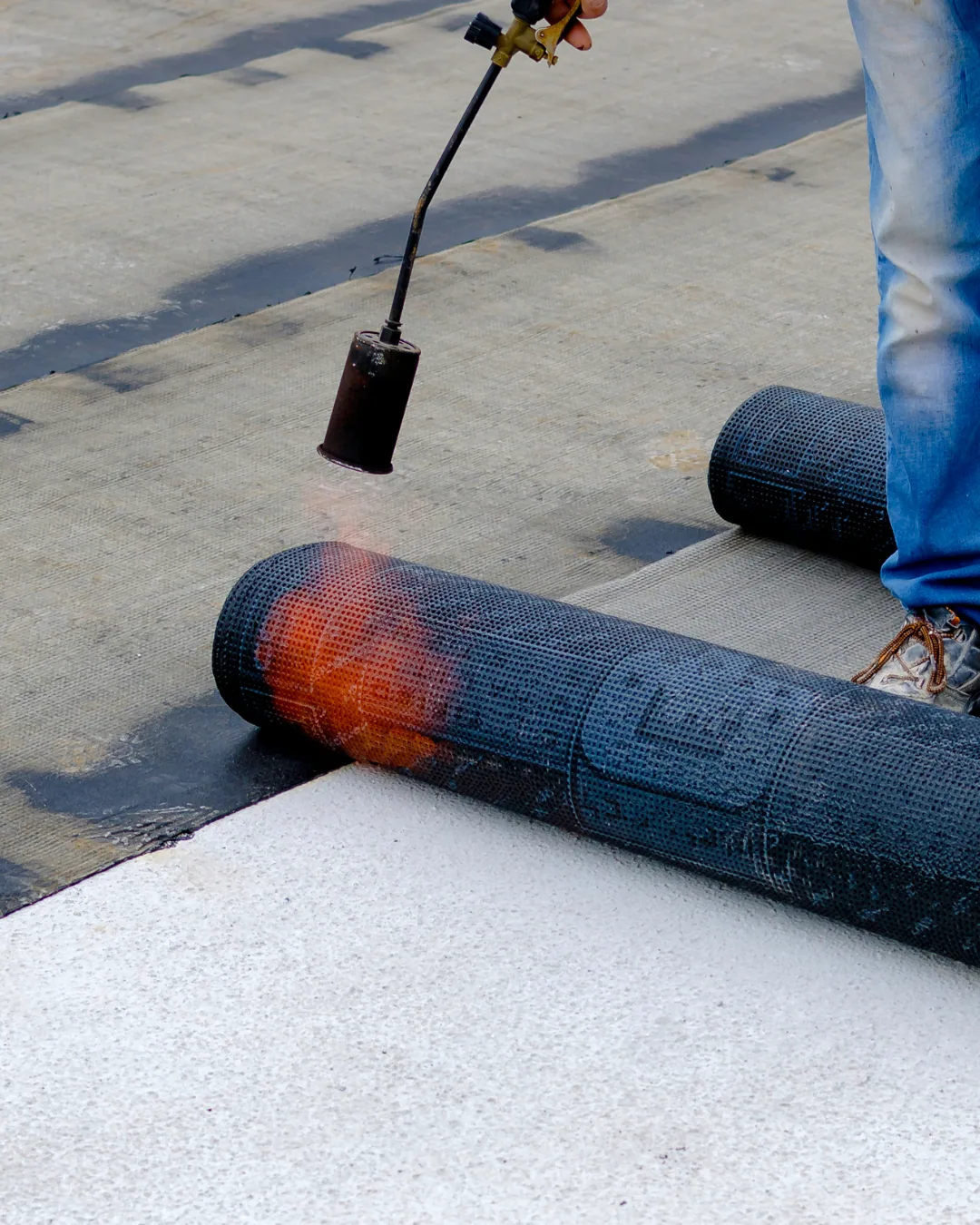
Evaluate KEE membrane roofing in Vacaville, CA. We review chemical exposure, welded seams, attachment, flashing, and the roof layers before choosing scope.
Warm afternoons in Vacaville, CA, put repeated movement at the seams and curbs of a low-slope roof. A KEE membrane is a PVC-based sheet modified with ketone ethylene ester, a formulation that may suit particular exposure and service demands when the product data supports that choice. The added modifier does not remove the need for clean welds, secure attachment, and sound layers below. We inspect those parts together, including equipment exhaust paths and any prior repair that may affect the receiving surface. The choice between a KEE sheet and conventional PVC depends on the product, expected exposure, maintenance plan, and system details. Our roof inspection records those conditions before a repair or replacement scope is set.
Identify the product before comparing it
KEE describes a membrane formulation rather than a manufacturer or a single performance result. The membrane specification needs to identify the actual product, reinforcement, thickness, and compatible accessories. We review the product data and exposure conditions, then confirm that the proposed sheet suits the building's use. Vacaville’s local economy includes biotechnology, pharmaceutical manufacturing, advanced industry, production, and logistics. Those sectors can place different demands on rooftop exhaust, service access, and housekeeping. A roof adjacent to a discharge point should be evaluated for its real contact conditions, not assigned a membrane based only on a label. We document equipment and drainage before comparing KEE with standard PVC or another assembly. A product submittal should state how the sheet is reinforced and what cleaners, adhesives, flashing accessories, and repair materials are compatible. That detail reduces uncertainty when the building later needs a curb replacement or a localized patch.
Prepare every lap for welding
Like other PVC-based sheets, KEE membranes use hot-air-welded seams. The installer removes dirt and contamination, sets temperature and speed, and maintains pressure across the overlap. We probe completed seams after they cool and repair areas where the bond does not hold. Old patches, coating, adhesive residue, or sheet oxidation may change how the surface accepts a new weld. A test patch helps determine whether the existing material can be retained. If the seam failure runs into wet insulation or loose attachment, the scope expands to stable material. That repair limit needs to be visible in the estimate, so a line of new welding does not stop on a compromised bond line.
Review attachment below the sheet
Mechanical fastening, adhesive, and other approved assembly methods transfer loads differently. The selected attachment needs to match the deck, insulation, cover board, edge conditions, and project requirements. We inspect the existing fastening pattern where accessible and look for movement that has widened at the perimeter or around penetrations. A new membrane cannot correct a weak deck or crushed board by itself. In a recover, verify that retained layers are dry and stable, and account for added height at drains, curbs, doors, and parapets. Our recover review documents what can remain before the proposed assembly is closed over it. Vacaville adopted the 2025 Triennial California Building Standards Code by ordinance in November 2025, including the state building and energy codes; project requirements still need to be checked against the applicable approvals.
Trace the weld through each transition
Field seams do not solve the points where the sheet turns at a wall, drain, skylight, or curb. We inspect those transitions for proper flashing height, compatible accessories, secure metal, and a clear route for water to a drain. A rooftop unit change can leave a curb too low for the new assembly, and a drain bowl may need adjustment if insulation thickness changes. Fairfield has seven identified industrial and business parks, with sites serving technical, office, and industrial functions. When work occurs across buildings with different uses, access, delivery paths, and tenant schedules should be coordinated at each roof. Before installation, we also check whether the proposed flashing can be welded without obstructing drain access or covering a serviceable fastener row. The curb and support scope can be planned with membrane work so the flashing does not become a separate late repair.
Compare KEE with its closest options
Conventional PVC and KEE both use welded seams, but their formulations differ. TPO is another thermoplastic option, while EPDM has a different sheet chemistry and usually a tape or adhesive seam. We compare product exposure limits, service history, foot traffic, rooftop discharge, drainage, and the expected repair method. A PVC system may suit one set of conditions; a TPO assembly may fit another. For a roof with a sound existing membrane, a coating such as silicone may be worth evaluating, but coatings do not restore wet insulation or loose attachment. The proposal names the chosen assembly and its details rather than treating KEE as a substitute for an inspection. It also identifies the flashing accessories and repair materials that will remain available for later service.
Make future service easier to scope
Keep the membrane data, weld checks, flashing details, and repair locations with the roof plan. When another trade installs equipment or cable supports, the record helps identify which seams and penetrations need protection. Periodic review should note punctures, open laps, ponding, and any change in exhaust or service access. A condition report can show how those observations have changed and distinguish a localized repair from a larger replacement. For larger properties, note which roof sections have different membrane products or attachment methods; a single site may contain more than one assembly. Those distinctions affect patch materials and future repair planning. Owners in North Village can share the roof information and operating window before we inspect. We will map the membrane, transitions, and underlying condition, then explain what is supported by the field findings and what still needs an opening or product review.
Questions Owners Ask
Is KEE the same material as ordinary PVC?
KEE is a PVC-based membrane modified with ketone ethylene ester. The exact product formulation, reinforcement, and accessories matter, so we identify the manufacturer's sheet and review its technical data before specifying it. The modifier does not replace good seam preparation, compatible flashing, or a sound roof assembly.
Does KEE resist every chemical from rooftop equipment?
No single sheet should be assumed to tolerate every discharge. We identify the substance and its path, then compare that exposure with the product data and detail requirements. Exhaust fans, condensate lines, and service routes are included in the roof review so the specification reflects the real operating conditions.
Can an existing KEE roof be repaired with standard PVC?
Compatibility must be confirmed before welding a new patch to the existing sheet. We identify the membrane, test a prepared area, and check whether contamination or aging prevents a reliable bond. If the product cannot be confirmed or the sheet is not sound, we define another repair detail based on the exposed material and test results.
What affects the cost and schedule of a KEE replacement?
Removal depth, insulation condition, attachment, curb and drain changes, metal work, access, and close-in windows drive the scope. Product availability and approvals also affect timing. We inspect the roof, identify those items, and state assumptions for concealed layers so the proposal can separate known work from conditions found after removal.
What records should remain after installation?
Save product names, assembly layers, attachment details, seam checks, flashing photos, and repair locations. The file should also note equipment changes that may affect the sheet. We can prepare a roof record that helps a maintenance team plan later inspections and repairs.
Related Roofing Work
- Commercial Roof Inspection in Vacaville, CA
- Commercial Roof Recover and Overlay in Vacaville, CA
- Commercial Rooftop Equipment Curbs and Supports in Vacaville, CA
- PVC Roofing in Vacaville, CA
- TPO Roofing in Vacaville, CA
- Commercial Roof Condition Reports in Vacaville, CA
- Commercial Roofing in North Village, Vacaville, CA
- Commercial Roof Asset Management in Vacaville, CA
Send the roof records, equipment locations, and operating window. We will review the membrane, seam condition, transitions, and underlying layers before recommending KEE repair, recover, or replacement work.