Spray Foam Roofing in Vacaville, CA
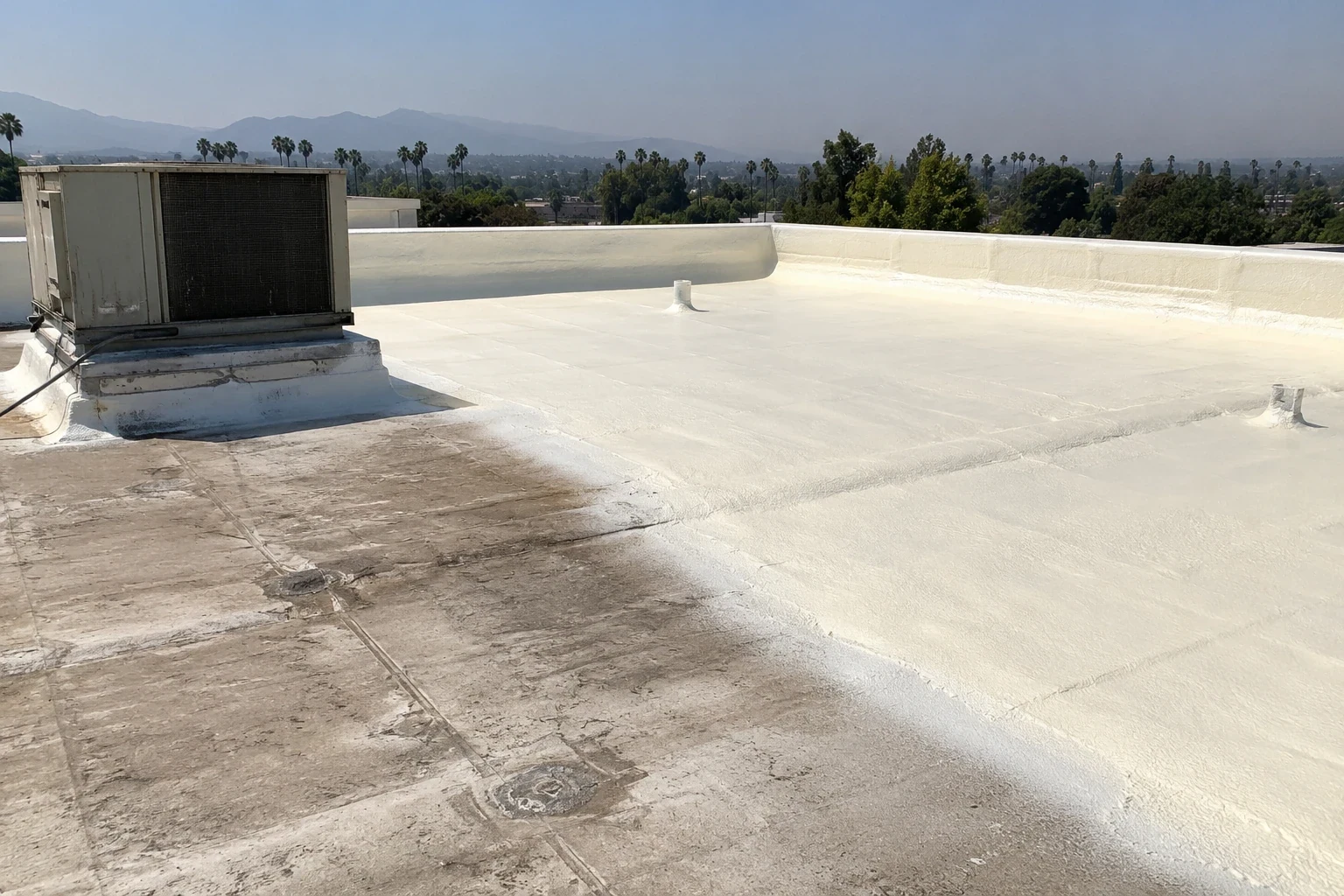
Assess spray polyurethane foam roofing in Vacaville, CA. We inspect substrate, foam thickness, drainage, coating condition, and repair limits before work.
A spray polyurethane foam roof is one continuous field only when the substrate is sound, the foam is applied at a controlled thickness, and its protective coating remains intact. A Central Solano County heat advisory included Vacaville, CA, during a period of very high daytime temperatures and warm nights. That forecast does not diagnose a roof, but it makes coating condition and movement at transitions worth checking. We inspect foam surface, blisters, splits, exposed areas, drainage, and flashing before deciding whether localized repair, recoating, or removal is appropriate. An inspection records the visible condition and any area that needs moisture testing or a test cut.
Prepare the receiving surface
Foam needs a clean, dry, stable base. Dirt, loose coating, moisture, and weak existing material can interfere with adhesion or conceal damage. We inspect the roof surface and transitions, then use selective openings where the existing assembly cannot be confirmed from above. A wet substrate should be repaired or removed before new foam is installed. City planning materials identify business parks and industrial park areas in Vacaville near I-505 and North Village; the roof of an operating business still requires its own condition review, since land-use designations do not identify the existing membrane or substrate. The scope should state what will be removed, what will remain, and how prepared areas will be accepted before foam application begins.
Build thickness in controlled passes
Foam is sprayed in lifts to reach the specified thickness without trapping excessive heat or leaving thin spots. The installer watches temperature, proportioning, substrate conditions, and pass depth as the material expands and cures. We check the finished field with measurements and note irregular areas, gaps, or overspray that could affect drainage and coating. The applicator must maintain a consistent mix and keep the gun distance steady so the foam rises evenly. Wind and substrate temperature can change how material lands, which is why the work area and equipment settings are monitored throughout each pass. A very thick pass is not a shortcut to a uniform assembly; it can cure differently and leave an inconsistent surface. The building's slopes and drains guide the foam profile so water moves toward outlets instead of collecting at a low spot. Our written scope identifies the target thickness, transition detail, and inspection points, together with how the crew will protect adjacent equipment and intakes during spraying.
Protect the foam from exposure
The coating over SPF shields the foam from ultraviolet exposure and weathering. As it wears, open cells or bare foam can absorb water and deteriorate. We inspect coating thickness and adhesion, identify blisters and splits, and check whether water has reached the foam or substrate. Recoating can extend service when the foam remains dry and firmly bonded, but it cannot repair widespread wet material or an unstable base. Before recoating, the existing surface must be dry enough for the selected product and free of loose particles, incompatible residue, and oils from service equipment. A coating restoration begins with cleaning and preparation, then closes repaired areas with compatible material. For exposed foam, we trace the boundary of damage and rebuild the surface before applying the protective finish. The owner receives a map showing the repaired and retained areas.
Shape water away from details
Parapets, drains, scuppers, skylights, and equipment curbs need a continuous foam and coating transition. A spray layer that bridges a gap without proper support may crack as the roof moves, while coating that stops short of metal can leave an exposed edge. We inspect each detail for positive drainage, secure flashing, and enough height to tie in the restored assembly. Where a unit is replaced, its curb and support should be coordinated before the surrounding foam is closed. The drain review checks the low point and outlet, and curb coordination addresses equipment openings. The detail scope includes temporary protection so foam and coating do not enter drains, intakes, or service areas. New cable supports or service walk pads should be installed with compatible flashing and secured without leaving a puncture through the finished coating. We document those locations for later equipment work. We also inspect the existing metal counterflashing and fasteners before spraying against them. Loose metal should be repaired first; otherwise the new foam can bridge a moving joint and split as the roof cycles.
Compare localized repair with replacement
A small puncture or failed coating area can be cut back and rebuilt when surrounding foam is dry and bonded. A recurring leak, extensive wet foam, or coating failure across large areas can make broader removal more practical. We inspect with visual checks, moisture testing, and openings where needed, then compare repair with a new SPF layer or another roof system. A silicone coating may be suitable for a compatible, sound surface; acrylic coating has different exposure and ponding-water considerations. We identify drain paths, existing coating type, and moisture conditions before choosing. Vacaville's local sectors include biotechnology, advanced manufacturing, industrial production, and logistics; the owner's process and equipment schedule help set the access and close-in plan.
Record the surface for later service
Keep the foam thickness readings, coating product, repaired areas, drainage notes, and closeout photos in the roof file. Later inspections can compare coating wear and new punctures with the original condition rather than repeating the first investigation. Coordinate foot traffic for equipment service and protect the surface from dropped tools or unplanned penetrations. A moisture survey can help target openings when water is suspected below the coating, while a condition report ties those findings to a repair or capital plan. We can inspect a roof in the Vaca Valley Business Park area and explain which sections can remain, which need rebuilding, and how the work fits the building's operating window.
Questions Owners Ask
Can new foam be sprayed over an existing SPF roof?
Only when the existing foam and coating are dry, well bonded, and suitable to receive more material. We test suspect areas, remove failed coating, and inspect for moisture before application. Wet or delaminated foam needs cutback to a firm boundary; spraying over it would leave the underlying failure in place.
How do you find wet areas under the coating?
We review visible coating defects, drainage, and the leak history, then use moisture testing where the assembly permits. A survey can map areas for confirmation, but selective openings may still be needed to identify which layer is wet. The repair scope follows those confirmed boundaries rather than the ceiling stain alone.
What affects the cost of an SPF restoration?
Foam removal, substrate preparation, thickness to rebuild, coating condition, drains and transitions, access, and protection of equipment affect the scope. The roof's moisture extent is also important. We list those items separately and identify test areas so the owner can see why one roof area needs rebuilding while another can be recoated.
Can SPF roofing be installed while a business operates?
The work plan has to account for spray overspray, odors during application, intake locations, access, and the close-in schedule. We identify sensitive areas and equipment with the owner, protect them, and stage the crew so open sections are covered within the agreed window. Some operating conditions may require work to be phased or scheduled outside normal activity.
What should be documented at closeout?
Record foam thickness, coating type, repaired boundaries, drainage details, and photos before the final surface closes. Keep the product information with the roof plan and note later equipment work. We can provide a photo-supported condition report for future inspections and maintenance decisions.
Related Roofing Work
- Commercial Roof Inspection in Vacaville, CA
- Commercial Roof Coating Restoration in Vacaville, CA
- Commercial Roof Drain and Scupper Repair in Vacaville, CA
- Commercial Rooftop Equipment Curbs and Supports in Vacaville, CA
- Silicone Roof Coatings in Vacaville, CA
- Acrylic Roof Coatings in Vacaville, CA
- Commercial Roof Infrared Moisture Survey in Vacaville, CA
- Commercial Roof Condition Reports in Vacaville, CA
Share the leak location, roof records, and operating window. We will inspect the coating, foam, drainage, and transitions, then identify whether the surface can be repaired, recoated, or needs removal.