Restaurant Roofing in Vacaville, CA
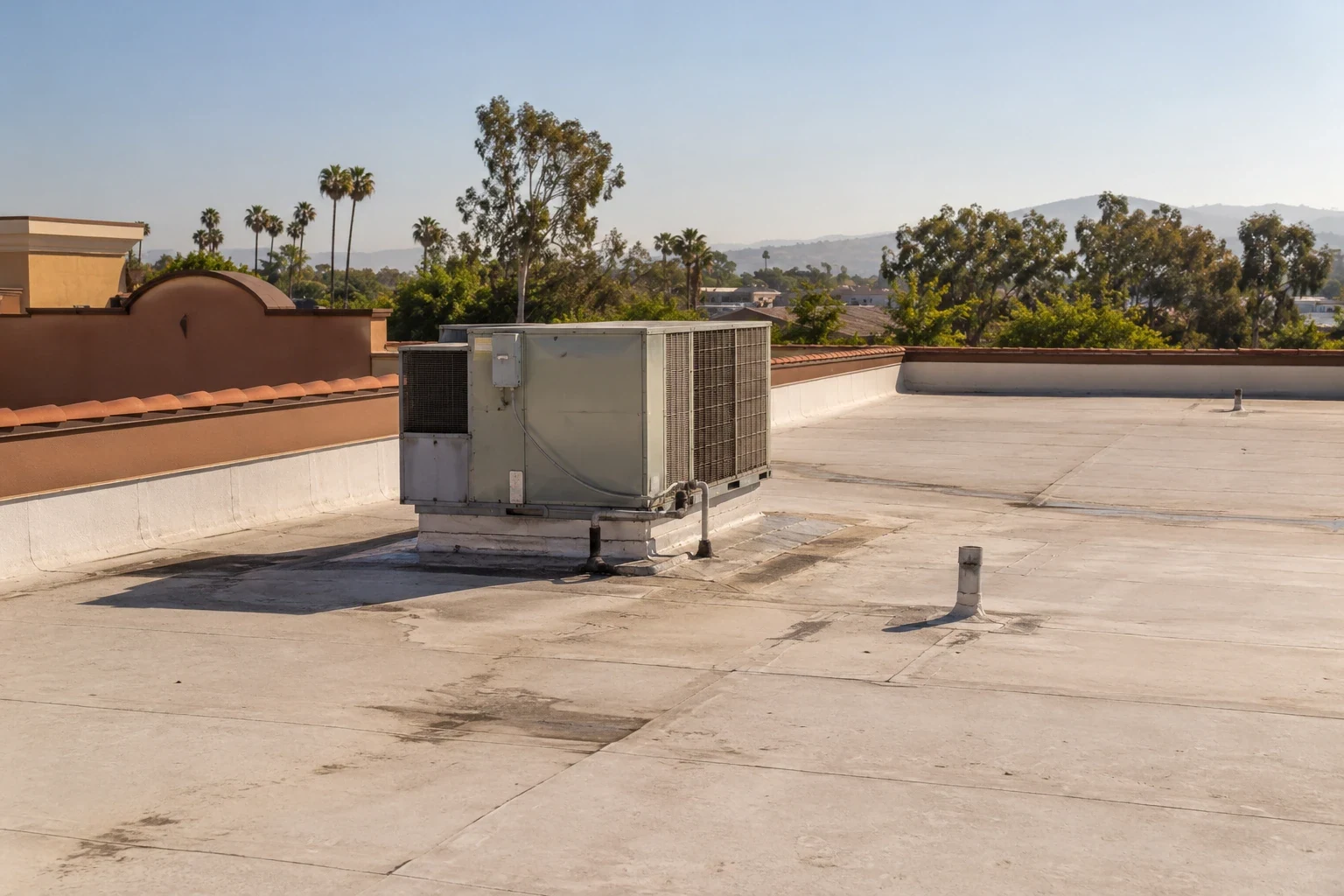
Coordinate Vacaville restaurant roof repairs with exhaust curbs, kitchen schedules, delivery access, drainage, and interior protection.
Restaurant roofing work has to account for kitchen exhaust, rooftop equipment, service access, and the hours when staff prepare and serve food. A leak near a kitchen ceiling may come from a curb, drain, seam, or another transition above the room. Vacaville’s hot periods can stress exposed laps and metal, but heat is a reason to inspect the assembly rather than a diagnosis. We map the reported symptom, examine the roof detail, and identify what testing could establish before choosing a repair boundary or schedule.
Set the work period with the operator
The operator identifies meal periods, deliveries, waste pickup, employee entrances, and any area that cannot be blocked. Roofing crews need a separate path for tools and material, along with a lift area that does not conflict with service traffic. We agree on the sequence and close-in point before opening a roof section. If an exhaust fan must remain available, the mechanical contact confirms when it can be isolated and restarted. A work plan for an occupied property can identify notice, interior protection, and the handoff required at each close of shift.
The Downtown Vacaville Business Improvement District represents more than 450 businesses; pedestrian flow and storefront access can matter when setting a restaurant work zone. The owner’s actual access rules matter more than general district context. We confirm the approved delivery door and place a repair zone where staff can keep required circulation. For a property in Downtown Vacaville or near North Village, we still verify its loading and staging details directly with management.
Inspect hoods, fans, and grease-related details
Kitchen exhaust equipment can place fans, duct supports, and curbs close together. We inspect the flashing at each penetration and look for a gap where the assembly changes height or material. Any grease-contaminated surface is handled according to the site’s maintenance rules; roofing scope should not cover a detail that needs cleaning or mechanical work first. We document fasteners, curb corners, sealant condition, membrane bond, and the surface that can receive a new patch. If the fan or duct has to move, the responsible trade confirms lifting and reconnection before the roofing crew removes material.
A curb review also checks whether water can reach the outlet nearby or remains behind a support. The equipment-curb service can record flashing and service clearances. We identify each exhaust point by roof zone rather than grouping separate fans under one note. If a repair requires cutting around a base, the scope states how far the membrane extends and where the new detail terminates. A later inspection can then compare the repaired edge with the photographed pre-work condition.
Trace a leak without guessing at its source
Moisture above a kitchen can travel along the deck before reaching a ceiling, while condensation or an equipment line can create a different symptom. We compare the report’s timing with weather, fan operation, roof slope, and the locations of seams and drains. We compare the stain’s timing and location with the roof seams, penetrations, and drainage path above it. If moisture testing or a small inspection opening is warranted, we coordinate protection below and record which layer was exposed. The results can support a bounded repair or show why a larger area needs testing before replacement is priced.
Drainage review covers the field feeding each outlet, not only the visible bowl. We note blocked strainers, standing water, low areas around curbs, and the path through a scupper or leader. A drain and scupper check can be added when runoff is part of the symptom. Roofs over a food market may have a wider refrigeration layout; grocery roof planning presents those equipment questions. A restaurant in a larger retail complex may also need coordination with shopping-center access planning.
Account for heat at sheet laps and metal
Sun exposure warms the roof field, while shaded areas and metal edges can respond differently over the same day. That movement puts stress at lap edges, curb corners, fastener rows, and changes in plane. We inspect whether a seam has opened, whether a prior patch is lifting, and whether the receiving surface remains sound. A sealant bead can split while material under it stays bonded, so the report distinguishes the visible line from the membrane condition beneath it. Work proceeds only after the patch or flashing can be tied into compatible material.
The inspection also records whether sheet laps run toward or away from the exhaust curb and how the metal flashing terminates at the base. We check for a reverse lap, loose corner, or patch edge that can collect runoff. If a duct support bears on the membrane, its load and protective pad need review with the mechanical contractor before roofing work changes the detail. Any proposed opening is coordinated with kitchen use and interior protection. After close-in, photographs capture the finished perimeter and note which fan or duct remains outside the roofing scope. That record gives the owner a practical point of comparison during the next equipment service.
Vacaville’s regional climate includes very hot daytime periods and warm nights in some heat advisories. The weather sets context for the inspection date; it cannot confirm damage at one roof. We record surface condition, moisture findings, and drainage together. A commercial inspection can consolidate photographs, test locations, and open maintenance items. Where an existing coating is under consideration, a restoration assessment checks adhesion and compatibility before an additional finish is placed over the assembly.
Keep roofing and kitchen equipment scopes distinct
A local detail repair can suit a defined opening when adjacent material is dry, bonded, and able to accept the new flashing. Several leak points, widespread wet insulation, loose attachment, or deck deterioration may support selective removal or a replacement comparison. The cost and schedule depend on access, roof height, equipment movement, removal depth, interior protection, and the time needed to close each area. We list what the roofing crew will perform and what must be completed by a kitchen-equipment or mechanical trade.
Before work, the operator confirms cleaning schedules, food-area restrictions, and any required post-work check. The closeout connects the repair to a roof zone, includes photographs before and after, and notes any exhaust detail still assigned to another contractor. A restaurant within a larger retail property may share access controls, but the kitchen keeps its own equipment and roof-detail record. Maintenance notes can identify the next inspection point without promising a particular leak outcome.
Questions Owners Ask
Can a restaurant stay open during roofing work?
The operator sets meal, delivery, and access limits. We phase roof zones, protect the interior below openings, and coordinate noisy or equipment-related work for an approved period.
Does a kitchen ceiling leak always come from the exhaust fan?
No. Water may travel from a seam, drain, curb, or wall transition. We compare the symptom with roof geometry and equipment details before assigning a source.
Who moves a roof exhaust fan for flashing repairs?
The owner confirms the mechanical contractor responsible for disconnecting, lifting, and reconnecting equipment. The roofing scope states the flashing work and required handoff.
How are grease and roof membrane details handled?
We document the roof surface and follow site maintenance rules for any contaminated area. A detail should be cleaned or corrected as needed before a patch is installed.
When should the owner compare repair with replacement?
Testing may show moisture beyond one curb or a broader attachment problem. We identify those findings and compare a limited repair with the removal area supported by the evidence.
Related Roofing Work
- Occupied Commercial Building Reroofing in Vacaville, CA
- Commercial Roofing in Downtown Vacaville, CA
- Commercial Roofing in North Village, Vacaville, CA
- Commercial Rooftop Equipment Curbs and Supports in Vacaville, CA
- Commercial Roof Drain and Scupper Repair in Vacaville, CA
- Grocery Store Roofing in Vacaville, CA
- Shopping Center Roofing in Vacaville, CA
- Commercial Roof Inspection in Vacaville, CA
Send the leak location, fan and curb information, operating schedule, and access rules. We can map the roof detail and plan the work period around the property.