Grocery Store Roofing in Vacaville, CA
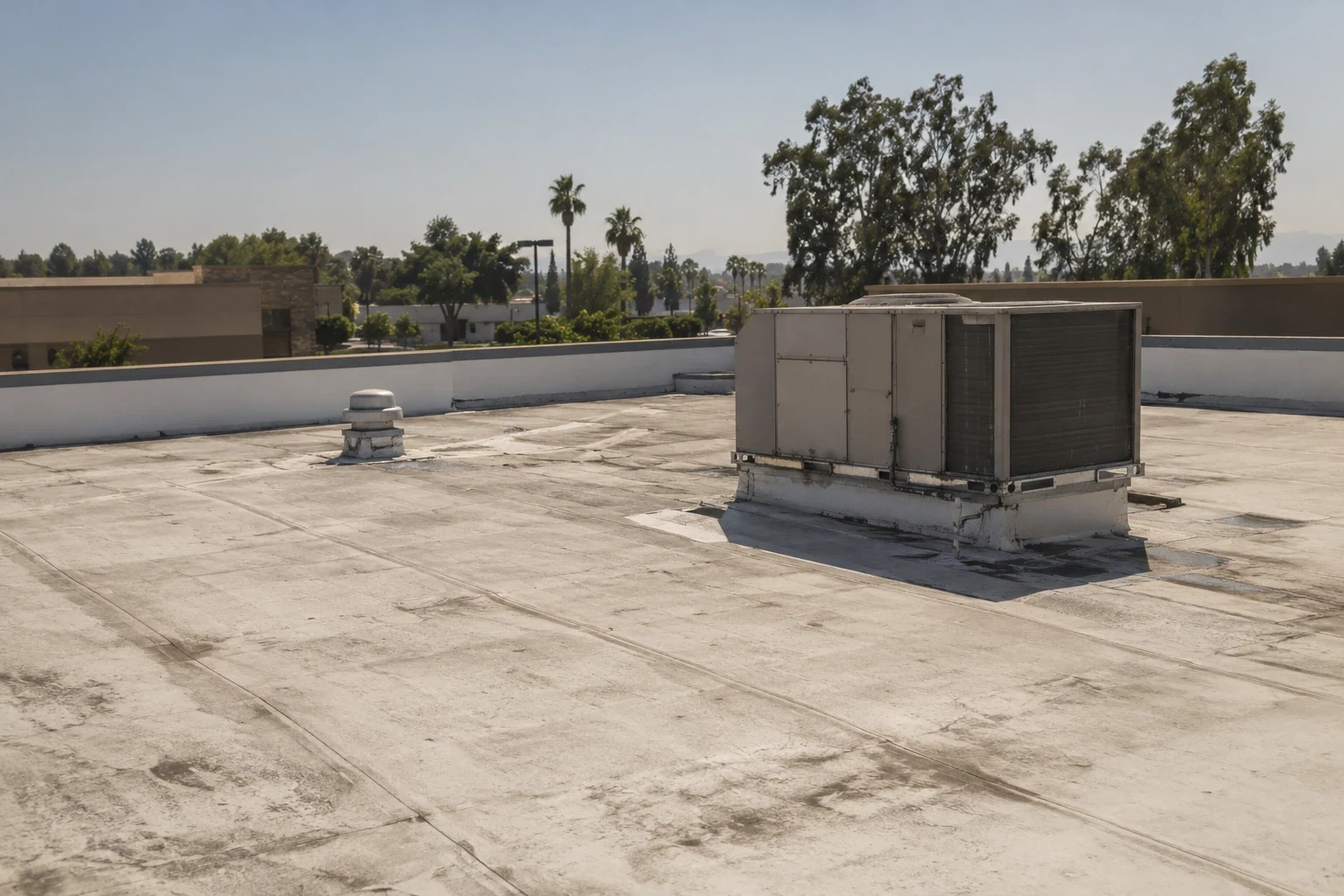
Plan Vacaville grocery roof repairs around refrigeration equipment, loading access, curb flashing, drainage, and protected close-in windows.
A grocery roof supports refrigeration equipment, ventilation, lighting, and service routes that may stay active through the workday. In Vacaville, a Central Solano County heat advisory has included very hot afternoons and warm nights; that weather calls for checking sheet movement at curbs and laps, not assuming a leak source. We trace the reported symptom, inspect penetrations and outlets, and document what testing shows about the insulation and deck. The scope then names the work zone, the trade coordination required, and the time available to restore weather protection.
Coordinate roof work with receiving and store use
Delivery timing, receiving doors, customer entrances, refrigeration service, and fire access each affect staging. The store identifies routes that remain open and periods when a lift or material drop can occur. We place the work sequence around those rules and record a daily close-in point before a roof area is opened. If work is planned over a sales floor or food-preparation area, the owner also confirms interior protection and any sanitation procedure. A sequence for an operating building can connect crew access, notices, and restoration checks without assuming the entire store closes.
Downtown Vacaville’s business district supports more than 450 businesses across multiple industries. If a grocery project is located in Downtown Vacaville, its loading and pedestrian plan may differ from a property near North Village. The actual store layout and manager’s instructions set the work sequence. The local setting helps frame access questions; the store manager supplies the actual receiving hours, vendor routes, and restricted zones. We verify those details before setting crane or hoist placement.
Check refrigeration and ventilation penetrations
Condensing units, exhaust fans, conduit, and piping can create multiple roof transitions. We inspect each curb corner, pipe boot, fastener line, and membrane termination for movement or a loss of bond. A refrigeration line may pass through a sleeve that differs from nearby electrical conduit, so each detail is recorded by location and use. When equipment has to move, the mechanical contractor confirms shutdown, lift, and reconnection responsibilities. Roofing scope should identify the flashing work separately from equipment work, then include a photograph after the transition is rebuilt.
The City identifies biotechnology, pharmaceutical manufacturing, advanced manufacturing, industrial production, and logistics among Vacaville’s economic sectors. Those uses do not establish what any grocery building contains. On site, we inventory the equipment that is actually present and check service clearances before opening a curb. A curb and support inspection can add a detail schedule to the repair record. Roof drains near a unit receive a separate check because condensate, debris, or service traffic can affect the route to the outlet.
Trace runoff around curbs and low points
Roof drains may sit behind equipment or serve only a portion of the building. We follow the surface slope, check strainers and scuppers, and note ponding that remains after nearby areas dry. A drain bowl that looks clear does not resolve a low area or blocked leader below. If water appears near refrigeration equipment, we distinguish a roof entry from condensate or a service-line issue before assigning work. The report marks the outlet, adjacent membrane, and any test that could show moisture beyond the visible symptom.
We also note where roof access meets a refrigeration service route and whether routine maintenance leaves a clear path to the unit. A technician may need to reach valves or electrical disconnects while a roofing zone is being repaired. The schedule can preserve that route or assign a temporary escort, depending on the store’s rules. Before close-in, the crew and property contact review the curb photograph, flashing termination, fasteners, and any removed debris. If a service line was disturbed by another trade, that handoff stays on the closeout list until the responsible party confirms its work. This detail prevents a finished roof area from concealing an incomplete equipment task.
A truck traveling between Sacramento and the Bay Area can reach Vacaville from I-80, with I-505 serving nearby destinations. Field observations, not road maps, establish where water moves across a roof. A drain and scupper assessment can document the outlet serving each repair zone. If the roof includes a broader retail footprint, shopping-center roof planning may help compare tenant routes; a larger single-store area can also be compared with big-box roof coordination.
Keep food and inventory protected below
Moisture testing has to account for the roof assembly and what lies under the test location. We review the reported leak time, inspect nearby seams and penetrations, and map any readings to the actual roof zone. If an opening is needed, the manager identifies the interior area below and confirms protection before material is removed. The test notes explain the method, location, and layer observed. A stain above a produce aisle does not prove that a unit curb is the source; water can travel across the deck before it appears indoors.
During hot periods, the outer sheet and metal edges can move while shaded or covered areas respond differently. The heat advisory is useful context for inspection timing, not a condition report. We check the bond line at an earlier patch, verify whether the receiving surface can hold a new detail, and separate confirmed wet insulation from suspected areas. A commercial roof inspection can organize the photographs and test points for a repair comparison. If a coating is considered, a restoration review first checks compatibility and surface condition.
Set a repair limit before resuming operations
When diagnostics isolate one detail and nearby layers remain dry, a patch may answer the problem. Readings across connected grocery zones, loss of attachment, or deck damage can call for a removal comparison that accounts for refrigeration service and sales-floor protection. We compare the options against receiving schedules, refrigeration service, food-area protection, removal depth, disposal, and the available close-in period. If a recover is proposed, the existing layers and test results must support it before another assembly is added.
The work record identifies the affected zone, materials, responsible trade, and any condition that could change the recommendation. We schedule noisy or disruptive steps with the manager and verify that the store can use its required routes after close-in. The closeout includes detail photographs, repair boundaries, and outstanding maintenance items. A marked sketch should identify drain locations, equipment routes, and surfaces that were not opened so later service visits can use the same reference. For a restaurant or food-preparation tenant in a shared center, a separate restaurant roof review can highlight separate exhaust and access questions without merging the two scopes.
Questions Owners Ask
Can grocery operations continue during roof repairs?
The manager defines receiving, customer, food-area, and fire-access limits. We phase work by roof zone and agree on interior protection and a close-in check before opening material.
How do you inspect around refrigeration lines?
We map each curb, sleeve, boot, and line, then check flashing, membrane bond, and nearby drainage. A mechanical trade handles shutdown or movement when equipment work is required.
Does a ceiling stain identify the roof opening?
No. Water may move along the deck or insulation before it becomes visible. We compare the report with roof details and use testing when the path remains uncertain.
What should a grocery roof scope include?
It should identify roof zones, equipment transitions, drain paths, interior protection, delivery limits, repair materials, close-in timing, and any work assigned to another trade.
When could a broader replacement be compared with repair?
Multiple leak areas, moisture outside one detail, loose attachment, or damaged deck may support selective removal or replacement. The report explains which finding changes the boundary.
Related Roofing Work
- Occupied Commercial Building Reroofing in Vacaville, CA
- Commercial Roofing in Downtown Vacaville, CA
- Commercial Roofing in North Village, Vacaville, CA
- Commercial Rooftop Equipment Curbs and Supports in Vacaville, CA
- Commercial Roof Drain and Scupper Repair in Vacaville, CA
- Shopping Center Roofing in Vacaville, CA
- Big-Box Retail Roofing in Vacaville, CA
- Commercial Roof Inspection in Vacaville, CA
Share the leak location, receiving schedule, equipment records, and any interior protection rules. We can map the detail and explain a repair boundary before work begins.