Military Hangar and Maintenance Facility Roofing in Vacaville, CA
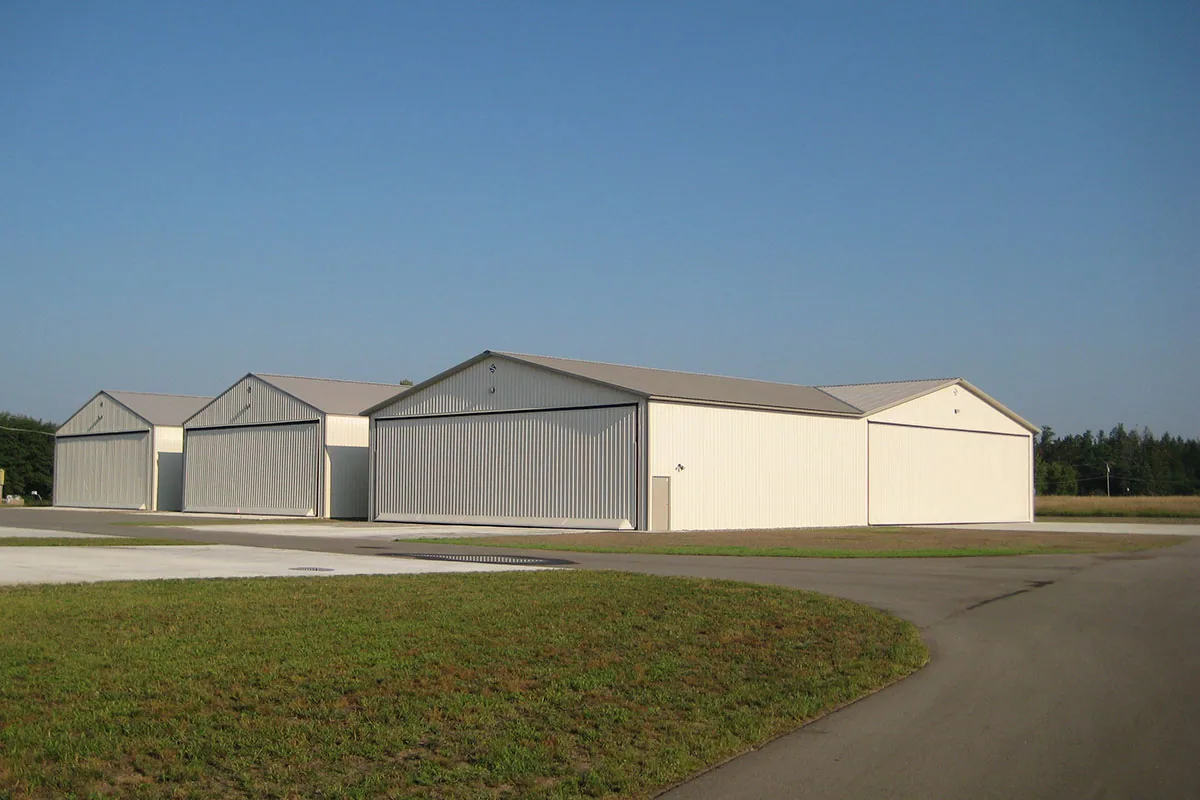
Plan military hangar roof work in Vacaville around wide spans, door travel, equipment clearances, drainage, and controlled close-in windows.
A Vacaville heat advisory covering very high daytime temperatures and warm nights makes movement at a hangar's long seam or metal panel worth checking. The forecast does not reveal attachment, deck condition, or a leak path. We inspect the actual roof, map the symptom to a bay, and include door travel, equipment clearance, and drainage in the work plan. The owner sets the access authority and available time; the repair boundary follows the field evidence and a close-in point the building can support.
Read the roof across the full span
Air Force construction reporting identifies cargo-aircraft maintenance hangars, warehouses, shops, and related support buildings at Travis. A hangar roof may span a broad open volume, so a leak near a work area can start far from the ceiling mark. We inspect the slope, panel or membrane joints, purlin or deck attachment, curb flashing, and exterior edge, then note which observations are confirmed and which need a test. Long structural bays make it useful to label photos by grid or roof zone rather than by an interior room alone.
The 60th Air Mobility Wing operates C-5M, C-17, and KC-46 aircraft for several air-mobility missions. Those aircraft types explain why clearance and movement can matter around a hangar, but the installation authority supplies the actual operating restrictions. Vacaville's nearby I-505 corridor is a broad industrial planning area; it is not a substitute for the owner's roof plan. A military property scope can record access limits with the assembly observations.
Keep door travel clear
Large hangar doors can travel along tracks, stack at a side wall, or lift through a path that changes the usable work area. Before a lift is positioned, we ask the operator where each door moves and what equipment needs to pass beneath it. The plan marks a no-stage zone, confirms the ground route, and keeps the lift basket clear of controls and door hardware. If repair access crosses a door path, the facility contact selects a window when the equipment can be held in the approved position.
Door movement also affects roof detailing at the head, jambs, and adjacent gutters. We check the perimeter metal for attachment, sealant separation, and water marks, then compare those observations with the roof slope and outlet. Where the field system turns into a vertical wall, the membrane termination or panel flashing needs a connection that can move without opening a water path. A perimeter-metal review can trace that transition and document which adjoining edge must be rebuilt with the repair.
Set equipment and drainage limits
Maintenance buildings may have exhaust, ventilation, electrical service, piping, and fall-protection hardware distributed along the roof. We identify which units can stay in service, what access each trade needs, and whether a curb or support has been added since the roof plan was drawn. A roof opening near a curb is checked for membrane bond, flashing height, fasteners, and water flow. If a unit cannot be taken offline, the owner's mechanical contact identifies what access remains possible and whether the equipment can be isolated. We keep roof testing separate from service work, so a disconnected line or moved exhaust is not mistaken for original leak evidence. Before flashing is rebuilt, the trade responsible for the unit confirms the curb dimensions and the service clearance that must remain. If the operator reports a recurring leak after equipment work, we compare the service record with the roof detail before deciding whether the curb or another seam is involved.
Vacaville connects to Bay Area and Sacramento traffic by I-80, with I-505 as a nearby north-south route. Those roads help place the work area, but they cannot map hangar runoff. We follow the roof's measured slope to its drainage low point and inspect the drain bowl, scupper, strainer, and surrounding flashing. The drain and scupper scope can distinguish a blocked outlet from a failed roof connection. For a rooftop unit, a curb and support inspection can note the metal condition and the clearance required for future service.
Compare repair with system replacement
A puncture, open lap, or failed curb may support a local repair if the surrounding membrane is dry, attached, and able to receive the patch. Moisture across several structural bays, widespread fastener movement, or deck deterioration can change the recommendation to staged removal or replacement. We compare the area opened, insulation and cover board selected, attachment pattern, and temporary protection for the hangar interior. A coating or overlay is considered only when the existing layers and test results support another system, not simply because the field appears smooth from above.
Different hangars can have membrane, built-up, or metal assemblies, and each requires a different inspection sequence. A wide-span hangar review can record panel laps or membrane seams by bay, while a warehouse roof assessment may focus more on repeated rooftop units and loading-zone drainage. We identify the assembly actually present and set a repair boundary that follows evidence, so a proposal does not mix unrelated details into one broad allowance.
Fit the work to an approved window
The owner or installation authority establishes the escort, entry, photography, and material-delivery rules. We confirm each of them before the crew or equipment is dispatched. The schedule lists a roof zone, the person who approves access, the time a section can be opened, and the checkpoint for restoring weather protection. If the close-in window changes, the field lead records the alternate cover and return time before leaving the roof. No route or site permission carries over unless the authorized contact confirms it.
The City's November 2025 ordinance moved a triennial code cycle into Vacaville's permit process, including California building and energy requirements. For a wide roof, the designer compares proposed insulation, attachment, and edge conditions with the selected system and permit scope. We provide photos by bay so the owner can reconcile the work sequence with the project criteria and close-in window. A North Village area review can address broad district access context, while the work sequence remains specific to the property and the authority that controls it.
Questions Owners Ask
Where can a roof leak appear in a wide-span hangar?
Water can travel along a deck, purlin, or membrane before appearing below. We compare the interior report with roof slope, seams, curbs, and outlets, then mark the test area so the owner can see what was confirmed and what remains open.
What must be identified before a lift is positioned near a hangar door?
The operator identifies door travel, tracks, control areas, and ground equipment routes. We mark those limits with the approved lift position and material path, then confirm the window with the authorized contact before setting equipment.
Can a maintenance hangar remain in use during roof repairs?
That depends on the approved work zone and the facility's operating controls. We can divide a scope into sections, but the owner determines access, separation, escort, and mission windows before any area is opened.
When is a hangar roof recover appropriate?
The existing layer count, moisture, attachment, and deck condition all need to support another assembly. We use inspection and test results to compare a recover with selective removal or replacement, then identify which findings drive that choice.
How are roof-mounted systems included in the scope?
We inventory curbs, exhaust, conduit, piping, and supports, then note service clearances and trade contacts. Any unit move or isolation is assigned to the responsible trade and included in the close-in and return-to-service sequence.
Related Roofing Work
- Military Installation Commercial Roofing in Vacaville, CA
- Commercial Roof Edge Metal, Coping, and Gutter Service in Vacaville, CA
- Commercial Roof Drain and Scupper Repair in Vacaville, CA
- Commercial Rooftop Equipment Curbs and Supports in Vacaville, CA
- Aircraft Hangar Roofing in Vacaville, CA
- Warehouse Roofing in Vacaville, CA
- Commercial Roofing in North Village, Vacaville, CA
Send the leak location, roof plan, assembly records, and permitted work window. We will trace the condition, document door and equipment limits, and compare a defined repair with a larger scope.