
Commercial Roofing in the Suisun Depot Infill Area, Suisun City, CA
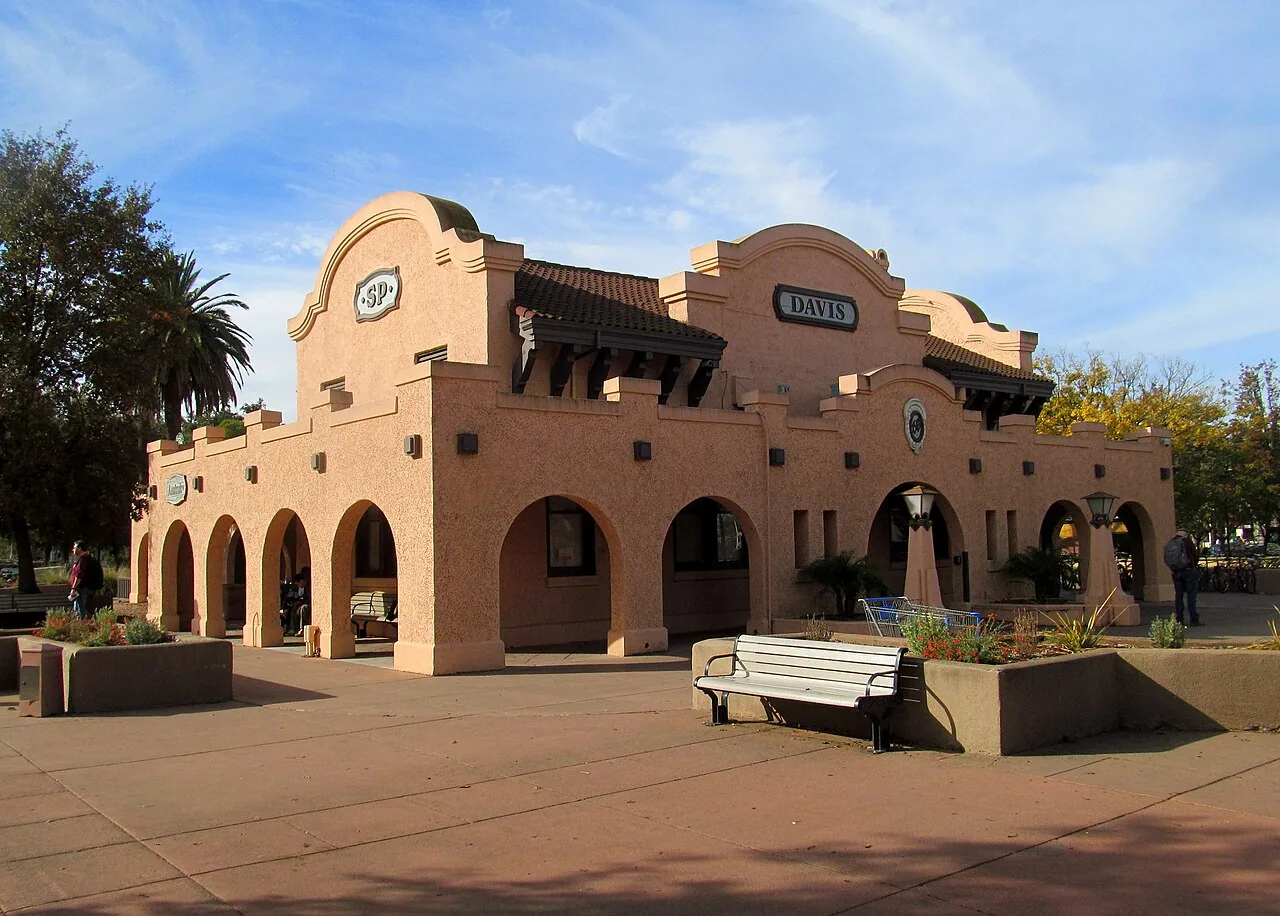
Assess commercial roofs in the Suisun Depot infill area with attention to mixed use, heat movement, drainage, existing layers, and phased access.
For a property near Suisun Depot, the roof scope follows its installed assembly and current use. The half-mile infill designation describes a surrounding planning area, not roofing work on the depot building; the General Plan encourages higher-density office and housing in the Downtown Waterfront. For a commercial or mixed-use building in the district, we inspect the installed assembly and its current operating needs: membrane, insulation, flashing, penetrations, and drainage. The City's strategy also names public and private opportunity sites and infrastructure work as implementation priorities. A roof condition report can help an owner decide what is serviceable before a renovation or reuse scope is fixed. Our inspection documents the actual roof and maps an interior leak to the detail above it, rather than assuming that planned density tells us what materials or conditions are present.
Read the area, not the station
The half-mile planning reference covers a surrounding infill area whose buildings and projects can have different uses. It should not be confused with the depot facility or treated as one roof target. A housing building, office suite, restaurant, or older commercial property can have distinct access hours and roof assemblies. We confirm where the property sits in the district, how its occupants use the space, and which sections can be reached without interrupting service. The adjacent Downtown Waterfront area is also planned for residential, office, restaurant, and service activity, which reinforces the need to assess each building on its own terms.
During the first walk, we note field seams, parapet edges, equipment curbs, penetrations, and each drainage low point. Interior stains, prior repairs, and maintenance records help us trace likely water paths. A leak can travel along insulation or a deck before appearing inside, so a visible mark is a starting point rather than a repair location. Our leak repair service tests the nearby membrane and flashing and identifies the receiving surface. If water has moved beyond one detail, we mark the broader boundary before selecting material or removal depth.
Allow for sheet movement
The Suisun Depot area is part of a planned infill zone: the General Plan prioritizes development within one-half mile of the depot and describes nearby office and housing uses. That context points to a changing district, not to any roof assembly at a property. A regional heat forecast that included Vacaville gives a climate reason to inspect movement at seams, curb corners and metal terminations, but it is not a temperature reading for Suisun City. We compare the roof field with the flashing and edge that receive its movement, looking for a lap that has lifted or a fastener that no longer holds.
Once a separation is visible, the repair boundary depends on the layers below. We check the cover board and insulation, then follow the bond into material that can receive a compatible tie-in. A seam repair uses the identified sheet and proper preparation; a surface coating will not reconnect a loose lap. The written scope marks the material to remove, the area to rebuild and any concealed layer that needs an approved test before permanent work.
Check each water route
Infill and renovation planning can change how a property is used, but the roof still needs a dependable path to its outlets. We examine strainers, drain bowls, scuppers, overflow provisions, and the slope leading into them. Debris may be the only problem at one outlet. A low area that remains after cleaning can point to settled insulation or a depressed assembly. We photograph the water line, record the drainage low point, and compare it with interior evidence before calling the condition a membrane defect.
A drain and scupper repair addresses a failed component; a recurring pond may require a broader correction. Infrared mapping can help prioritize test cuts, but it does not identify the exact wet layer on its own. We verify moisture through physical inspection before recommending a coating, recover, or tear-off. If the existing surface is dry and stable, restoration may fit after proper preparation. When the receiving layer is weak or wet, the scope should address those materials and the route water takes. The owner's comparison should distinguish outlet service from work on the roof plane.
Compare reuse and roof scope
Suisun City’s development strategy names public and private opportunity sites and infrastructure work as implementation priorities. For a property near the depot under reuse review, the roof can affect the order of interior improvements, but only a field inspection establishes whether the assembly can remain. We document dry areas, wet insulation, attachment concerns and failed transitions separately. A localized correction may preserve sound material; broader removal becomes a consideration when moisture or loss of attachment extends beyond one repair zone.
Project pricing and duration change with removal depth, substrate repairs, curb and edge reconstruction, material lead time, access and the weather-tight close-in window. Vacaville’s 2025 code adoption does not set requirements for a Suisun City project; the governing jurisdiction and scope must be confirmed. A condition report with photos can show which roof zones were inspected, while a replacement scope can be compared against the same moisture and attachment findings. That lets an owner sequence roof and interior work using observed conditions rather than a planning map alone. Before approval, identify who will protect exposed edges, clear debris and confirm the building is dry after each work interval.
Set a safe close-in point
Mixed office and housing uses can mean different quiet hours, tenant routes, and equipment access at one property. Before removing material, we agree on staging, protected entrances, noisy work periods, and the section the crew can close before stopping. Temporary protection is part of the scope, not an afterthought. A day's limit follows the assembly, crew access, and the forecast; it should leave each open edge protected from water entry. Where work proceeds over several shifts, we keep the boundary between completed and remaining areas visible.
Our occupied-building sequencing accounts for those limits and identifies when an area can return to normal use. Owners responsible for several sites can keep this district's findings separate from the broader Suisun City service area, since a nearby roof does not establish this property's condition. If active water is entering, emergency repair is available around the clock and on holidays. Share the leak location, available roof records, and operating window. We will inspect the specific assembly and answer a defined repair, reuse, or replacement question.
Questions Owners Ask
Does the half-mile planning area mean work happens on the depot?
No. The General Plan uses Suisun Depot as a geographic reference for infill. This service area concerns surrounding properties; each roof is inspected individually.
Can a roof inspection help before a reuse decision?
Yes. We document serviceable areas, moisture, attachment, and failed details so the owner can compare a repair with recover or replacement before fixing the broader scope.
What changes the limit of a seam repair?
The limit follows the condition of the bond line, adjacent sheet, insulation, and receiving surface. We test beyond the opening and extend removal where wet or loose layers continue.
Would a coating correct a recurring low spot?
Not by itself. We first establish why water remains, confirm whether layers are wet, and identify whether drainage correction or removal is needed before considering restoration.
How do you protect tenants during roof work?
We agree on access routes, staging, noisy work, daily stopping points, and temporary protection before opening a section. The sequence follows the property schedule and roof conditions.
Related Roofing Work
- Commercial Roof Inspection in Vacaville, CA
- Commercial Roofing in Downtown Waterfront Area, Suisun City, CA
- Commercial Roof Leak Repair in Vacaville, CA
- Commercial Roof Seam Failure Repair in Vacaville, CA
- Commercial Roof Drain and Scupper Repair in Vacaville, CA
- Commercial Roof Condition Reports in Vacaville, CA
- Commercial Roof Replacement in Vacaville, CA
- Occupied Commercial Building Reroofing in Vacaville, CA
Send the leak location, any roof history, and the building's operating window. We will inspect the assembly, document the repair boundary, and explain a safe sequence.