Commercial Roofing in Downtown Waterfront Area, Suisun City, CA
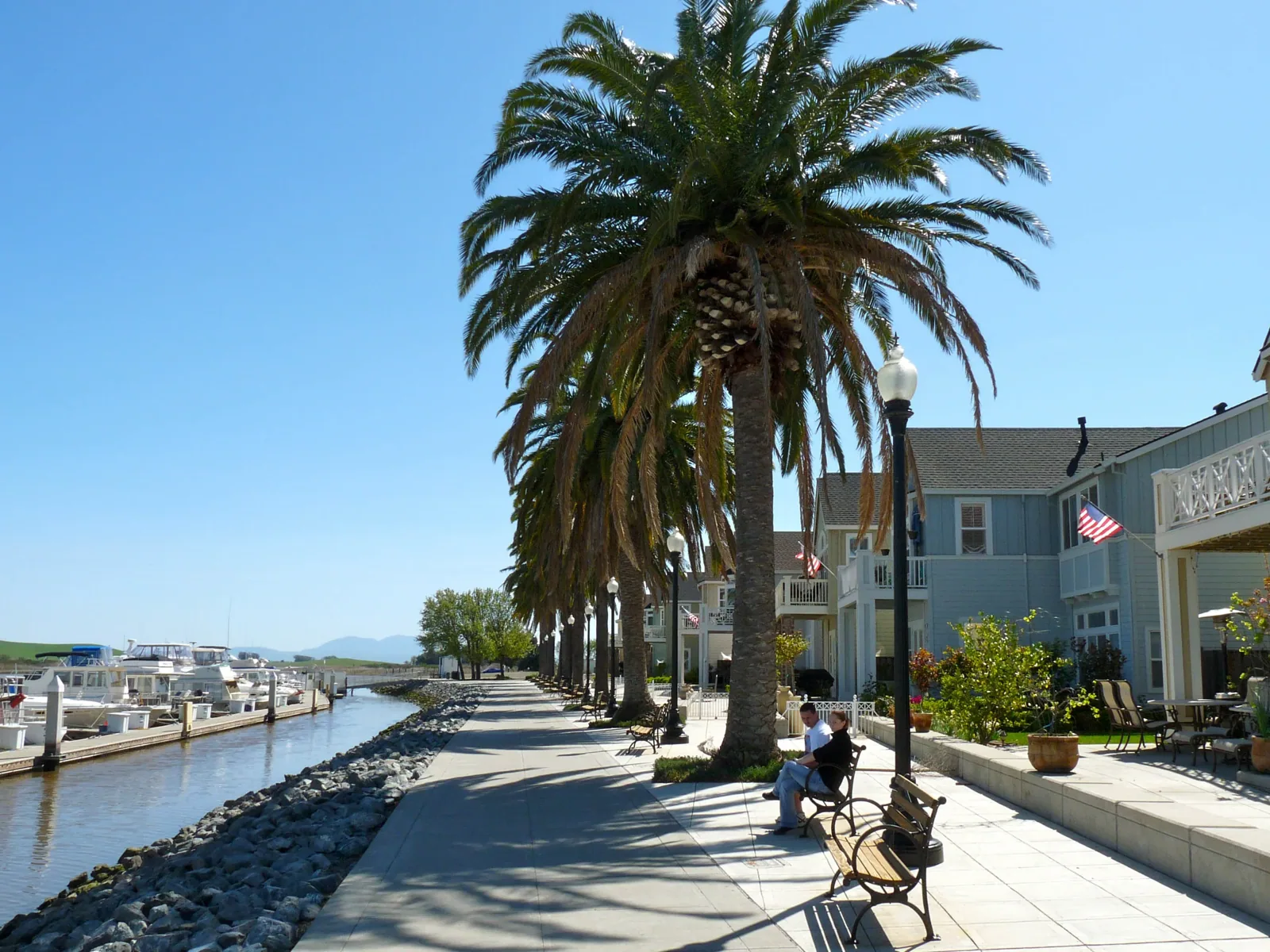
Coordinate roof repairs in Suisun City's Downtown Waterfront Area around mixed uses, heat, transitions, drainage, and access for active buildings.
The Downtown Waterfront Area is planned for housing, office space, restaurants, services, civic and cultural activity, so a roof project here may need to account for several kinds of daily use. The plan also identifies existing commercial, office, and industrial space in need of reuse. We begin with the roof that is actually present, record its layers and transitions, then map any leak against the rooms and operations below. Vacaville's regional heat advisories make sheet movement worth checking, but they do not prove that a Suisun City roof is damaged. A hands-on inspection looks at seams, edge metal, curb flashing, and drainage low points before we set the repair limit. That first walk gives the owner a physical condition record rather than a guess based on the building's planned use. Owners comparing more than one asset can keep the broader Suisun City setting distinct from this mixed-use district.
Separate the roof zones
Mixed use can place a restaurant, office suite, residential area, and shared service space beneath one roof, but their operating hours and access needs may not line up. We note which entrances remain active, where deliveries or mechanical service occur, and which interior areas need protection if work moves above them. The Downtown Waterfront plan calls for a combination of retail, entertainment, civic, cultural, and residential functions. Those are planning goals for the area, not proof of a particular tenant mix at a specific property. We confirm current use with the owner and assign each roof zone a clear access and close-in plan.
A low-slope assembly can be continuous across several occupancies while its drainage paths and penetrations vary. We inspect the field membrane, test accessible seams, look at parapet transitions, and trace water toward outlets. When a leak shows inside a restaurant or office, the opening can sit upslope or beside the visible mark. Our leak tracing follows the layers and details instead of sealing the first visible interior location. If the receiving surface is sound, a local repair may work. Wet insulation, loose cover board, or a failed bond line can extend the scope beyond the initial stain.
Check movement at the edges
The National Weather Service has described a regional period of very hot days and warm nights that included Vacaville. The advisory is useful climate context, not a Suisun City roof reading and not a design load. A membrane still needs direct examination. Sun warms the sheet; cooler hours let it draw back. That cycling puts stress where a field membrane meets edge metal, a curb, a drain bowl, or another material. We examine those changes in plane for open laps, lifted corners, brittle sealant, and fasteners that no longer hold the intended pattern.
At a parapet or equipment curb, the flashing termination matters as much as the horizontal field. We look for a secure top edge, a continuous bond, and a sound surface beneath any proposed patch. If several details move together, we check whether the assembly below is stable before selecting a correction. A coating can renew a prepared surface, but it will not restore wet insulation or loose attachment by itself. For a thermoplastic roof, a compatible PVC detail repair depends on membrane identification and weldable receiving material. The written scope should name the detail, preparation, repair extent, and close-in point.
Follow the drying path
Restaurant service, office access, and shared interior areas all depend on a roof that sheds water without leaving a persistent low spot over an occupied zone. We inspect drains, scuppers, strainers, overflow provisions, and the surface leading into them. A slow outlet may be debris or a downstream restriction; a pond that returns after cleaning can point to a settled area or insulation that has lost shape. We photograph the water line, mark the low point, and compare the roof observation with interior evidence before deciding whether the cause is maintenance, geometry, or a damaged layer.
A drain and scupper repair addresses a blocked or failed component, while a broader slope correction may require insulation work. Moisture mapping can direct investigation, but a thermal image alone does not show exactly which layer is wet. We confirm questionable areas with physical checks, then document how far the condition extends. When the surface is dry and attached, a restoration coating may be considered; where the substrate is weak or wet, removal and replacement of affected material may be necessary. An owner can compare the findings with a ponding-water repair scope that identifies both the membrane work and the water path being corrected.
Plan around existing space
The City's identification of existing space in need of reuse makes roof condition an important input when an owner is deciding what a property can support next. A roof report can separate an isolated defect from a larger replacement need. We record remaining serviceable areas, wet or displaced materials, perimeter conditions, and the status of penetrations. If the roof is repairable, the report defines a boundary and compatible materials. If replacement is more appropriate, it shows why a patch would not address the broader failure. That distinction helps ownership, leasing, and construction teams compare the roof scope with the rest of a reuse plan.
Timing depends on removal depth, material lead time, weather windows, required approvals, and the hours when access is available. Vacaville's adoption of the 2025 California Building Standards Code applies to Vacaville; it does not substitute for checking the code authority for a Suisun City project. Before a major alteration, we confirm which local requirements govern and coordinate submittals with the project team. A photo condition report provides a common record for property and design discussions. The owner can also compare tear-off and replacement with a recover evaluation when existing layers and moisture conditions permit.
Keep occupied areas protected
A roof scope succeeds when each opened section can be closed before the crew leaves it exposed. For a mixed-use property, we confirm staging points, tenant access, kitchen or office schedules, and any locations where falling debris or noise would disrupt operations. Work can be phased by roof zone if the assembly and access routes allow a safe break between shifts. Temporary protection belongs in the plan before removal begins, with the crew's daily close-in limit tied to the forecast and the materials on hand.
Our occupied-building sequence sets those boundaries with the site contact, while urgent response is available around the clock when active water entry cannot wait. We document changes with photos and keep the repair boundary visible so a later inspection can distinguish new work from older assembly conditions. Downtown Waterfront's planned mix of residential, office, and visitor-serving uses makes coordination a property-level question, not a promise that every building has the same schedule. Share the leak location, roof records, and operating window; we will use the inspection to answer a defined repair or replacement question.
Questions Owners Ask
Does planned mixed use tell you what roof is installed?
No. Planning uses describe the area, not the layers on an individual property. We inspect the membrane, insulation, attachment, flashing, and drains before choosing a repair method.
Can roof work continue while a restaurant or office remains open?
The work can often be divided into zones, subject to roof conditions, access, and a safe close-in plan. We coordinate staging and disruptive work with the building contact.
What does reuse planning change about a roof evaluation?
It makes a documented condition and repair boundary useful to the broader project decision. We separate serviceable areas from wet or failed sections so the scope can be compared with intended building use.
When does ponding need more than outlet cleaning?
A low area that returns after the outlet is clear may involve settled insulation or lost slope. We map the water path, verify moisture, and explain the correction before proposing surface work.
Does Vacaville's heat advisory establish a damage claim here?
It provides regional climate context only. We rely on observations from the Suisun City roof, including seam condition, wet materials, drainage, and interior evidence.
Related Roofing Work
- Commercial Roof Inspection in Vacaville, CA
- Commercial Roofing in Suisun City, CA
- Commercial Roof Leak Repair in Vacaville, CA
- Commercial Roofing in Vacaville, CA
- Commercial Roof Drain and Scupper Repair in Vacaville, CA
- Ponding Water Roof Repair in Vacaville, CA
- Commercial Roof Condition Reports in Vacaville, CA
- Commercial Roof Replacement in Vacaville, CA
Share the leak location, roof records, and operating window. We will inspect the assembly, mark a defensible repair boundary, and set a close-in sequence for the occupied areas.