
Commercial Roof Seam Failure Repair in Vacaville, CA
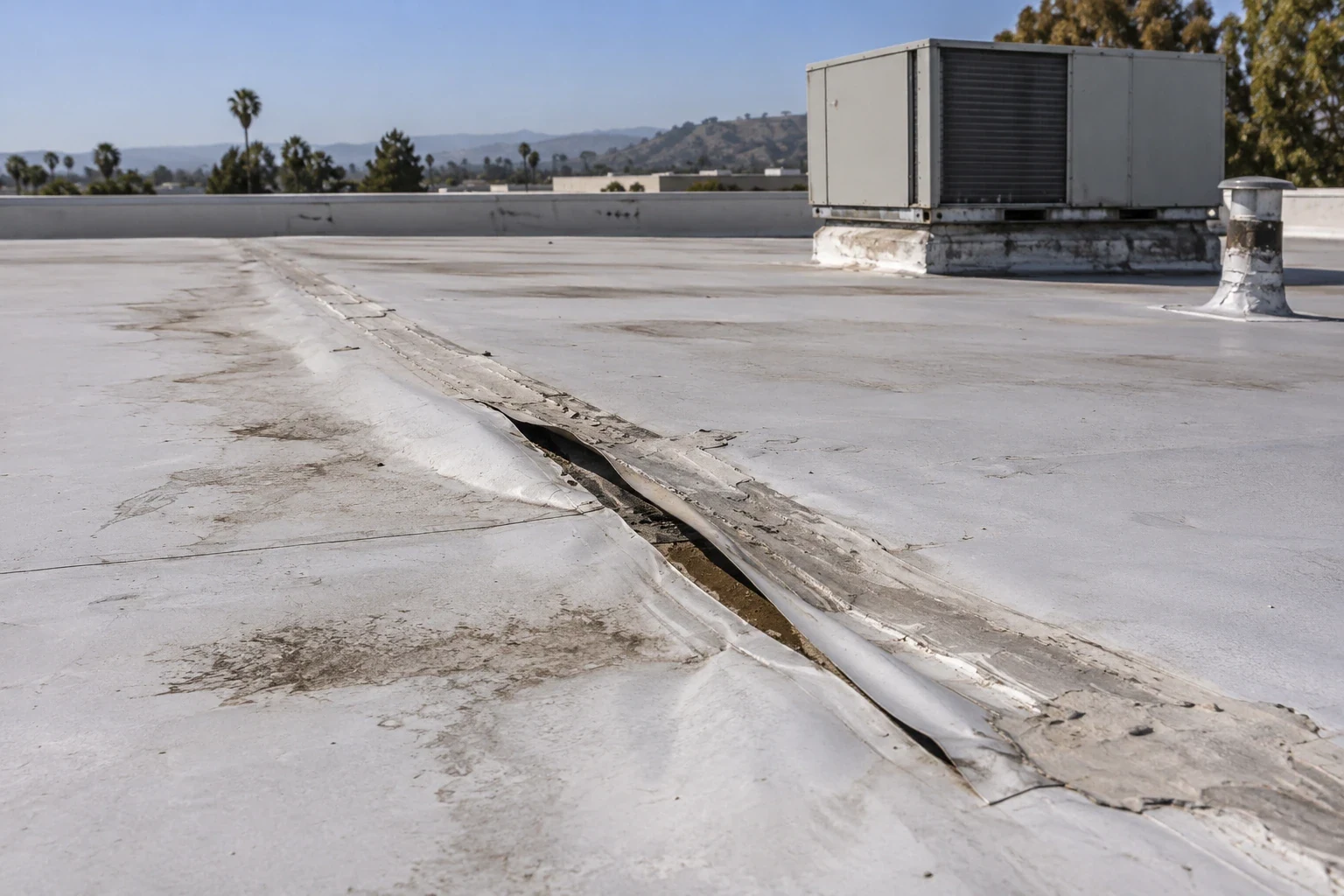
Repair split commercial roof seams in Vacaville, CA. We inspect the bond line, adjoining insulation, and drainage before setting a durable repair limit.
A weak lap can start to release as the sheet expands and contracts through Vacaville's hot days and warm nights. A Central Solano County heat advisory included the city, which makes seam movement worth inspecting without treating a forecast as a diagnosis. We trace the split, probe beyond both ends, and check whether the fastener pattern or insulation is moving with it. Where roof access crosses an active loading yard, coordinate the inspection window with the property contact before bringing probes or repair materials onto the roof. A commercial inspection maps the bond line, adjacent equipment, and drainage low point before we select a splice or a larger assembly repair.
Read the opening from both sides
A seam separates where the bond is weak, contaminated, stressed, or supported by a moving substrate. We check whether the opening follows a straight lap, turns at a curb, or stops at a prior patch. The probe test extends beyond what can be seen from a ladder or an interior stain. We also look for wrinkles, fishmouths, edge lift, and fastener movement that can keep pulling on the joint. On a TPO roof, the repair may require a clean, heat-weldable sheet edge. A reinforced patch over dirt or a moving fold will not restore the bond line that failed.
We also inspect how the sheet ends at each termination. A lap can be secure in the field but pull where it meets a curb, wall, or metal edge. The sequence of the repair matters: loose material is removed, the receiving area is prepared, and the seam is joined before a final probe checks continuity. If old adhesive, coating, or an incompatible patch occupies the repair area, we define the extra preparation rather than expect a new layer to bridge it. The report shows where that preparation begins and where the existing sheet remains usable.
Check what the open lap exposed
Water at an open seam can enter the cover board and travel away from the split before it appears inside. We inspect insulation and deck near the opening, mark any test point, and note whether the layers remain firm. A small wet area can be removed to dry material; a longer path may call for additional openings to establish where the assembly is sound. If standing water has repeatedly crossed the same lap, a ponding water review can determine whether drainage also needs correction. We keep the seam repair and any low-point work as distinct lines in the scope.
Protect the roof before a complete splice
When a split is active, immediate weather protection can limit exposure while the crew prepares a compatible permanent repair. We confirm safe access, control the area below, and cover or seal only what the assembly can accept under the conditions present. The temporary measure has a defined edge and return plan. A broad application over an untested seam can trap water or conceal an opening that still moves. At a failed curb or wall junction, a separate flashing repair may be required so the membrane lap does not become the only detail carrying the water seal. The report identifies which action is temporary and what remains open.
Fit inspection around local operations
A service visit near North Village service visit still needs a building-level seam map. The district name helps orient the route, but it cannot identify which roof section was examined, who approved access, or where a lap opens. We record the building label supplied for the assignment, mark the seam on the roof plan, and keep any access restriction beside that observation. The repair decision follows the material at the marked location, not the surrounding area's name.
That separation matters when a property has multiple additions, separate tenants, or more than one membrane age. Each seam receives its own location code and status. If the opening lies outside the authorized work area, we document the boundary and request direction before extending the scope. The field record can then support the next visit without turning a geographic reference into a claim about a particular facility.
Build the new bond on stable material
Once the opening is prepared, we remove loose or damaged membrane, clean the receiving surface, and make a splice compatible with the roof system. Weld temperature and travel must suit the sheet and site conditions; the completed lap is checked after it cools. For other assemblies, adhesive or tape procedures differ, so the roof type is confirmed before materials are ordered. If the seam reaches an edge, penetration, or drain, the adjacent detail is inspected before the work closes. We keep the repair dry during preparation and do not close over an area that still has loose reinforcement or a damp base. Where test cuts were needed, each opening is restored with compatible material and logged separately from the original split. A completed lap receives a visual review and a probe check after the weld has cooled or adhesive has set. That step catches a small open edge while access and matching material remain on the roof. A recover assessment can address the broader assembly when repeated failures, moisture, or poor attachment make a single seam repair insufficient.
Compare the repair with the affected roof area
Price and schedule change with seam length, access, removal depth, moisture testing, and the amount of membrane needed to reach a stable bond. Several short failures may point to a larger attachment or substrate issue, while one isolated opening may stay within a limited zone. We list testing, temporary protection, tear-out, replacement layers, and transitions separately where each could change the total scope. A defined roof repair can address the confirmed opening; a replacement comparison is useful when splits recur across the field. The owner sees what is confirmed and what further testing could add before authorizing removal.
Record the repaired lap and the next check
At completion, we photograph the repaired seam in context and close up, note the system and patch dimensions, and mark any untested portion. The file records how the new lap meets the existing sheet and whether insulation was removed or retained. Later maintenance can inspect the same seam and compare its condition with the repair date. A roof condition report preserves the location, materials, and open questions alongside other roof observations. If a new split appears beyond the repaired area, the mapped detail helps determine whether the failure is local or part of a broader pattern.
Questions Owners Ask
Can a split seam be welded without removing insulation?
Sometimes. We test the layers at and beyond the opening first. If the base remains dry and attached, the membrane can receive a local splice; wet or crushed insulation must be removed to a stable edge before the repair closes.
How do you find the full length of a seam failure?
We probe the lap past both ends of the visible split and inspect nearby patches, wrinkles, and attachment points. Photos and a roof plan record the tested boundary, with moisture checks added where the result could change removal.
Can ponding water cause a seam to reopen?
Repeated wetting can keep a weak lap exposed, but the roof needs inspection to identify why it split. We check the drainage low point and bond line separately, then include both corrections if each is supported by the field findings.
What changes the cost of a seam repair?
The length of failed lap, membrane type, access equipment, wet layers, and the transitions at each end drive the work. We list those assumptions and separate testing from permanent repair so the boundary can be reviewed.
What should the closeout show?
It should identify the roof zone, material, repair dimensions, photos, any removed layers, and portions not tested. We leave the next inspection a marked location rather than a general note about the roof.
Related Roofing Work
- Commercial Roof Inspection in Vacaville, CA
- TPO Roofing in Vacaville, CA
- Ponding Water Roof Repair in Vacaville, CA
- Commercial Roof Flashing Repair in Vacaville, CA
- Commercial Roofing in North Village, Vacaville, CA
- Commercial Roof Recover and Overlay in Vacaville, CA
- Commercial Roof Repair in Vacaville, CA
- Commercial Roof Replacement in Vacaville, CA
Share the seam location, roof records, and operating window. We will inspect the lap and adjoining layers, mark the stable repair boundary, and explain whether drainage or another transition also needs work.