Ponding Water Roof Repair in Vacaville, CA
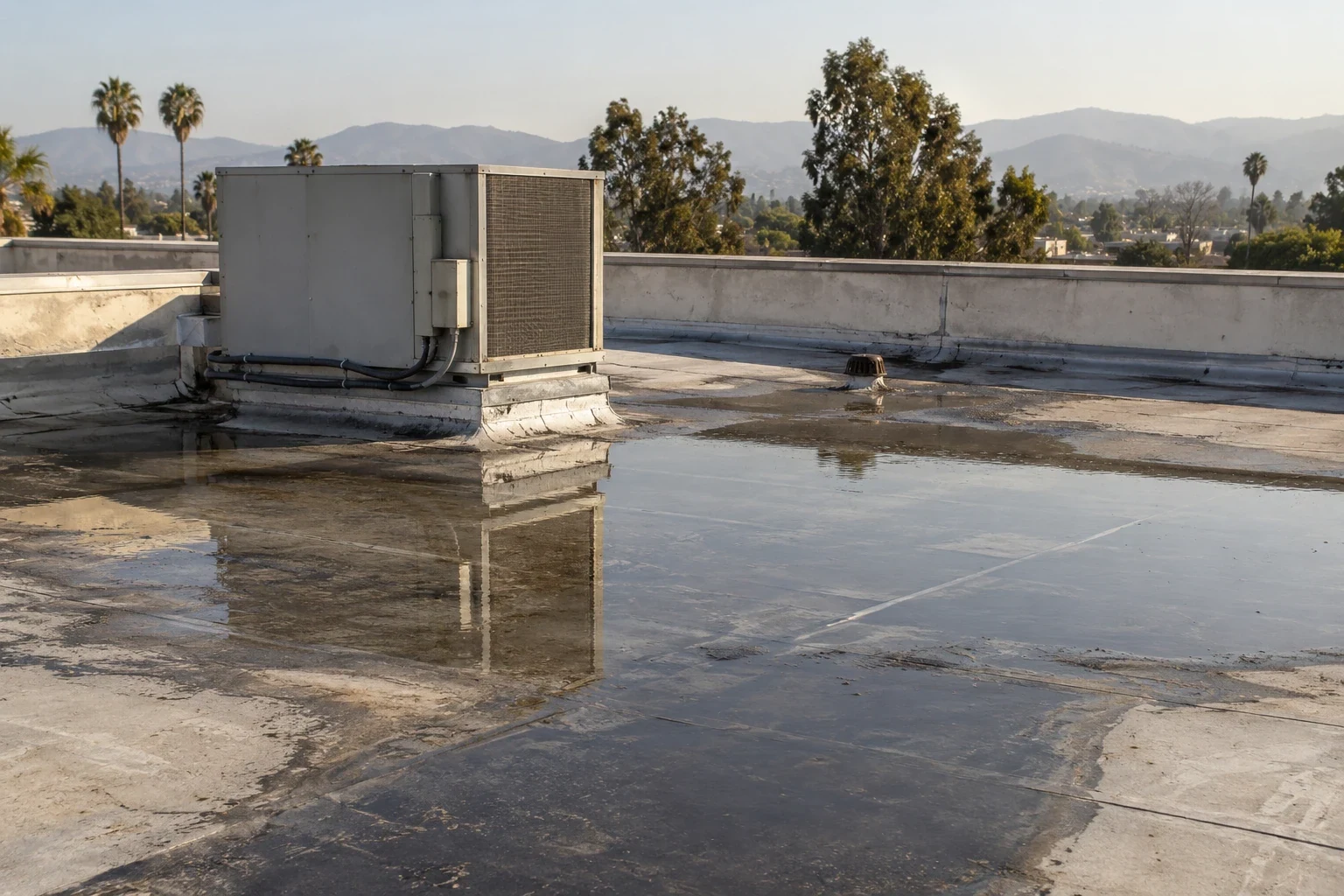
Trace ponding water on Vacaville, CA commercial roofs. We measure drainage, inspect seams and insulation, and define a repair that addresses the low point.
The neighboring southern Sacramento Valley has warm, dry summers and a winter rainy season, a regional pattern that makes a persistent roof puddle worth measuring after the surface has had time to drain. Water left at a low point can keep a seam or patch wet longer than adjacent areas. We map the puddle, trace the drainage path, and check whether the deck, insulation, or membrane has changed shape. Lower Lagoon Valley's adopted plan includes a Business Village and Town Center among other proposed uses, while North Village combines planned commercial and business park areas with other land uses. Those different contexts do not establish roof slope. A roof inspection checks the actual assembly before we select a correction. If ponding has softened a nearby curb connection, flashing failure repair may be part of the same review.
Measure water at the drainage low point
We begin with the roof's actual flow path rather than a single photograph of standing water. A level or survey marks where the surface begins to fall, where water collects, and how the outlet sits relative to that area. We clear loose debris for inspection, check the drain bowl and overflow, and look for a crushed strainer, raised clamp ring, or blocked route. A drain and scupper service can address the outlet when it is part of the problem, but cleaning alone will not correct a sagging deck or a high seam that holds water behind it.
We note whether water remains after a rainfall has passed or appears only while runoff is moving across the roof. The time and area of the observation help distinguish a slow outlet from a low spot that holds a deeper pool. We photograph the puddle with a location reference, then return to the drain and nearby transitions rather than estimate depth from a distant view. If leaves or loose material are present, we record their position before moving them so the drainage path can be reviewed. This gives the owner a repeatable observation point for the next visit.
Separate membrane defects from deflection
A puddle can form because the insulation has compressed, a deck has deflected, a previous patch created a dam, or a drain is too high for the surrounding field. We inspect each possibility and record whether the surface remains stable underfoot. Moisture readings or a test opening can show whether water has entered below the membrane and whether the cover board can remain. An infrared moisture survey may help identify areas for confirmation, while a core or opening gives a direct view of the assembly. The repair plan states which result supports the proposed boundary instead of treating one wet reading as a complete map.
A broad moisture pattern changes removal quantities differently from a small wet area beside one outlet. We mark the test location, note the method used, and describe whether the surrounding board felt firm or yielded under controlled inspection. If an opening exposes separated layers, the next cut follows the affected material until a dry, bonded edge is reached. We protect the roof while that limit is established and include restoration of the test opening in the work scope. A flashing review can be added when water tracks from a curb or wall into the ponded zone.
Check how long the surface stays wet
Standing water can leave deposits, soften some repair materials, expose a weak lap, or keep a previously patched area under repeated wetting. We inspect seams and flashing around the ponding edge, then compare the area with places that dry sooner. A sound field next to the low point may still be retained if water has not reached the insulation and the surface remains attached. If a lap is opening, seam failure repair may be needed in addition to the drainage correction. The work should close both the path that admits water and the reason it remains at that location.
Relate local development to property use
Vacaville planning identifies business and industrial park uses near I-505 and North Village, and the Lower Lagoon Valley plan includes commercial space in its proposed buildout. These are planning contexts, not descriptions of an existing roof. At each property, we confirm loading routes, access hours, rooftop equipment, and which interior areas need protection while drainage work proceeds. A Lower Lagoon Valley service visit still begins with the building's own survey and outlet locations. We keep proposed area plans distinct from field observations and record the roof zone where water persists. That distinction lets owners assess drainage work from measured conditions rather than from nearby development activity.
Compare a local correction with broader work
The repair boundary depends on how much material must be removed to reach a stable, dry receiving surface. A drain adjustment may be enough when the membrane and insulation are sound. A depressed area can require tapered insulation, deck work, or a redesigned flow path, with added coordination around curbs and doors. We price testing, drainage correction, membrane restoration, and concealed repairs separately when conditions remain unknown. A bounded roof repair can address one drainage low point; repeated ponding across several zones can justify a replacement comparison. The scope identifies how added height affects edge details and where water should discharge after the work. Timing also depends on the amount of roof that can remain exposed during one shift, where materials can be staged, and whether the property can isolate a service route. We state these limits before removal begins. When the underlying cause is still being tested, the proposal can separate the first investigation from later construction so the owner sees which decision is ready and which measurement remains open.
Track the result after the next rain
After correction, photographs and a roof plan mark the old water line, repaired area, drain route, and remaining locations that still hold water. We record the measurement conditions and inspection date so a later visit can compare the same points. Routine maintenance can check strainers, overflows, and surface changes before a blockage sends water back toward the same seam. The North Village area includes varied planned uses, but each owner's roof map remains specific to that property. If the corrected low point still collects water, the record gives the next survey a precise starting location.
Questions Owners Ask
How long should water remain on a commercial roof?
The roof's design, drainage layout, and conditions after rainfall matter. We measure the affected area after drains have had time to clear, then determine whether the water reflects a blockage, a dam, or a change in roof level.
Can adding another drain solve ponding?
An additional outlet can help only when its location, slope, and connection move water away from the low area. We map the flow path and inspect the deck before recommending a drain, tapered insulation, or structural review.
Does a puddle mean the insulation is wet?
Not by itself. We inspect the membrane and use targeted moisture testing or an opening when results could change the repair. The report distinguishes surface water from confirmed moisture below the roof covering.
Will a roof coating remove a low spot?
A coating changes the surface protection, not the underlying slope. If water is held by a depression, seam, or drain height, that condition needs a separate correction before a coating is considered.
What should we compare in the repair proposal?
Review the survey location, outlet work, removal depth, insulation or deck assumptions, transition details, and closeout photos. We separate confirmed quantities from any concealed condition that could change the final boundary.
Related Roofing Work
- Commercial Roof Inspection in Vacaville, CA
- Commercial Roof Drain and Scupper Repair in Vacaville, CA
- Commercial Roof Infrared Moisture Survey in Vacaville, CA
- Commercial Roof Seam Failure Repair in Vacaville, CA
- Commercial Roofing in Lower Lagoon Valley, Vacaville, CA
- Commercial Roof Repair in Vacaville, CA
- Commercial Roof Replacement in Vacaville, CA
- Commercial Roofing in North Village, Vacaville, CA
Share the roof plan, location of standing water, and access window. We will trace drainage, check the assembly, and show whether a drain correction, local repair, or broader scope fits the observed condition.