Commercial Storm Damage Roof Repair in Vacaville, CA
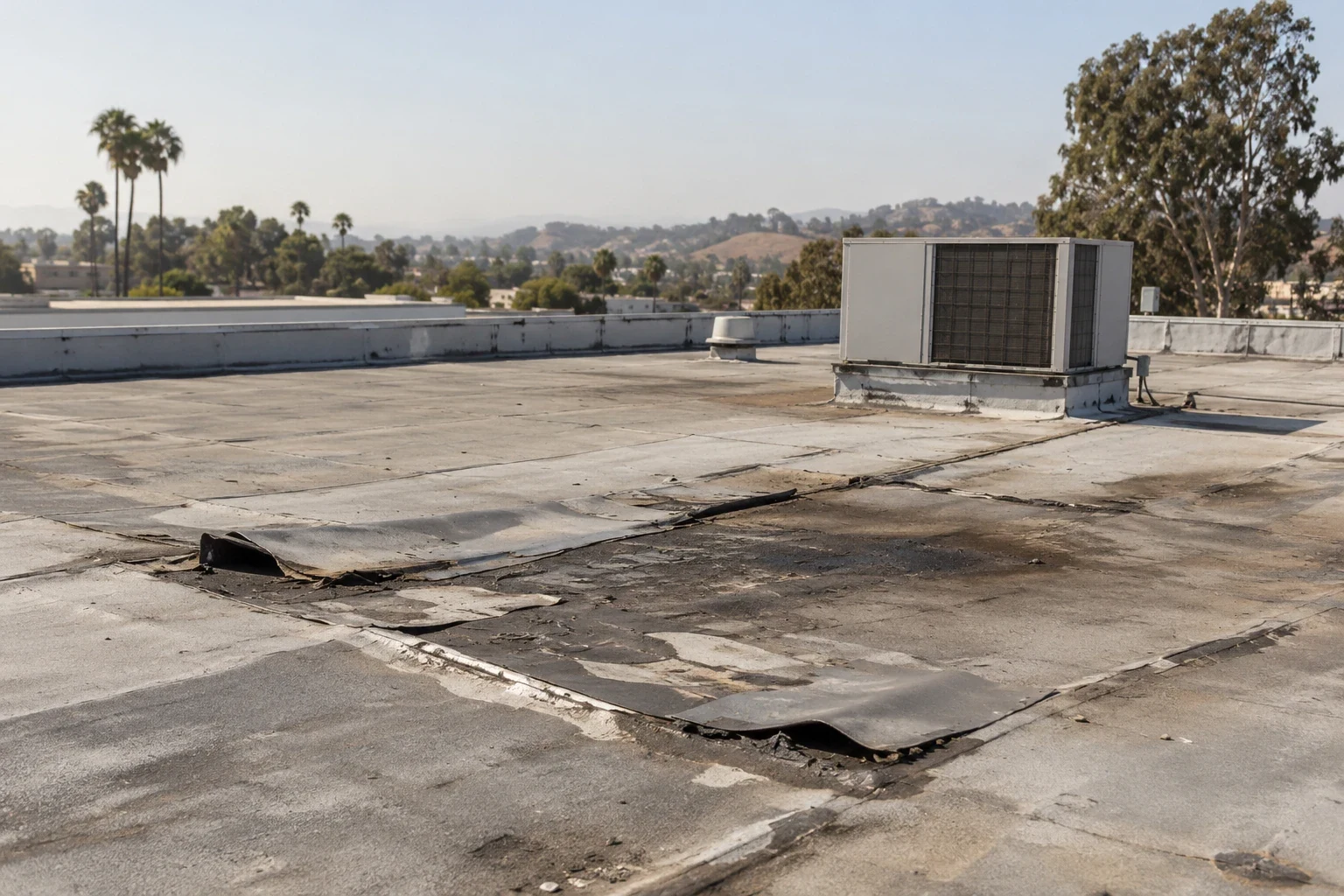
Document storm-related roof conditions in Vacaville, separate temporary protection from permanent repair, and plan access around the building.
After a storm, the first question is whether water is entering and which area needs protection before a permanent repair can be designed. We record the reported location, interior impact, drainage route, and visible roof condition, then mark any temporary step separately from the final scope. The neighboring southern Sacramento Valley has a winter rainy season that makes timely roof drainage checks useful. That regional pattern can inform inspection timing, but it cannot establish that weather caused a particular opening. We compare the roof with its service history and document the actual change. A commercial roof inspection gives the property team a map for immediate stabilization and the next repair visit.
Protect the space below before the roof is accessible
Active water entry may require moving stock, protecting electrical or mechanical equipment, or placing an interior catch while the roof remains unsafe to access. We ask where the leak appeared, whether it is still active, and which operations are affected. Roof access follows current weather and fall-protection limits; a contractor should not climb a wet or wind-exposed surface because a call is urgent. If a safe inspection is not possible, we explain the next step and keep the interior response moving. When access becomes appropriate, we document any temporary cover, seal, or diversion with its limits and a return plan. That interim action should not be represented as a permanent repair or as proof of the damage source.
Trace the interior report to a roof zone
Water can travel along a deck or insulation before appearing at a ceiling, so the roof opening may be offset from the interior stain. We map each report against drains, seams, walls, equipment curbs, skylights, and previous patches. Photographs include a location reference and a broad view that can be used on a later visit. If a building has more than one active report, we record them as separate points until evidence connects them. Downtown Vacaville and North Village have different development and access contexts, yet neither district can identify a specific roof detail. The building plan, service notes, and field inspection provide that information. A Downtown Vacaville service record may orient a visit, while its roof map must identify the actual repair location.
Distinguish a new change from existing wear
We look for displaced edge metal, a separated lap, punctures, damaged flashing, impact marks, and debris that changed the roof surface. Then we compare those findings with earlier inspection photos, leak tickets, and repair invoices. A deteriorated sealant joint or blocked drain may be an existing condition that became noticeable after rain. We state what is visible and what remains uncertain rather than assigning a cause the roof evidence cannot support. The City names biotechnology and advanced manufacturing among Vacaville’s target sectors. Those sectors help frame local operations, not roof age or storm exposure at a specific property. The report should be grounded in the observed assembly.
Inspect drainage and adjacent transitions
A leak near a drain may begin at a seam or curb upstream. We inspect the outlet, overflow, nearby membrane, and the route runoff follows across the affected section. Before the neighboring southern Sacramento Valley's winter rainy season, we trace actual roof slope and outlet condition to set the drainage repair boundary. We record whether a strainer is clear, if water has a defined ponding boundary, and whether the overflow route is unobstructed. A drain or scupper repair may be part of the correction when the bowl, flashing, or discharge path is involved. If water has reached a penetration, a flashing review can establish that separate repair boundary.
Price confirmed work separately from testing
A repair proposal identifies the roof zone, preparation, materials, transition details, and closeout photographs. Temporary protection, diagnostic testing, and permanent repair appear as distinct steps so the owner can track each decision. If water may extend below the membrane, we mark where confirmation is needed instead of pricing a surface patch as if concealed layers were dry. A localized repair can address a confirmed opening; a broader replacement review may be warranted when inspection shows widespread deterioration. We note access assumptions and conditions that would trigger a change request. If preparation exposes a new problem, the crew photographs it and requests direction before expanding the authorized boundary. The estimate also lists work that remains outside the authorized repair, such as concealed deck damage or a downstream drain test, so the property team can assign those questions clearly. If the owner needs options, each scope states its material and preparation assumptions separately. This makes the repair decision easier to review without blending emergency protection, investigation, and long-term replacement planning into one line.
Fit response work around site operations
Storm response at an active property includes tenant access, deliveries, equipment availability, and protection below the roof. We confirm who can provide keys or escort, which areas must remain clear, and whether any unit needs an authorized shutdown. Vacaville and Rio Vista include different commercial settings, while roof access and safety rules remain property-specific. The visit plan identifies where materials will be staged, how debris will be handled, and which section can be closed at each shift boundary. If a work window changes, the property contact receives a revised schedule and the reasons for it. A separate emergency stabilization visit may protect an interior while permanent work awaits suitable access or weather.
Leave the next inspection a usable record
Closeout identifies temporary measures removed or left in place, permanent work completed, materials used, and any open test or monitoring item. Photos show the repair and enough of the surrounding membrane or edge to locate it again. If a roof section could not be reached, the report says so. A roof condition report can carry the record forward, and claim documentation support can organize construction observations when an owner is discussing an insurance matter. The service record does not decide coverage. Its job is to preserve a factual sequence from first report through repair and later review, so the property team can see what changed and what still needs a decision.
Before the crew leaves, we verify temporary protection is removed or clearly assigned to the next shift, and we mark any open test location for permanent restoration. The owner can then distinguish a completed repair from a condition that still needs monitoring or another trade.
Questions Owners Ask
Should we wait until the storm ends to report a roof leak?
Report active water entry as soon as it is safe. Interior protection and roof access are separate decisions, and crews follow current access and fall-protection limits.
Can the inspection prove when a roof defect began?
The inspection documents conditions visible on the visit date and compares them with available records. It may not establish when a hidden defect started, and the report should say when that remains uncertain.
Is a temporary cover the same as permanent repair?
No. Interim protection is documented with its limits and a return plan. Permanent work follows inspection, testing where needed, and an agreed repair boundary.
Why might the leak appear away from the roof opening?
Water can travel along the deck or insulation before reaching a ceiling. We compare the interior report with seams, drains, walls, curbs, and prior repairs instead of assuming a point directly above it. We note the route as a working finding, not a final cause statement.
What belongs in a storm repair closeout?
The record should list locations, temporary steps, permanent materials, photographs, any unresolved test, and the next action so the building team can track the repair and assign follow-up to the right facility contact when available.
Related Roofing Work
- Commercial Roof Inspection in Vacaville, CA
- Commercial Roofing in Downtown Vacaville, CA
- Commercial Roof Drain and Scupper Repair in Vacaville, CA
- Commercial Skylight and Penetration Flashing in Vacaville, CA
- Commercial Roof Repair in Vacaville, CA
- Commercial Roof Replacement in Vacaville, CA
- Emergency Commercial Roof Repair in Vacaville, CA
- Commercial Roof Condition Reports in Vacaville, CA
Tell us where water appeared, what operations are affected, and what roof records are available. We will plan safe access, map visible conditions, and separate temporary protection from permanent work.