Commercial Roofing in Interchange Business Park, Vacaville, CA
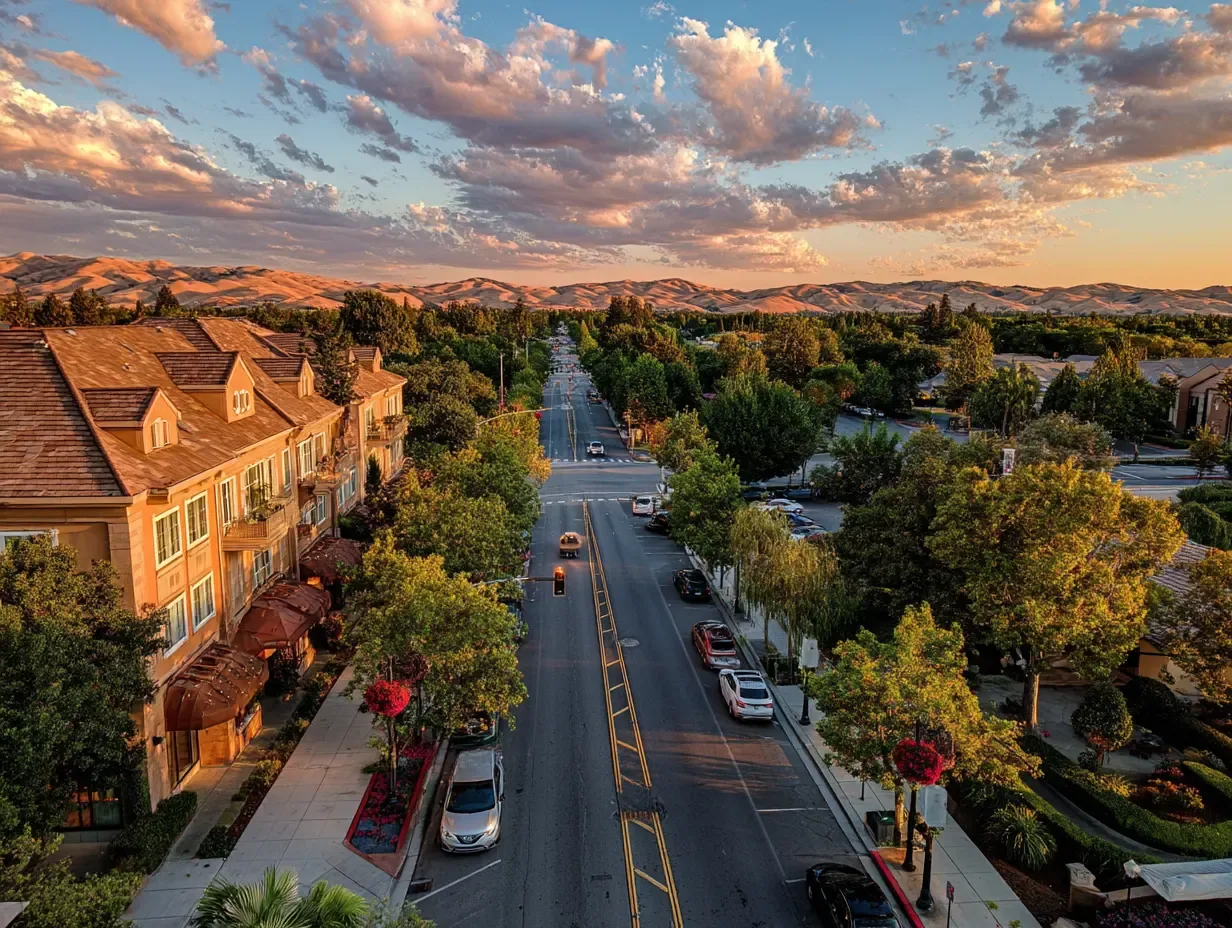
Commercial roofing in Interchange Business Park, Vacaville, with roof inspections, drainage checks, and repair scopes tied to the building's current use.
Heat movement can test seams and equipment curbs in Interchange Business Park, so we inspect the bond, edge metal, flashing, and receiving surface before setting a repair boundary. City planning materials identify business parks and industrial land near I-505 and North Village. That broad context locates the service area, but it does not establish an existing building's owner, operating schedule, or roof assembly. We confirm the property involved, who can authorize access, and whether the request concerns a current roof or a planned improvement before pricing.
Separate land use from roof condition
The planning corridor sits east of I-505 and west of North Village, between Vaca Valley Parkway and Midway Road. That geography helps identify the broad service area, but it does not establish where a particular building is complete or which roof systems it carries. On the first walk, we match the property map to roof zones, equipment, drains, and visible transitions. If plans show a coming use or construction change, we keep that scope separate from the assembly condition we can inspect now. A commercial roof inspection records what was reached, what was concealed, and which decision depends on an opening or current drawing.
Follow movement through the transition
Vacaville's regional heat advisories make repeated expansion a useful inspection consideration, not proof that a roof has failed. We follow a questionable seam into the adjoining field sheet and examine the curb flashing, fasteners, termination, and edge metal that carry its movement. A loose surface bead can hide an unbonded lap without repairing it. We look for a sound, dry receiving surface on both sides of the defect and mark where that material stops. If the separation continues beneath a patch or into insulation, the repair boundary widens. A moisture survey can help identify areas for confirmation, while an opening tells us what layer is present at the test point.
Give each outlet a defined path
Low areas around drains can hold water after the outlet itself is clear. We trace the roof elevations into the bowl, check the strainer and overflow, and inspect flashing at the edge of each opening. If debris is the only obstruction, cleaning may restore flow; if the surrounding surface slopes away, the correction can involve insulation or deck work. Adding a membrane over a low point will not supply missing fall. Before a recover is considered, we document water paths and test any layers whose condition is uncertain. Drain and scupper service can address a local outlet detail, and a repair scope should state whether it includes the bowl, flashing, or slope correction.
Identify materials before a patch is priced
Different assemblies need different repair materials and seam methods. We compare roof records with visible laps, fasteners, patches, and exposed edges, then identify what remains concealed. A TPO membrane depends on compatible sheet and a sound weld; a metal system moves at its attachment points and panel ends. We do not infer the material from a roof's color or a nearby property's use. If a layer has been coated, an adhesion check may be needed before restoration is priced. For an overlay, we review moisture, attachment, added height at curbs and edges, and drainage. An unsuitable retained layer calls for removal or further testing, not another cover. A small test patch is useful only if the cut edge, substrate, and surrounding sheet tell the same story as the visible surface. We record where the opening was made, what layers were present, and whether moisture or bond loss continued past the first seam. For a metal roof, we check fastener condition, panel laps, and whether movement at a termination has pulled flashing loose. Those observations keep the repair method compatible with the assembly instead of selecting a material from appearance alone. When records conflict with field findings, we identify the discrepancy before recommending another layer.
Coordinate access with the property's use
Industrial-type land can hold active buildings, vacant parcels, and projects at different stages. The property contact confirms what is operating and when a roof section can be opened. We plan material staging, lift access, interior protection, and the close-in window around those actual conditions. If another trade is moving equipment or adding a penetration, the curb height and flashing termination need approval before the membrane is cut. During phased work, we identify where temporary dry-in ends and which zone is available next. A phased reroof sequence should fit the building's confirmed schedule; a land-use designation cannot substitute for the owner's access plan. Timing depends on more than the crew's time on the roof. A lift route, protection inside the building, material delivery, weather exposure, and the length of each dry-in section affect the close-in plan. We separate work that can proceed immediately from items waiting on a test result or owner approval. If removal uncovers wet insulation, the exposed area needs a revised boundary and a plan for replacement before it is covered. The estimate should name that decision point and show whether added material or labor is included. This lets the owner compare options with the same access and protection assumptions.
Keep the property record tied to its roof
We label each building and roof zone on its own inspection record, with photographs of seams, drains, penetrations, and repair terminations. A separate visit near North Village receives its own findings rather than inheriting another property's roof history. The note separates what we observed from what remains behind the cover board or insulation. A property manager can use a condition report to track tested areas, approved work, and open questions for a later capital review. For a separate visit near Vaca Valley Business Park, we create a distinct set of findings rather than carry another property's roof history forward. A useful map also notes the access point and any roof zone excluded from the visit. If another building changes from office to industrial use, its new equipment schedule can affect penetrations and loading, but the adjoining property keeps its own assembly and work plan. We date each observation and attach the owner's approval to the affected zone. The next inspection can then revisit the same termination or drain and identify whether a previous repair remains intact or needs a new scope.
Questions Owners Ask
Does the General Plan change show that an existing roof needs replacement?
No. The change describes land use for several properties, not their roof condition. We inspect the assembly in place and separate repair, recover, and replacement choices from a planned change in use.
What should be checked where a seam meets an equipment curb?
The field sheet, seam bond, curb flashing, termination, and nearby fasteners all affect the repair boundary. We trace the transition into sound material and identify any concealed layer that needs a test opening.
Can a drain repair address water that remains in a low area?
A clear outlet may still sit below an area that lacks slope. We inspect the bowl and the elevations around it, then price cleaning or flashing separately from any insulation or deck correction.
How are inspections arranged for a property that is not yet occupied?
The owner confirms access, construction status, available drawings, and any active trade work. We define whether the visit is a design review or a field inspection before scheduling a roof opening.
Which records help compare roofs across the corridor?
Keep each property's plans, photographs, repair notes, and roof map under its own address or building identifier. We record the zones reached and the items still unconfirmed so a portfolio review can compare like conditions.
Related Roofing Work
- Commercial Roof Inspection in Vacaville, CA
- Commercial Roof Infrared Moisture Survey in Vacaville, CA
- Commercial Roof Drain and Scupper Repair in Vacaville, CA
- Commercial Roof Repair in Vacaville, CA
- TPO Roofing in Vacaville, CA
- Occupied Commercial Building Reroofing in Vacaville, CA
- Commercial Roofing in North Village, Vacaville, CA
- Commercial Roof Condition Reports in Vacaville, CA
Share the property location, roof plans, leak area, and access window. We will identify the assembly we can inspect and document a repair boundary or the test needed for the next decision.