Commercial Roofing in Green Valley Corporate Park, Fairfield, CA
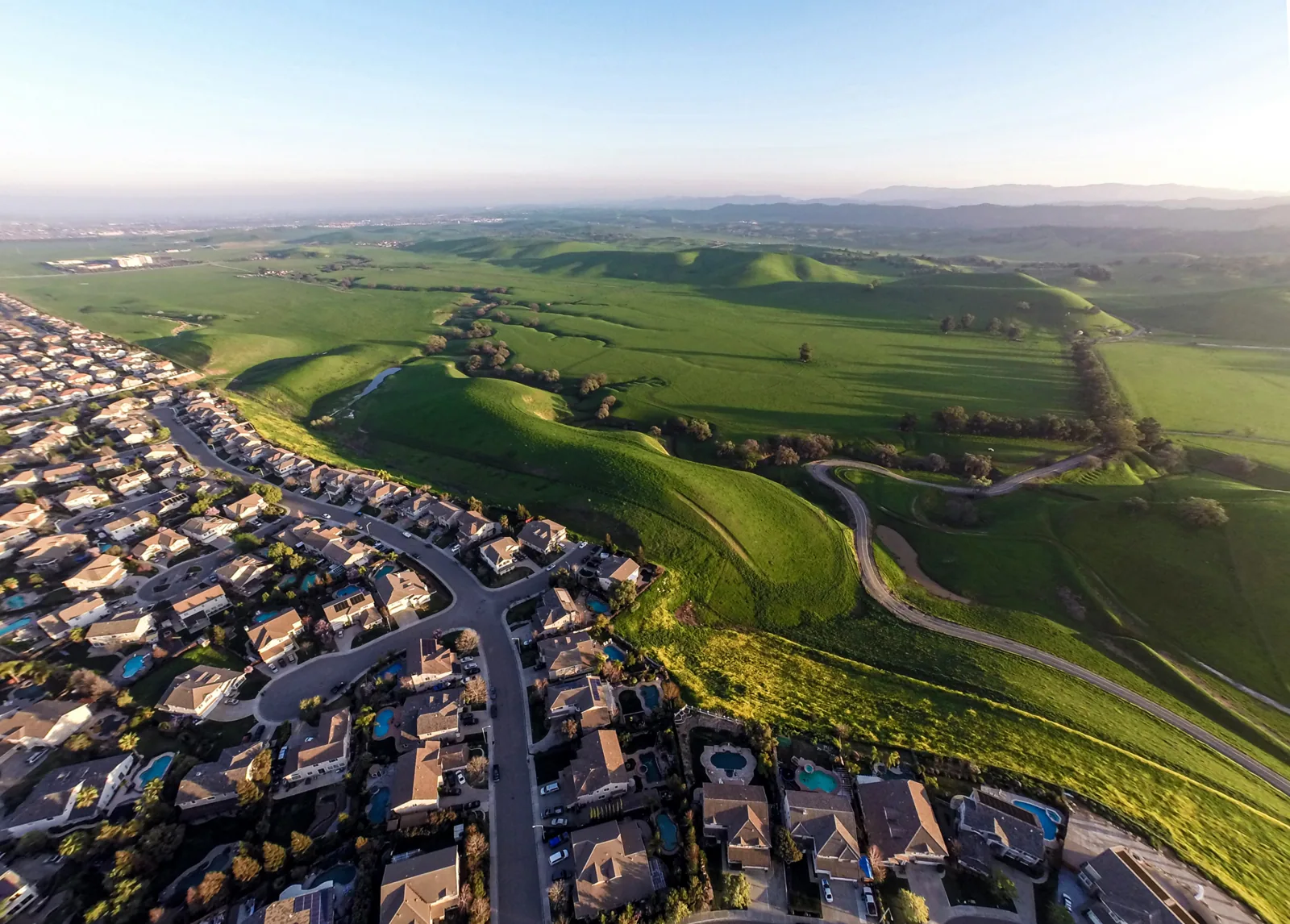
Commercial roofing in Green Valley Corporate Park, Fairfield, with seam, drain, and curb-flashing inspections for office and technical properties.
Heat movement at a long seam is a practical inspection question near the I-80 and I-680 crossroads of Green Valley Corporate Park. We trace the bond into the adjoining sheet, then check curb flashing, edge metal, fasteners, and drainage before defining a repair limit. The City lists this 150-acre Fairfield park for office, research and development, biomedical, and technical-support operations. Those are target uses, not a description of a particular tenant's schedule or roof system. We confirm the building, access, and current assembly first, then plan protection and close-in around its actual operations.
Find where the bond releases
A roof sheet changes length as its surface warms and cools. At a lap, curb, or wall termination, that movement tests the bond and fasteners. We look for a lifted edge, a split that continues under a patch, and a receiving surface firm enough to accept a repair. A bead of sealant cannot secure loose material below it. We mark the defect and inspect beyond its visible edge, including adjacent flashing and insulation where accessible. A commercial roof inspection documents the location and any concealed condition that needs a test opening before the repair is priced. We photograph the edge before removal and include the dry-in method in the work scope.
Set access with the property contact
Office and technical-support operations can have equipment, interior protection, and access requirements that change the work sequence. The property contact tells us which areas stay in use, when a lift can arrive, and how roof entry is controlled. We do not infer those details from the City's target-use list. Before removal, we agree on material staging, the sections that can be opened, and the close-in window. If a new unit or conduit is planned, the installing trade confirms dimensions and curb height before membrane work. An occupied-building plan divides the roof into protected zones that fit the approved schedule.
Check the low point and outlet together
Water can remain at a low point even when the drain is open. We inspect the outlet, strainer, overflow, and elevations leading into the bowl, then check the membrane and insulation around the depression. Cleaning may correct a blockage; a slope issue can require insulation or deck work. Coating changes the surface but not the underlying geometry. Before an overlay is considered, we test the retained assembly and confirm added height will not interrupt drainage at the curb or edge. Drain and scupper service addresses the outlet detail. An infrared moisture survey can help choose where to verify concealed wet material with a test opening.
Identify the system before choosing material
Plans may name a system, while field repairs can leave additional layers or incompatible patches. We inspect exposed seams, fastener patterns, terminations, and the material beneath any coating. A heat-welded TPO membrane needs a different seam repair than an EPDM sheet or metal panel. If the owner is considering a recover, we check attachment, moisture, height at curbs, and how the new edge will meet existing walls. The repair product must bond to a sound receiving surface. When the assembly cannot be identified from visible areas, a test opening can confirm the layers before the scope calls for a new membrane or restoration. At the receiving surface, we look for loose granules, old sealant, contamination, and a wet layer that would prevent a new bond. A membrane seam is checked for a continuous weld or lap, not just a straight appearance from a distance. Around a panel roof, we look at fastener washers and the condition of the flashing where panels meet walls. If the existing plan does not match what we see, we identify the discrepancy before writing a material-specific price. A short field test can prevent an incompatible patch from being applied to a previously coated or repaired area.
Compare repair with broader renewal
A local patch may hold when the defect ends at firm, dry material. Recurring seam failures, broad moisture, or poor attachment can change the choice to replacement. We map each roof zone and state which conditions are confirmed, which are concealed, and what test would affect the decision. Cost and timing include access, protection below, the number of curb details, disposal, and how much material must be removed before close-in. A repair scope identifies the patch limits; a replacement assessment sets removal depth and sequencing. The owner can compare both using the same building and access assumptions. A test opening should answer a named question: whether moisture crosses the visible stain, whether an old patch bonds to the original membrane, or whether the deck remains suitable for another layer. We set the opening where it can distinguish those conditions and plan the temporary cover before cutting. If the test shows that a small area is isolated, the proposal can keep a narrow repair limit. If wet material continues across seams or beneath equipment, we map the expanded area and revisit the choice. This sequence reduces the chance of pricing a repair that leaves the actual failed layer in place.
Carry the inspection into the next review
Green Valley Corporate Park is a distinct area within Fairfield, with its own property contacts and roof records. For each building, we label inspected zones, photographs, material observations, repair terminations, and areas that were not accessible. A nearby Fairfield Corporate Commons property does not inherit those findings. A condition report can carry open tests, approved work, and the next inspection date into a capital review. If a new tenant or equipment change alters access, the record shows which area needs another look. That makes the next decision about the roof in front of the owner, not a general description of the corporate park. The report should list each observation with its location and date, and connect it to a photo or test result. A manager can then separate a completed repair from a recommendation that still needs approval. If the roof is reviewed again after equipment work, we compare the curb dimensions and flashing to the earlier record. For multi-property planning, each building receives its own condition notes even if the same operating group manages both. The owner can prioritize a test, a temporary repair, or a larger renewal using known facts and stated unknowns, rather than combining roof conditions because two locations share a business-park label.
Questions Owners Ask
Does the crossroads location predict a roof's wind or drainage design?
No. The park's location identifies the area but not the assembly or its design. We review the plans and inspect attachment, seams, outlets, and exposed transitions before proposing work.
What should be checked at a roof curb before equipment replacement?
We inspect curb height, flashing, nearby membrane, and the path water takes around the unit. The equipment trade should confirm final dimensions before the roof opening is made.
Can an overlay remain an option if water ponds?
Only after the cause and retained layers are understood. We check drainage geometry, moisture, attachment, and added height; a slope correction may be necessary before another layer is installed.
How do you keep office operations protected during a repair?
The contact confirms access, hours, interior protection, and any equipment limits. We set a removal area that can be dried in and closed within the approved window.
Which documents are useful for comparing repair and replacement?
A roof map, prior repair history, leak locations, photographs, and current plans help define the same areas for both options. We note concealed conditions and tests still needed.
Related Roofing Work
- Commercial Roof Inspection in Vacaville, CA
- Commercial Roof Drain and Scupper Repair in Vacaville, CA
- Commercial Roof Infrared Moisture Survey in Vacaville, CA
- TPO Roofing in Vacaville, CA
- Commercial Roof Repair in Vacaville, CA
- Commercial Roof Replacement in Vacaville, CA
- Commercial Roofing in Fairfield, CA
- Commercial Roofing in Fairfield Corporate Commons, Fairfield, CA
Share the building location, leak area, roof records, and operating window. We will inspect the accessible assembly and identify a repair boundary or the test that could change the scope.