
Commercial Roof Puncture Repair in Vacaville, CA
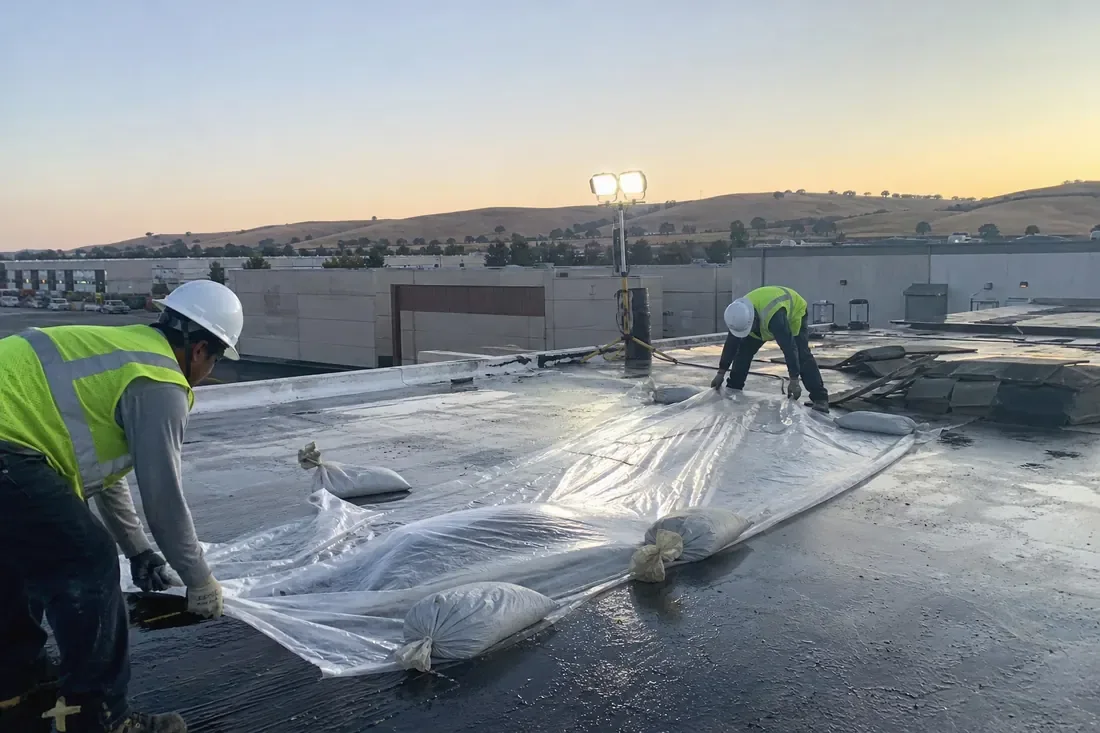
Repair membrane punctures and foot-traffic damage in Vacaville, CA. We test the affected layers, locate a stable patch area, and record the repair boundary.
A regional forecast included Vacaville among places expecting very hot days and warm nights. On a punctured roof, that weather context makes it useful to check whether a small opening has stressed the sheet around it. A dropped tool, loose fastener, service cart, or repeated foot traffic can cut or compress a roof layer, and the opening may be smaller than the wet area beneath it. We mark the reported route, inspect the membrane and insulation, then test beyond the visible mark. Downtown Vacaville's business district spans more than 450 businesses, while North Village includes planned commercial and business park uses. Those locations make access planning relevant, but the inspection identifies the actual roof and repair limit.
Identify what made contact with the membrane
A sharp cut, round impact, crushed board, and worn walkway leave different signs. We check the shape and edge of the opening, look for a tool or fastener nearby, and note whether the protective layer has split with the membrane. The walking route matters because repeated service access can polish a surface or compress insulation long before a leak is reported. Photographs include a wide view of the route and a close view of the defect. The roof inspection also checks nearby seams and penetrations so a puncture is not confused with an opening at an adjacent detail.
Foot traffic often leaves a path of softened or compressed insulation where technicians repeatedly approach a unit. A dropped screw or bracket may create a smaller point opening, while a sharp edge on a cart can score the sheet along its travel. We look for matching marks on protection board, walkway material, or the underside of a lifted patch. If the cause remains unclear, we describe the surface evidence without assigning a particular trade. That distinction matters when the owner decides whether a walkway or work practice should change after repair.
Test beyond the visible mark
Water entering through a pinhole can spread under the sheet, and compression can affect a larger board area than the cut itself. We probe the surrounding membrane, check attachment, and use moisture testing where the result could alter removal. If the area is wet or the cover board is crushed, the cutback continues to dry and stable material. We mark test points on a roof map and restore each opening after inspection. A moisture survey can guide test placement, but an opening is needed when the owner needs direct confirmation of the assembly layer.
We set test locations where they answer a decision: beside the cut, along the likely water path, and outside the apparent wet zone for comparison. A reading is tied to the method and roof area rather than generalized to the whole building. If the deck shows corrosion or the board has lost its shape, we photograph it and pause for direction before expanding the opening. The owner can then see whether the repair remains a local patch or includes a broader area of removal and restoration.
Match the patch to the roof system
A permanent repair needs compatible membrane and enough sound material around the puncture for a secure lap. On a thermoplastic sheet, we prepare and weld a patch; an EPDM roof uses a compatible primer, tape, or repair membrane selected for the existing surface. Coating over a cut without repairing the opening can leave a path below the new surface. When the impact also breaks a seam, seam repair should close that connection separately. If the edge of the patch reaches a curb, a flashing failure inspection confirms the transition before the new membrane is finished.
Patch size is not determined by the shape of the puncture alone. The repair needs enough prepared sheet beyond the cut to form a continuous connection and keep the patch edge away from weak material. If a prior coating or sealant covers the area, we remove only what prevents a reliable bond and record the preparation. The final detail should not create a raised edge that redirects runoff toward a seam or leaves a trip point on a service path. We check those surroundings before materials are placed.
Plan the route through the work area
Vacaville’s land-use plan identifies business and industrial-park areas near I-505 and North Village. That context helps plan travel; the property contact confirms roof access and operating rules. We ask the property contact which service route led to the puncture, where tools or carts are carried, and whether equipment shutdowns are needed to complete the repair. A North Village roof visit follows the building's own access rules. At a facility with recurring maintenance traffic, we can identify a walkway or protection detail for the route once the patch is complete. That helps reduce repeat contact with the repaired sheet without restricting access needed to service equipment.
Separate the patch from added protection
Price depends on puncture size, material type, moisture below the sheet, access, and whether a walkway or cover board needs replacement. We list the investigation, removal, patch, and surface protection separately so the owner can see which work addresses the opening and which helps manage future traffic. A limited commercial roof repair may resolve an isolated cut; multiple crushed areas or widespread wet insulation can call for a broader recover assessment or replacement comparison. We state the test results and any concealed condition that could change quantities before the crew extends removal.
Keep the repair point findable
Closeout records the repaired roof zone, membrane type, patch dimensions, moisture test points, and photos of the surface before and after work. If a service path was the cause, the record notes the route and any walkway protection added. The next inspection can check the patch edge and surrounding sheet instead of searching the whole roof. A condition report carries the location forward with any open questions. If a later visit finds another puncture nearby, the owner can compare its position with the earlier traffic route and decide whether the access protection needs to change. We note when the patch should receive its next visual check and which roof contact can release the area for that review.
Questions Owners Ask
Can a tiny puncture cause a large wet area?
It can allow water to spread beneath the membrane, but the wet boundary has to be tested. We inspect the layers around the opening and identify how far removal should continue before a patch is installed.
Will a patch hold if people still need roof access?
The patch can be made sound, then a route or walkway can be reviewed for repeated traffic. We locate the access path and nearby equipment before recommending protection that still allows safe maintenance.
How can we tell puncture damage from a split seam?
A cut or impact mark often has a localized shape, while a seam opening follows the lap. We inspect both the membrane surface and its bond line, then record each finding separately if they meet in the same zone.
Do you replace insulation beneath a puncture?
Only where testing or an opening shows it is wet, crushed, or detached. We mark the extent and stop at material that is dry and stable, then restore the roof layers with compatible components.
What details should be in the repair record?
Keep the roof location, material, patch size, test points, photos, and any changed access route. That record helps a later inspection compare the same spot and identify whether nearby traffic is affecting the sheet.
Related Roofing Work
- Commercial Roof Inspection in Vacaville, CA
- Commercial Roof Infrared Moisture Survey in Vacaville, CA
- Commercial Roof Seam Failure Repair in Vacaville, CA
- Commercial Roof Flashing Repair in Vacaville, CA
- Commercial Roofing in North Village, Vacaville, CA
- Commercial Roof Repair in Vacaville, CA
- Commercial Roof Recover and Overlay in Vacaville, CA
- Commercial Roof Condition Reports in Vacaville, CA
Tell us where the opening was reported, what equipment is nearby, and when roof access is available. We will test the surrounding layers and show the patch limit and any protection needed for recurring traffic.