Commercial Roof Asset Management in Vacaville, CA
Track Vacaville commercial roofs with building-level records, repair limits, photographs, and priorities that support maintenance and capital decisions.
A portfolio register is useful only when a reader can connect each entry to a roof zone and a decision. Begin with the building identifier, the known assembly, access conditions, drainage points, equipment, and the date of the observation. Keep a separate record for each section when systems or repair histories differ. Photographs should show both the detail and its place on the roof plan, while notes distinguish confirmed conditions from questions left for a later visit. A heat advisory that included Vacaville is environmental context, not a condition rating. The register should make the next field check more precise, not replace it.
Give each roof its own record
The first inventory pass is a reconciliation exercise. Match each property identifier to the roof plan, prior work orders, warranty file, and the person who can grant access. Where the documents disagree, retain both versions and mark the item for field confirmation rather than overwriting the record. Divide large roofs by expansion joint, drainage basin, or clearly mapped zone so a later technician can report the same place. Add approximate system and attachment only when observed or supported by closeout material. A photo-supported condition reports can then carry dated images and notes into the register without turning an old label into a current finding. For supporting images and dated findings, attach photo-supported condition reports to the matching roof zone.
Separate condition from urgency
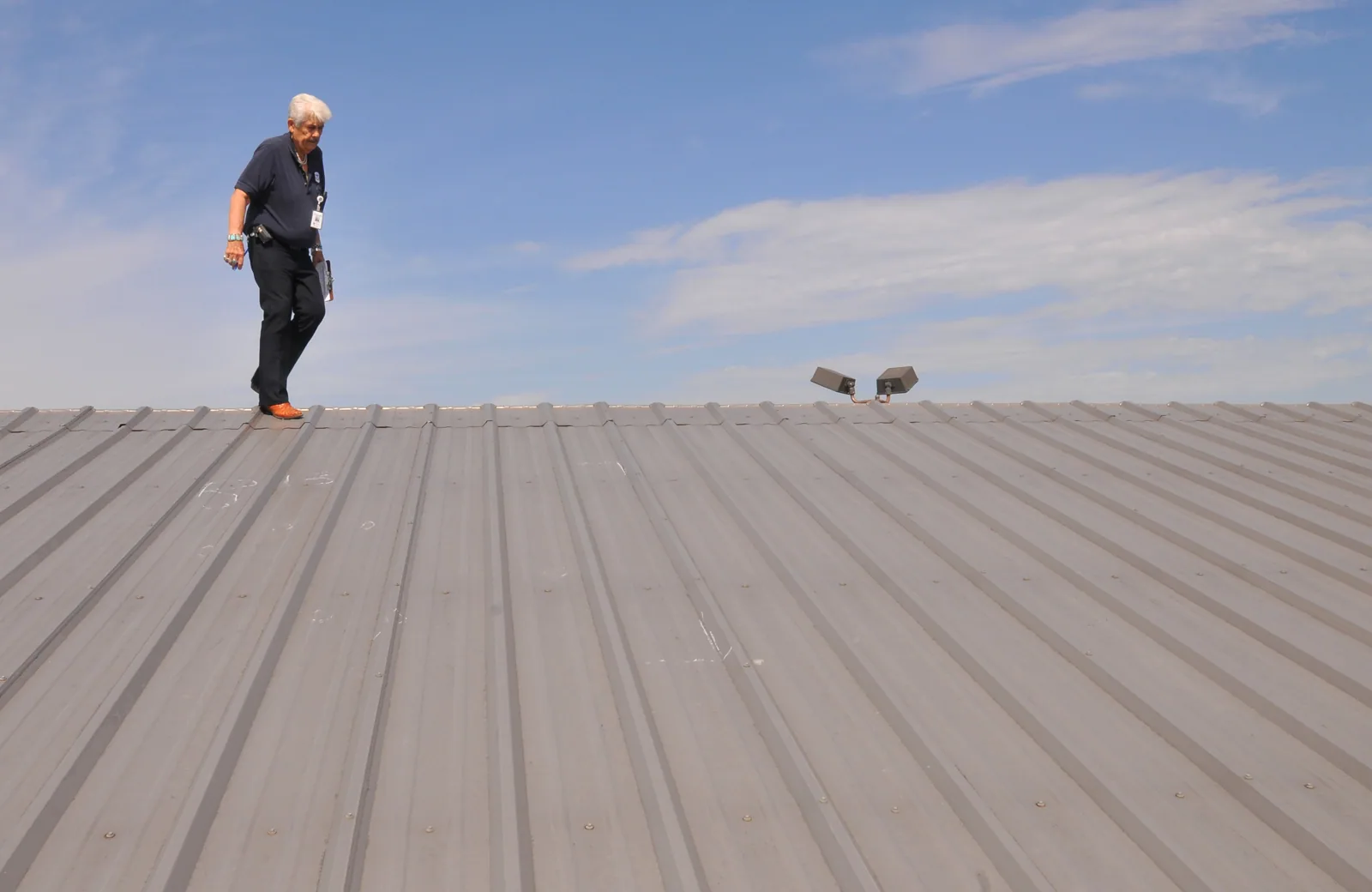
Priority should reflect consequence and evidence, not a broad color code. A leak over equipment, repeated water entry, or a soft area can require action before surface wear that is stable and dry. For each item, record what was seen, what is still uncertain, and what would change the recommendation. That might be a moisture confirmation, an opening at the deck, or access to a detail hidden behind equipment. An on-roof inspection supplies current observations; it does not make every listed concern urgent. Keep the decision date beside the condition so the next review can see whether the risk has changed.
Use local context carefully
Territory labels help a portfolio team assign a call, but they should not become a condition rating. A roof mapped to the I-80 route or the nearby I-505 corridor still needs its own asset identifier, ownership record, and replacement horizon. In Downtown Vacaville, the Business Improvement District represents more than 450 businesses; that is useful context for route planning across a district, not evidence about any particular roof. Keep the district field separate from the building record. If two properties sit near Vaca Valley Business Park, a shared dispatch zone may group the visits, while each property retains its own system, contacts, and approval path. A portfolio export can then sort by location without treating neighboring buildings as a single project. Use geography to organize work queues; tie every inspection finding and spending decision to the roof it actually describes.
Connect repairs to the assembly
Close each repair record with a map mark, dated photographs, materials removed, and what remained in place. The next service technician needs to see whether work stopped at a seam, drain, curb, or wall return, and whether adjacent material was tested or simply left outside the scope. A note such as “leak fixed” cannot answer those questions. Attach a defined repair scope to the corresponding roof zone and identify any follow-up observation. This gives an owner a clean history when a leak returns without presuming that the earlier repair caused it.
For a portfolio with multiple owners or service teams, record who requested the repair and who accepted the completed work. Preserve the approval, scope boundary, and closeout date with the property record; do not mix a contractor invoice with an inspection finding. If a later budget review asks why a repair was selected, the manager can trace the decision to the dated observation and compare the result with the next visit.
Include the work authorization number when one exists, along with the contractor and completion date. That lets an accounting review trace the cost to the exact roof section rather than to a broad property expense.
Schedule visits by exposure and need
Set recurring visits by exposure and documented condition. A roof with a recently repaired lap may warrant a check after the next major maintenance event, while another property may need only a scheduled drain review. The calendar should identify the task, person responsible, access instructions, and the finding that would move work forward. A preventive maintenance visit can update those fields with current observations. If concealed moisture could alter the plan, an infrared moisture survey can help select confirmation points; keep an indicated area separate from a verified wet assembly.
Make portfolio comparisons useful
During a capital review, put each roof into an action category only after the underlying observation is attached. A drain correction, repeated seam opening, and an unresolved wet-area indication represent different decisions. The summary can show expected timing, but the roof-zone record should preserve what supports it. capital planning support can carry those items into an owner’s budget discussion. If the inspection indicates broad renewal, a replacement assessment should list removal limits, access assumptions, and the condition that could change quantities. That keeps the portfolio comparison tied to property evidence rather than a single rating.
Keep the next handoff readable
When responsibility changes, transfer the roof plan, inspection date, current work order, open question, and next review date together. Identify the person who can authorize access and the location of the warranty and closeout records. A due-diligence roof survey can establish a new baseline for an acquiring owner, while the asset register retains the sequence of observations made afterward. The handoff should make clear whether a listed item was repaired, monitored, or left pending verification. That distinction prevents a new manager from treating an estimate as completed work.
Keep a copy of the approved scope next to the dated closeout photos so each future visit can identify what changed.
For recurring work, retain the vendor, completion date, warranty document, and any owner acceptance note with the roof-zone history. A future manager can then see whether an open concern was monitored or closed, and which visit produced the latest condition record. The same file should identify the next person responsible for review.
Also record the approved access contact and any roof-area key or escort requirement; these details keep the scheduled asset review from becoming a second discovery visit.
Questions Owners Ask
How do you divide a roof for an asset register?
Use the roof plan and durable landmarks such as expansion joints, drain basins, and equipment rows. Each zone receives its own assembly note, photographs, inspection date, repair history, and follow-up item so a later visit can return to the same location.
What if a warranty file and field label disagree?
Keep both records with their source and date, mark the system identification as unconfirmed, and schedule a field review. Do not replace one description with another until the installed layers and any later repair can be reconciled.
Can a portfolio score determine which roof to replace?
A score can help sort work for discussion, but replacement should follow the condition at the building. The owner needs the observations, moisture results, access assumptions, and repair boundary that support a renewal decision.
What should a completed repair entry contain?
Record the roof zone, materials installed, area left outside the work, closeout photographs, and date. If a test or follow-up remains open, keep that item visible rather than closing the record as though every question was answered.
Which information should transfer to a new manager?
Provide the current roof plan, inspection and repair records, warranty documents, open work orders, access contact, and next review date. Identify which items are verified and which still need a field check.
Related Roofing Work
- Commercial Roof Condition Reports in Vacaville, CA
- Commercial Roof Inspection in Vacaville, CA
- Commercial Roofing in Vaca Valley Business Park, Vacaville, CA
- Commercial Roof Repair in Vacaville, CA
- Commercial Roof Maintenance in Vacaville, CA
- Commercial Roof Infrared Moisture Survey in Vacaville, CA
- Commercial Roof Capital Planning in Vacaville, CA
- Commercial Roof Replacement in Vacaville, CA
Share the property list, available roof records, leak history, and operating windows. We will inspect the selected assemblies, map observed conditions, and leave a building-level record for the next maintenance or capital choice.