Commercial Roof Due Diligence in Vacaville, CA
Review a Vacaville commercial roof before acquisition or refinancing with mapped conditions, photographs, repair questions, and defined follow-up testing.
Roof due diligence is a comparison exercise: the buyer supplies a record set, and we log assembly features that can be reached during the site visit. Vacaville’s position on I-80 near I-505 helps route the inspection, while the roof itself must be verified on site. We classify each mismatch as a document gap, visible defect, inaccessible area, or test question. The buyer can then see which item supports a reserve, which requires authorization, and which remains outside the survey before the transaction decision is made. The closeout assigns each open item to a roof zone and a defined next check.
Reconcile the file with the roof
We review available plans, closeout records, invoices, warranty documents, and leak history before the site visit. A document may identify a membrane or a past project without showing whether later equipment work, a tenant improvement, or another repair changed the assembly. We match records to roof zones where possible and flag gaps rather than inferring a system from a generic description. On the roof, we note the membrane, seams, penetrations, edge metal, drains, curbs, and transitions that can be reached. A photo-supported condition report ties each observation to a location and lets a buyer distinguish file statements from current field findings.
Define the survey boundary
Before inspection, we confirm which buildings and roof sections are included, who can provide access, and whether equipment or tenant operations limit the route. The report states the areas we could inspect, conditions that prevented access, and any destructive testing that was not authorized. We also identify the date of the visit, the records considered, and whether the roof was dry or recently exposed to rain. If an owner needs a decision before a closing date, those boundaries make it easier to distinguish a completed survey from work that still requires authorization or access. The findings can then be reviewed by the buyer and its project team without suggesting that uninspected areas received the same examination. A survey without that boundary can be read too broadly, especially when one property includes additions or separate roof assemblies. We note whether a roof plan was available and identify the plan reference used in photographs. For a portfolio acquisition, a roof asset register can preserve property-by-property records, while the transaction survey remains focused on the assets under review.
Look at transitions before averages
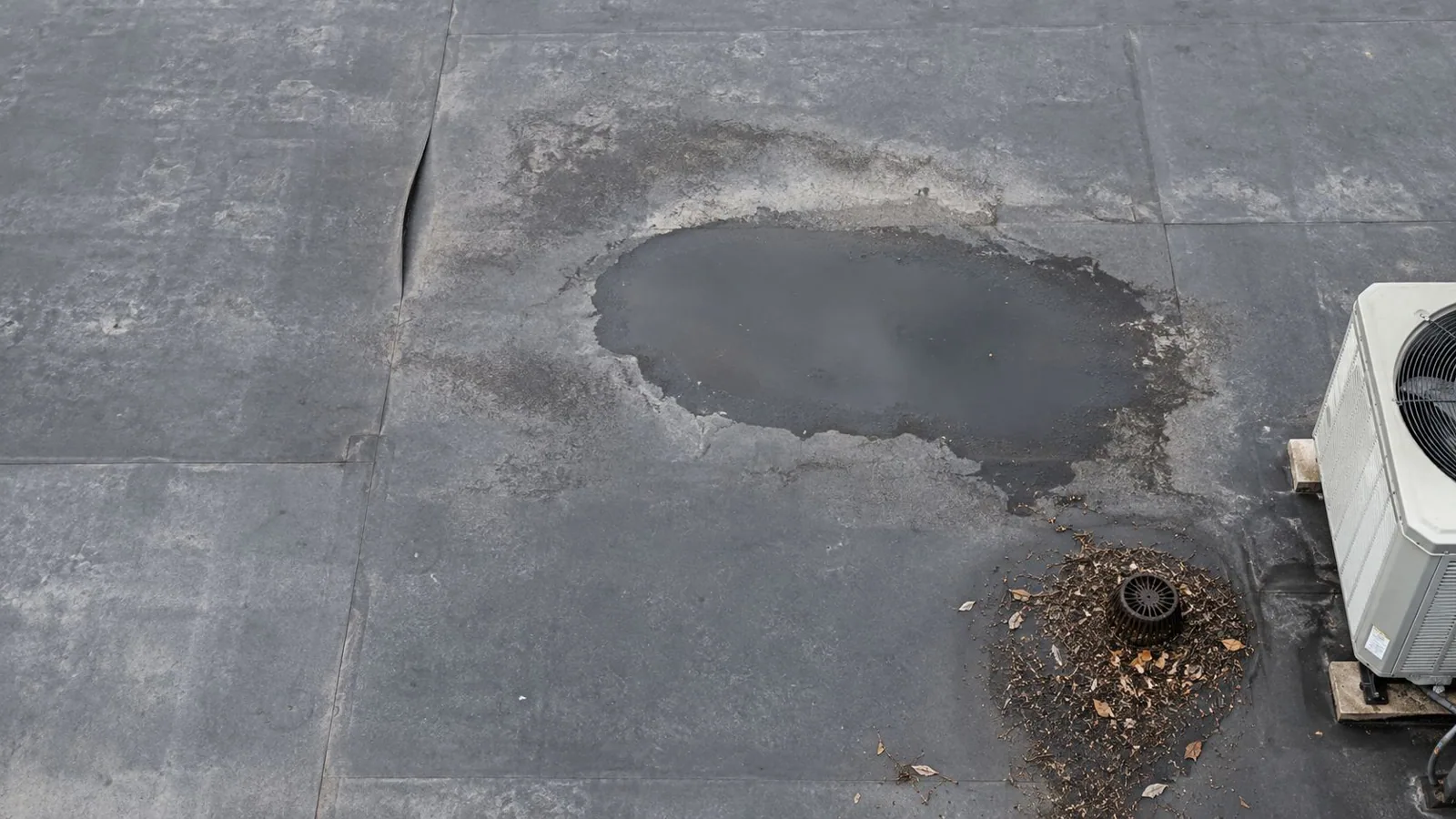
Broad roof ratings can conceal the details that control water entry. We inspect seams, terminations, drains, scuppers, curbs, penetrations, and wall connections, then note visible splitting, separation, loose material, ponding, or prior patches. At a membrane seam, the question is whether the bond line and receiving sheet remain sound. At a drain, we consider the basin, flashing, overflow, and slope around the low point. If a surface indication suggests concealed moisture, we recommend confirmation only where the answer could change the scope. An infrared moisture survey can help choose test locations, while a hands-on inspection documents details and accessible roof conditions.
Keep local context in proportion
For a transaction that includes a Vacaville asset, we tie each roof observation to the property record rather than treating nearby development as evidence about that roof. City materials identify the I-505 industrial land corridor from Vaca Valley Parkway to Midway Road, west of North Village. We use that place name only to orient the inspection route; the buyer still receives a separate roof-zone map, access note, and condition record for each included building. The diligence summary distinguishes a visible finding from a question that needs a test opening, a current drawing, or owner authorization. Vaca Valley Business Park remains a geographic reference, not a condition claim. The decision file lists the evidence that supports each reserve item and the next step needed to firm up any open quantity.
Separate repair from capital exposure
For each finding, we state the observed condition, its location, the possible roof consequence, and the next action that would resolve uncertainty. A localized split with stable material around it may support a bounded repair. Wet insulation across multiple areas, failed attachment, or a deteriorated deck can require a broader investigation and replacement comparison. We do not translate a stain below into a roof quantity without tracing the path. If the buyer needs a budget scope, a capital planning review can organize confirmed work, optional corrections, and open assumptions. A repair proposal or a replacement assessment then describes the work to be priced against the actual condition.
Order the additional checks
Some questions need access to an attic, a test cut, a core, a drain survey, or confirmation of the installed assembly. We identify the specific area and state why the answer matters. If the buyer authorizes a test opening, we photograph the layers and restore the area under an agreed close-in plan. If destructive testing is outside scope, the report keeps that item open instead of describing it as a verified condition. For an inspection in the I-505 industrial land corridor, the property contact confirms equipment routes and operating schedules before the visit so the survey window reflects that building. An outlet and drainage review can be added when a low area or repeated ponding may affect the transaction plan.
Give the transaction team a clear record
The deliverable organizes photographs, mapped defects, documents reviewed, areas not accessed, and recommendations by building and roof section. We include a brief condition summary, but retain supporting observations so a single label does not replace the evidence behind it. We separate immediate protection from repair planning, maintenance, replacement considerations, and unresolved testing. That structure helps a buyer compare findings with seller records and decide what belongs in a closing condition, reserve, or later project scope. It does not state a value for the property or make a coverage decision on behalf of a warranty issuer. If the roof remains under review after the transaction, scheduled maintenance can establish a current service record, and a warranty file review can organize the documents available to the new owner. We invite the team to share its closing window and roof records so the survey answers the defined transaction question.
Questions Owners Ask
What does a due-diligence roof survey include?
We review the supplied records, inspect included roof areas, photograph visible conditions, and identify repair, replacement, access, and testing questions. The report also states the boundaries of the survey so the findings are not applied to areas that were not reached.
Can the survey confirm how long the roof will last?
A field survey documents condition and visible repair needs; it does not assign a fixed remaining life. We describe the evidence, note unknown layers or access limits, and identify further checks that could change a replacement or maintenance decision.
Should destructive testing be part of the transaction review?
It is useful when concealed moisture, deck condition, or assembly identification could change the scope. We name the proposed location and close-in plan, then proceed only when the owner authorizes that opening and restoration.
How do you treat missing roof records?
We list what was provided and what could be confirmed in the field. An absent closeout or unclear membrane description remains an open item, and we recommend inspection or testing where that gap affects repair compatibility or the buyer’s planning.
Can a survey cover several buildings in one acquisition?
Yes, if each building and included roof zone is identified before the visit. We can coordinate access and present findings together, but retain separate maps, photographs, conditions, and follow-up items for every assembly.
Related Roofing Work
- Commercial Roof Condition Reports in Vacaville, CA
- Commercial Roof Infrared Moisture Survey in Vacaville, CA
- Commercial Roof Inspection in Vacaville, CA
- Commercial Roofing in Vaca Valley Business Park, Vacaville, CA
- Commercial Roof Capital Planning in Vacaville, CA
- Commercial Roof Repair in Vacaville, CA
- Commercial Roof Replacement in Vacaville, CA
- Commercial Roof Drain and Scupper Repair in Vacaville, CA
Send the roof records, building list, inspection boundary, leak history, and closing window. We will document accessible conditions and identify which repair or testing decisions need resolution.