Commercial Roof Capital Planning in Vacaville, CA
Plan Vacaville roof capital work with condition evidence, repair comparisons, replacement timing, drainage needs, and operating constraints for each building.
A capital plan is useful when it turns separate roof observations into decisions that an owner can schedule and fund. We first map the assembly, service history, drainage, and active conditions, then separate immediate water-control work from planned renewal. The plan keeps each building's scope and uncertainty visible, so a portfolio ranking does not make unlike roofs appear interchangeable. A Central Solano County heat advisory listed Vacaville among cities forecast for very high daytime temperatures and warm nights; that context can help prioritize inspection timing, but it does not establish roof damage.
Set the condition baseline
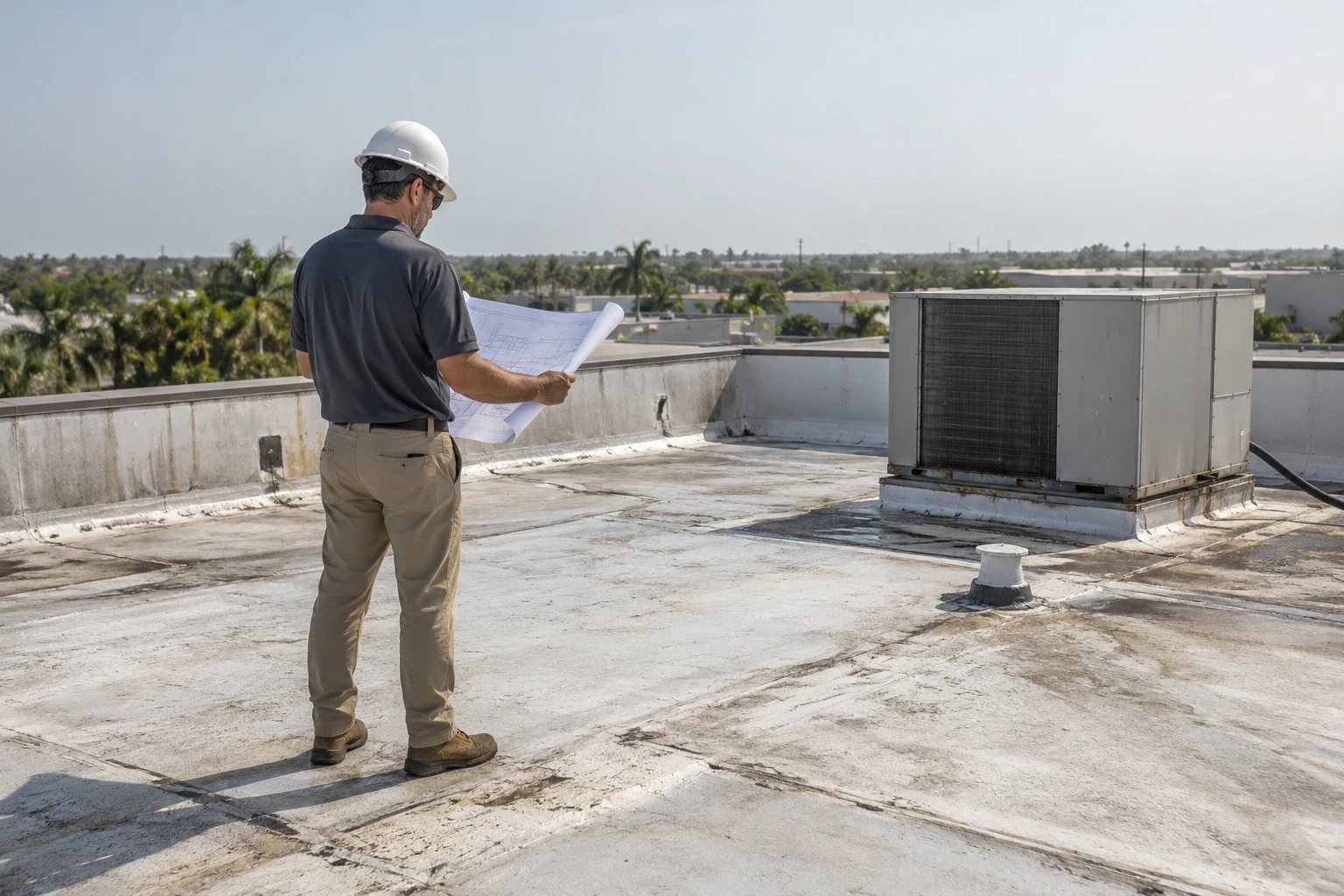
The baseline begins with a roof plan and field observations. We mark active leaks, prior patches, open seams, soft or wet insulation, damaged edge metal, curb transitions, ponding, and any area that could not be reached. A report should distinguish what was visible from what requires a test opening. We also record the approximate assembly and the basis for that identification, since an old invoice may not describe later changes. A written condition report with photographs gives an owner a way to compare a future visit against the same roof zones. It also helps separate a maintenance item from a repair that needs a defined proposal before funds are allocated.
Compare repair with renewal
A capital decision should show what another repair can resolve and what it cannot. We identify whether a failure is local to one flashing or seam, repeated across independent roof areas, or associated with moisture or movement beneath the membrane. If sound material surrounds the defect, a bounded repair may extend useful service while the owner plans a larger project. If wet insulation, unstable attachment, or deck deterioration is widespread, the removal boundary can become a replacement question. We compare the same roof zones across options so a repair proposal and a replacement scope do not describe different assumptions. The owner sees the condition, the evidence gap, and the work that would change the decision.
Put timing against real constraints
Timing depends on more than a calendar year. A leak over production space, limited roof access, rooftop equipment work, a tenant turnover, or a planned interior project can change the useful window. We identify what must be protected now, which inspections can wait for a coordinated shutdown, and what work should precede a new tenant or equipment installation. Vacaville’s target sectors include biotechnology, advanced manufacturing, industrial production, and logistics. Those sectors do not establish the operating plan for one building, but they make it sensible to ask the property contact about deliveries, clean areas, equipment, and close-in windows before setting a sequence. At Vaca Valley Business Park, the recorded acquisitions for biomanufacturing facilities make nearby project context visible; each roof still requires its own access and condition review.
Account for layers and water paths
Replacement budgets change when the scope includes wet insulation, deteriorated cover board, deck repairs, tapered insulation, drain corrections, equipment support, or higher curb flashing. We inspect the roof and identify which layers are confirmed and which may only be seen after opening. Drainage deserves a separate line of review: a new membrane cannot correct a low area if the deck and insulation elevations remain unchanged. The proposal should state removal limits, temporary protection, material layers, edge and penetration details, and how concealed conditions will be reviewed before close-in. It should also distinguish confirmed quantities from allowances that remain subject to opening the assembly. That distinction lets ownership compare a defined scope with a contingency without treating both as completed findings. For an overlay comparison, a roof recover assessment considers retained moisture, attachment, added height, and applicable requirements before treating an existing layer as reusable.
Keep code review tied to the project
Before a design moves to permit, the owner’s project team checks the applicable building and energy provisions against the scope, occupancy, and review path. We record that coordination as an open dependency and avoid treating a reserve number as a code interpretation. The City’s planning activity report lists proposed industrial and commercial projects, including warehouse and retail proposals; a proposal does not describe a completed building or its roof. For an existing facility, budget quantities still come from measured roof zones and an identified assembly. If added insulation changes curb height, or a drain move affects water flow, those transitions belong in the scope comparison. The designer and permitting authority confirm requirements that apply to the selected project.
Rank work without flattening differences
A portfolio table can put urgency, scope status, and decision timing side by side, while each building retains its own report and uncertainties. We can distinguish an active water entry, a repair with a known boundary, a roof needing a survey, and a replacement concept still awaiting design. The ranking should state the reason for priority, not hide it in a color alone. For industrial properties near the Vaca Valley Business Park and businesses represented by Downtown Vacaville’s district, roof plans may call for different access and sequencing even when the funding year is shared. A roof asset register carries the field record forward, and multi-site program planning can coordinate visits without treating separate assemblies as one condition. The decision log can identify who approved the work, which allowance was used, and what condition would trigger a return visit. That keeps a deferred item visible without describing it as repaired. At the next budget cycle, the owner can compare the same roof zones, review updated photographs, and decide whether concealed conditions or changed operations justify a new inspection.
Leave a decision trail
When ownership approves a project, we keep the inspection basis, selected option, exclusions, and unresolved items with the scope. If a tear-off later reveals a different deck or moisture condition, the opened area is photographed and the owner receives the change before that section is covered. This makes the final record useful for future maintenance rather than just confirming that a contract closed. For a lender or buyer reviewing an acquisition, a separate roof due-diligence survey can address transaction questions, while the capital plan remains focused on repair and renewal timing. Share the available roof records and operating window, and we can define the inspections and comparisons needed for the next funding decision.
Questions Owners Ask
What evidence is needed before placing roof work in a capital year?
We document the assembly where it can be identified, visible defects, prior repairs, moisture indicators, drainage, and access limits. If a test opening or additional survey could change the replacement boundary, we list it before treating an allowance as a confirmed scope.
How do you compare another repair with replacement?
We compare the same roof zones and state what each option resolves. A repair is considered where sound receiving material supports a bounded correction; broader wet areas, recurring failures, or an unstable substrate can make removal the more relevant planning case.
Does a recently adopted code edition set the roof replacement date?
No. The adopted code is a coordination issue for a proposed project, not a condition report or age-based replacement trigger. We identify the scope and building details that need review, then confirm applicable requirements with the project team and authority.
Can a capital schedule cover several properties?
Yes, when the schedule keeps each building’s findings and uncertainties separate. We can group inspections and show priorities together, while retaining separate roof plans, access windows, repair limits, and replacement assumptions for each asset.
What changes a roof replacement allowance after work opens?
Hidden deck damage, wet insulation, or a different layer arrangement can change removal and reconstruction. We photograph the opened area, explain the difference from the surveyed condition, and request direction before covering the added work.
Related Roofing Work
- Commercial Roof Condition Reports in Vacaville, CA
- Commercial Roof Repair in Vacaville, CA
- Commercial Roof Replacement in Vacaville, CA
- Commercial Roof Recover and Overlay in Vacaville, CA
- Commercial Roofing in Vaca Valley Business Park, Vacaville, CA
- Commercial Roof Asset Management in Vacaville, CA
- Multi-Site Commercial Roof Programs in Vacaville, CA
- Commercial Roof Due Diligence in Vacaville, CA
Send the roof plans, repair history, current leak locations, and operating constraints. We will inspect the assemblies, compare repair and replacement boundaries, and organize the findings for a building-level capital decision.