Commercial Roofing in Downtown Winters, Winters, CA
Commercial roof inspections and repairs for Downtown Winters, with careful work planning around historic commercial buildings, access, and occupied spaces.
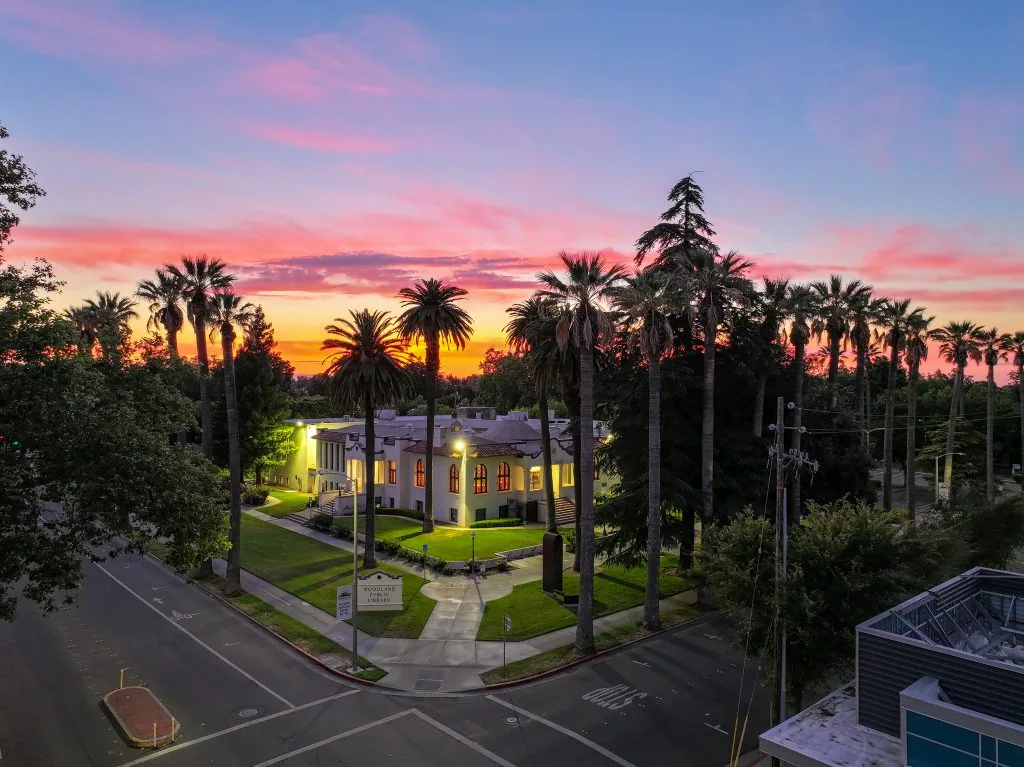
Work above a pedestrian-oriented block calls for a building-specific plan as well as a sound roof repair. Downtown Winters is a pedestrian-oriented core with historic commercial buildings, street trees, and period lighting. Those features set a preservation context; they do not reveal a roof's age or assembly. We begin by confirming the property contact, access route, reported leak, and any work window that keeps the entrance usable. The first walk then follows the roof surface from the field to edges, walls, curbs, and drains. We record what is visible and identify any test needed before pricing concealed layers. That keeps the recommendation tied to the actual building while respecting the district's public-facing character.
Trace water without guessing at its path
A ceiling stain is a starting point, not a roof diagnosis. We compare the reported room and timing with the roof zone above, then inspect seams, penetrations, wall transitions, and the route toward each outlet. If water can move under a membrane or along a deck, the interior mark may sit away from the opening. We photograph the suspected path and note whether the surface is wet, separated, patched, or difficult to reach. The owner can use a commercial roof inspection to understand the visible conditions before approving repair. If a test opening is needed, the report identifies its purpose and the close-in plan. A single confirmed entry point should not be presented as proof that every nearby roof section needs replacement.
Before the visit, gather the last repair invoice, any roof plan, and the exact room or tenant report if those records are available. We do not need a complete archive to start. A date, photo, or note about rain conditions can help us choose where to inspect first, then the roof determines the next step. During the walk, we label each observation as visible, tested, or still concealed. That distinction matters when a surface detail looks intact but water appears below it. The owner can approve a small diagnostic opening when the likely benefit is clear, with the location and protection method agreed before cutting. No conclusion about a hidden layer belongs in the proposal until it has evidence behind it.
Protect the boundary of a historic storefront
Where a roof meets a parapet, wall, sign support, or older curb, the transition deserves its own inspection. We check whether flashing is attached, whether the receiving surface is sound, and whether prior sealant conceals a gap instead of closing it. Before work, we document the existing detail and the proposed repair limit. That record helps the owner review an intervention without assuming the historic character below can tell us which material is overhead. A repair scope should name the substrate preparation, flashing or membrane receiving the work, and the edge of the area restored. If the surrounding assembly is brittle or damp, we pause at that boundary and explain what wider repair would involve rather than stretch a patch over an uncertain base.
Separate drainage from roof-plane correction
Low areas and blocked outlets call for different responses. We inspect the drain or scupper, surrounding flashing, overflow path, and visible slope, then note whether debris is the only obstruction. Clearing an outlet cannot correct a depression in the roof plane. A drain and scupper review can address the connection, while a separate scope may be needed if insulation, deck, or membrane conditions are involved. This distinction matters when a building has limited access windows: the owner can authorize a contained maintenance visit without confusing it with a larger correction. We mark each outlet on the roof record and identify the condition that would change the recommendation, such as a soft area or moisture found beneath the surface.
Match the repair to the assembly
Before coating or recovering a roof, we verify the material and check whether the existing layers are suitable to receive more work. A seam system and a metal panel require different preparation, flashing details, and compatible repair products. Our review looks for loose laps, fasteners backing out, failed coating adhesion, and transitions added around equipment. Where an existing membrane may be recoverable, the assembly still needs to be stable and moisture conditions understood. If it is not, the owner can compare a defined repair with a broader roof recover assessment or a replacement plan. We explain the assumptions behind each path, including what remains concealed and which inspection or test would resolve that uncertainty.
Coordinate access on active downtown blocks
Work staging is a practical part of the roof scope. The property contact confirms when crews can enter, where materials can be brought in, and which areas below need protection. We do not assume a sidewalk, street, or shared entrance is available for loading just because it is close to the roof. For occupied space, the sequence identifies each area opened and the point at which it will be closed and checked. A temporary dry-in and a permanent repair are recorded as separate actions. If a schedule changes, the owner should know which decision is needed before the crew moves to another zone. That communication helps keep access orderly without making promises about public routes or building operations that have not been confirmed.
For a repair near a public-facing entrance, sequencing also includes who will move signs or protect merchandise, if the property contact says that is needed. The crew confirms where ladders and temporary materials can be placed rather than assuming a curb or walkway can be used. We divide the roof into manageable work areas, identify the expected close-in point, and state how the exposed edge will be secured if conditions change. Before demobilizing, the lead checks seams, terminations, and any temporary cover, then records the result for the owner. This creates a clear handoff for the next service visit and helps distinguish an interim weather measure from completed permanent work.
Keep each district record property-specific
Downtown is the heart of Winters and supports local businesses, but a district description cannot substitute for a roof record. We keep photographs, observed materials, repair boundaries, access notes, and unresolved tests associated with the building inspected. Main Street, Railroad Avenue, and Grant Avenue/State Route 128 are principal downtown streets, with the Main Street Corridor serving as one of the local work areas. A location name helps orient a service call; it does not transfer an inspection result from one property to another. A roof condition report separates completed work from recommendations awaiting approval, giving the owner a clear starting point for maintenance and future capital review.
Questions Owners Ask
Does the downtown plan describe a particular roof assembly?
No. Downtown Winters has a pedestrian-oriented core with historic commercial buildings, street trees, and period lighting. We identify the actual membrane, panels, flashing, and condition during a property inspection.
How do you work around a busy entrance?
The property contact confirms access, protection below, deliveries, and the work window. The crew stages one roof zone at a time and documents its close-in condition.
Can a ceiling stain locate the exact opening?
Not by itself. Water may travel along a layer before appearing indoors, so we compare the report with roof seams, penetrations, transitions, and drainage.
When should a repair become a replacement review?
We explain that choice when the receiving material is unsound, moisture extends beyond the defect, or multiple details cannot be restored as a contained repair. Any concealed condition is identified separately.
What records will I receive after service?
The closeout identifies the roof zones inspected, photographs, material observed, work limits, and any open test or approval. A completed repair stays distinct from a recommendation.
Related Roofing Work
- Commercial Roof Inspection in Vacaville, CA
- Commercial Roof Repair in Vacaville, CA
- Commercial Roof Drain and Scupper Repair in Vacaville, CA
- Commercial Roof Recover and Overlay in Vacaville, CA
- Commercial Roof Replacement in Vacaville, CA
- Commercial Roofing in Main Street Corridor, Winters, CA
- Commercial Roofing in Railroad Avenue Corridor, Winters, CA
- Commercial Roof Condition Reports in Vacaville, CA
Share the building location, reported condition, access contact, and preferred work window. We will inspect the accessible roof details and document a repair boundary or the next test.