Commercial Roofing for Insurance Restoration in Vacaville, CA
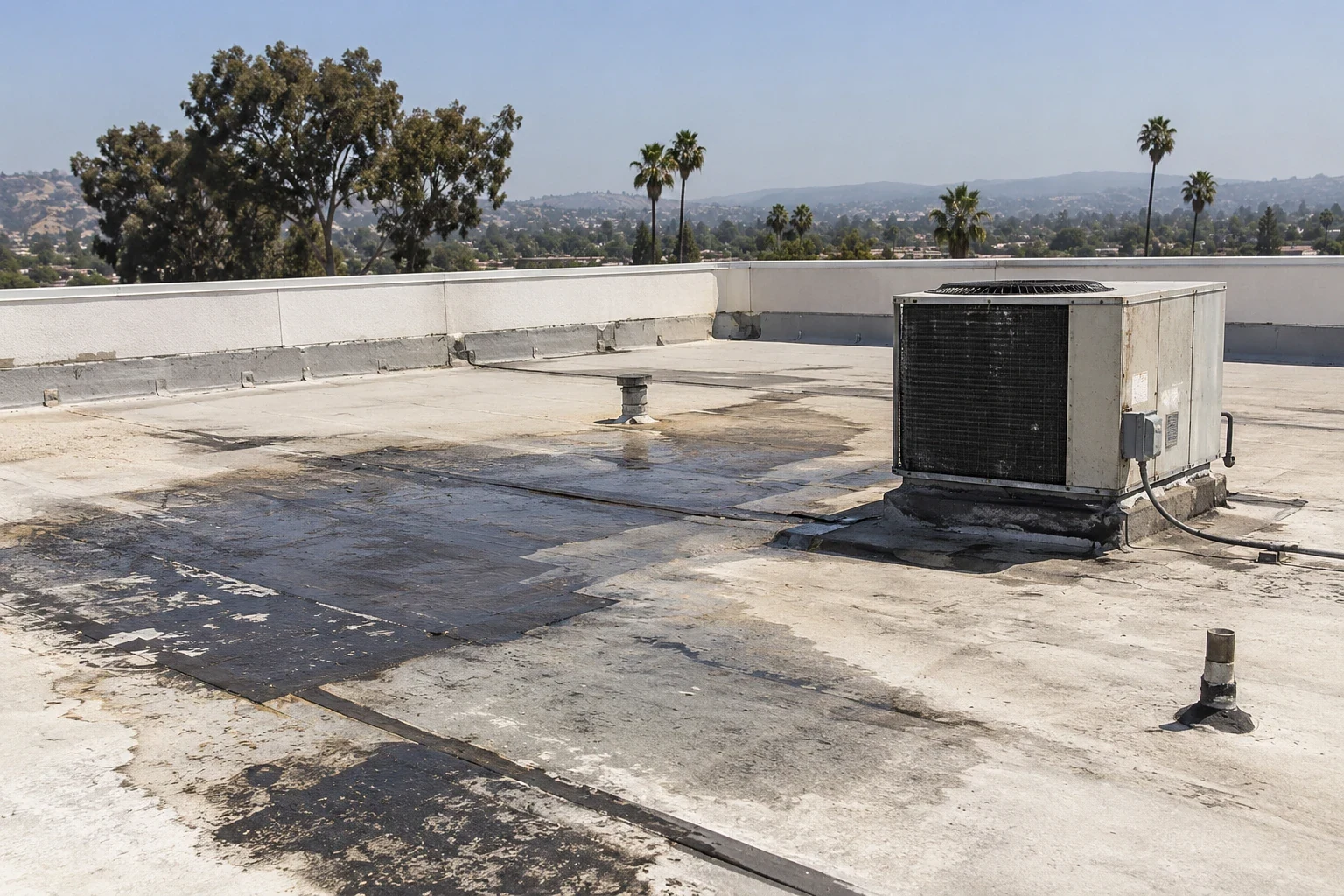
Document Vacaville commercial roof damage, temporary protection, moisture findings, and repair limits for restoration coordination.
After water enters a commercial building, the owner needs to limit interior exposure and understand what the roof actually shows. An adjuster or restoration contractor may be coordinating several trades, yet the stain below is not a complete roof diagnosis. For a Vacaville property, we inspect the reported area, trace the water path through the membrane and details, and record which conditions are visible or still concealed. The report separates temporary protection from permanent repair, notes what was tested, and identifies the boundary supported by the roof evidence. Coverage, policy interpretation, and claim decisions remain with the insurer and the property owner.
A restoration file should make the observed condition easy to distinguish from the reported event. We photograph the affected zone, identify the roof layers and nearby transitions, and record whether moisture, displacement, or an open seam was visible during the visit. The report separates confirmed findings from areas that were inaccessible or not tested. A commercial inspection can give the owner and project team a bounded repair description while leaving coverage and causation decisions to the appropriate parties.
Separate emergency protection from repair
When water is active, the first visit focuses on safe access, the source area, and a temporary measure that fits the roof and weather conditions. We note which interior areas are exposed, what protection was installed, and whether a wet surface or unstable substrate limits a lasting repair. A mitigation action can reduce further entry, but it should not be described as permanent restoration unless the assembly was properly prepared and the repair detail was completed. The owner and restoration lead can use the record to schedule interior work without losing track of the roof item that still needs a durable resolution.
If the property requires an urgent response, an emergency roof visit records the active condition and immediate roof work. A separate leak investigation can trace the path beyond the visible ceiling mark and establish whether moisture follows a seam, curb, drain, or wall transition. The report identifies any test opening or follow-up needed rather than treating the first point of entry as the entire affected area.
Build a roof record from observed conditions
A useful restoration file identifies the building, roof zone, membrane, slope or drainage route, visible damage, prior repairs, and date of inspection. We photograph the field and the specific detail, then mark where moisture readings or test openings were taken. A reading applies to its test point and conditions; it should not be extended to an untested roof section. If material is removed, we record the exposed layer and condition before installation proceeds. This lets the property owner and project contacts distinguish observed facts from reports, assumptions, and questions that need additional access.
The National Weather Service describes the neighboring southern Sacramento Valley as having warm, dry, sunny summers and a winter rainy season; this is a regional description, not a Vacaville station normal. Weather context can help align a reported event with the project timeline, but it does not establish that a particular membrane failed or identify a cause. We compare dated records with roof observations and service history, and leave causation determinations to the appropriate parties. A condition report keeps photographs, test locations, and limits of inspection in one building-level file.
Define the work supported by the roof
Once the condition is documented, the repair scope should name the roof area, material compatibility, preparation, flashing transitions, and the point where work stops at sound assembly. If wet insulation extends past the planned opening, the report can identify what additional testing or owner direction is needed. A repair proposal should not promise a particular claim outcome or include work that was never inspected. The owner decides how the technical scope fits its restoration plan, while the insurer determines coverage under its own process. Keeping those roles clear helps each party review the same roof facts.
A limited opening in stable, dry material may support a localized correction. Wider moisture, repeated seam failures, or a damaged deck can require a different scope after the assembly is checked. We can provide a roof work description and photographs for the owner’s file, while a claim documentation discussion stays focused on roofing observations rather than policy interpretation. If a public facility is involved, the designated agency contact can confirm access, approval routing, and building use before work is scheduled.
Coordinate roof and interior restoration
Interior drying or ceiling removal can reveal where water traveled, while roof access may be controlled by a separate facilities contact. We identify who can release each area, when photographs are needed, and which trade should notify the owner before an assembly is opened. If rooftop equipment or a prior patch is involved, the restoration team receives a description of the roof detail and a recommendation for any follow-up inspection. We do not assume that a dry interior means the roof is closed or that an exterior patch alone resolves concealed moisture below the surface.
City planning materials place business and industrial land uses near I-505 and North Village, but commercial buildings in Vacaville vary in use and roof assembly. A regional reference should help orient the project file, not substitute for the address, contact, and condition at hand. For a property being managed by a construction partner, a general contractor coordination plan can set trade handoffs, daily close-in, and the line between roofing and other work. The property representative remains the source for access authorization and business-hour limits.
Keep the restoration file ready for follow-up
At closeout, the roof record should show the temporary action, permanent material installed, photographs before and after work, test points, drainage observations, and any area left outside the scope. We identify the repair boundary and state where access was unavailable. If another leak is reported, those notes help the owner compare the new symptom with the earlier condition instead of assuming it is the same source. A future inspection can revisit open questions and confirm whether the surrounding assembly remains serviceable after restoration trades complete their work.
The file can be used for later maintenance, but it does not replace the owner’s policy or claims record. We preserve the roof evidence in practical terms: what we saw, what we did, what was not tested, and what should be reviewed next. A site in North Village still needs its own roof map and contact, even where city planning materials describe nearby business-park uses. Share the leak date, reported rooms, roof history, access rules, and restoration schedule, and we can inspect the assembly and return a documented scope for owner review.
Questions Owners Ask
Does a roof inspection determine insurance coverage?
No. We document roofing conditions and work performed; coverage and policy interpretation remain with the insurer and property owner. Our observations can be provided for their review.
What should happen during the first roof visit after a leak?
We confirm safe access, trace the visible water path, and document any temporary protection. The record identifies what was observed and whether testing or a return visit is needed.
Can a ceiling stain identify the roof opening?
It locates interior exposure, but water can travel before appearing below. We inspect nearby seams, curbs, drains, and transitions and note where the path remains uncertain.
How are moisture readings reported?
Each reading is tied to a specific test point and inspection condition. We distinguish measured areas from untested roof zones so the report does not imply a full-roof result.
What should the owner keep after roof restoration?
Keep dated photos, the repair boundary, materials, moisture test locations, temporary measures, and unresolved areas together with the property file. Those details support a later inspection.
Related Roofing Work
- Commercial Roof Inspection in Vacaville, CA
- Emergency Commercial Roof Repair in Vacaville, CA
- Commercial Roof Leak Repair in Vacaville, CA
- Commercial Roof Condition Reports in Vacaville, CA
- Commercial Roof Claim Documentation in Vacaville, CA
- Commercial Roofing for Public Agencies in Vacaville, CA
- Commercial Roofing Partner for General Contractors in Vacaville, CA
- Commercial Roofing in North Village, Vacaville, CA
Share the Vacaville address, symptom date, roof history, access contact, and restoration schedule. We will inspect the assembly, record the repair boundary, and provide roofing observations for owner review.